Practical guidance, honest gear advice, and comfort-first practice for adult violinists.
Start Here – Learn Violin Without Pain, Frustration, or Burnout
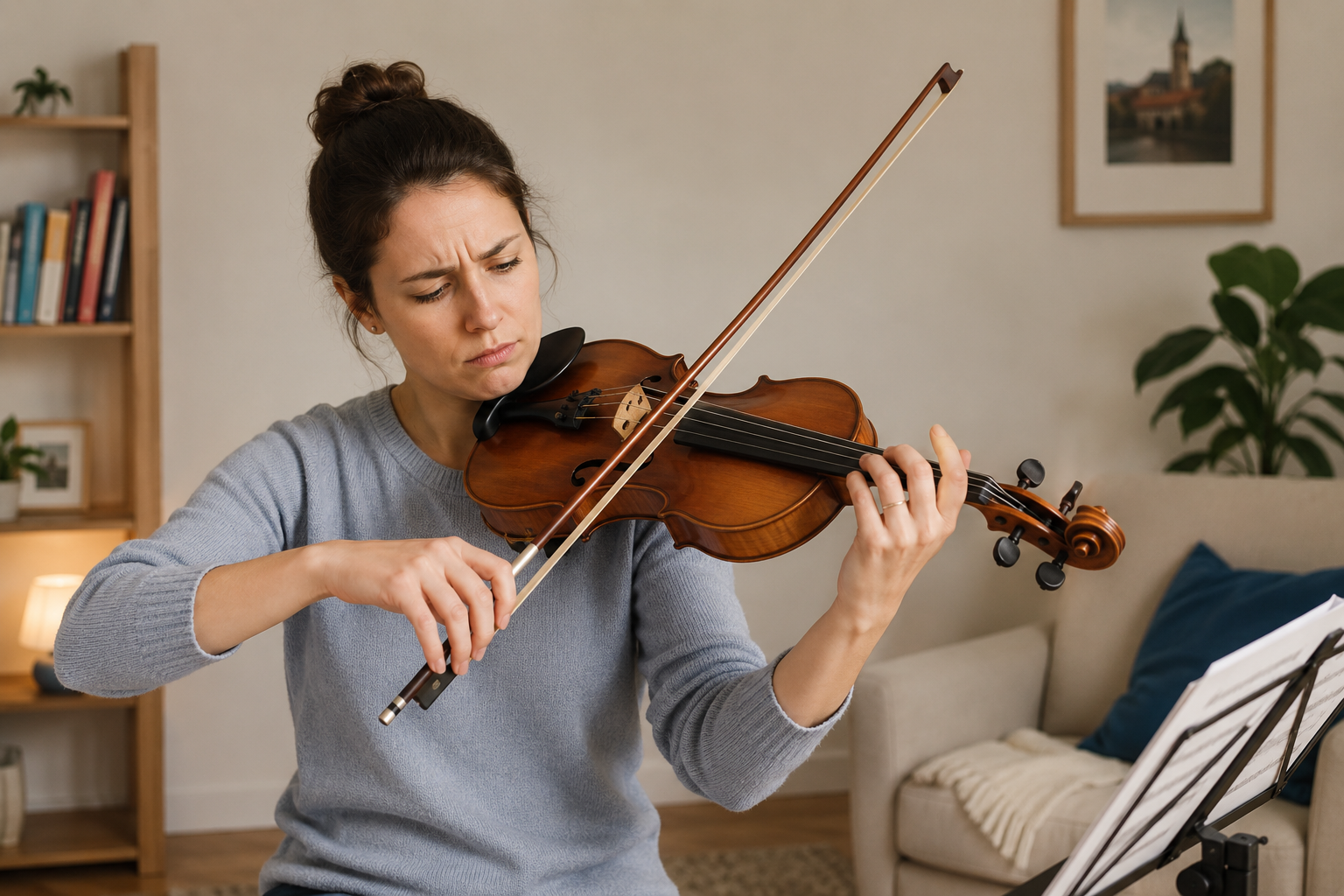
Learning violin as an adult should be rewarding—not physically painful or emotionally exhausting.
Most beginners quit not because they lack talent, but because they’re uncomfortable, overwhelmed, or unsure whether they’re “doing it right.” Practical Violinist exists to change that.
This site is built around one simple idea: progress without strain.
Choose the path that fits you right now:
🌱 Just Starting Out?
- How to Start Playing the Violin as an Adult (Step-by-Step Guide)
- What Should I Practice on the Violin Today?
- A Simple 5-Minute Daily Violin Practice Routine for Adults
- How to Buy a Beginner Violin: Complete Adult Guide (What Matters and What to Avoid)
Build momentum without overload.
🖐️ Dealing With Pain or Discomfort?
- Why Violin Posture Matters for Adult Players (And How to Fix It Without Tension)
- How to Reduce Chin Rest Pain: A Comfort Guide for Adult Violinists
- Violin Shoulder Pain for Adult Beginners: Causes and Simple Fixes
- Finger Pain on Violin: What’s Normal and What’s Not
Comfort isn’t optional—it’s the foundation of everything else.
🎶 Want to Sound Better?
- Why Does My Violin Sound Bad? (And How to Fix It Step by Step)
- Why Your Violin Sounds Scratchy (and How to Fix It)
- How to Hold the Violin Bow for a Smoother Sound (Adult Beginner Guide)
- How to Practice With a Metronome Without Sounding Mechanical
- Why Your Violin Sounds Out of Tune (Even After Tuning)
Small changes make big differences.
🎻 Need Simple Gear Guidance?
You don’t need expensive equipment—just the right basics.
- Essential Tools Every Adult Violinist Should Own
- Best Beginner Violins for Adults
- Best Violin Bows for Adult Beginners and Intermediates
- Best Violin Strings for Adult Beginners
- Best Violin Rosin for Adult Beginners
- Shoulder Rests for Comfort and Stability
You don’t need perfect posture, premium gear, or hours a day.
You need a clear plan you can follow without overthinking it.
That’s what Practical Violinist is here for.
It’s one thing to understand what to fix.
It’s another to sit down and know exactly what to practice — and in what order.
→ Start your first practice plan
🎻 Looking for In-Person Help?
Sometimes the right violin shop makes all the difference—especially
for rentals, setup, and long-term upgrades.
We’ve curated a violin shop directory focused on beginner support and long-term service.
-

If the left side of your neck hurts after playing violin, it’s usually caused by tension or setup imbalance. Learn what’s causing the strain and how to fix it with simple, practical adjustments.
-

Signs Your Violin Strings Are Worn Out (What You’ll Hear and Feel)
Old violin strings don’t fail suddenly—they gradually lose clarity, response, and stability. Learn the key signs your strings are worn out, what it feels like under your hands, and how to recognize when they’re affecting your sound.
-

Why Your Violin Sound Breaks or Cuts Out (And How to Fix It)
If your violin sound breaks or cuts out mid-bow—fading, cracking, or dropping out—it’s usually a small control issue, not your instrument. Learn how to fix it with simple adjustments to contact point, bow speed, and hand tension so your sound…
-

Best Music Stands for Violin Practice
Finding the right music stand can make a bigger difference to your practice than you might expect. This guide breaks down the best music stands for violin practice—from stable home setups to portable options—so you can choose one that fits…
-

Why Your Violin Double Stops Sound Messy (And How to Fix Them)
Struggling with messy double stops on violin? Learn why they sound uneven or rough and how to fix them with simple, practical adjustments you can apply right away.
-

Why Your Jaw Hurts While Playing Violin (And How to Identify the Cause)
Jaw pain while playing violin is usually a sign of tension, setup mismatch, or balance issues—not something you’re doing wrong. This guide helps you quickly identify the cause and points you to the right fix without guesswork.
-

Why Your Violin Sounds Weak or Quiet (And How to Get More Volume Without Forcing It)
If your violin sounds weak or quiet, the issue is usually how the bow is interacting with the string—not the instrument itself. Learn how to increase projection and volume with simple technique adjustments that actually work.
-

Why Your Violin Bow Slides on the String (Loses Grip) — And How to Fix It
If your violin bow feels like it’s sliding instead of gripping the string, the cause is usually a simple balance issue between rosin, contact point, and bow control. Learn how to identify the problem quickly and fix it with a…
-

Signs Your Violin Needs a Luthier (What You Can Fix Yourself)
Not sure if your violin needs a luthier? Learn the key signs of setup and structural issues, what you can safely fix yourself, and when it’s time to get professional help.
-

Best Violin Cases for Adult Players (Lightweight, Travel & Protection Options)
A practical guide to choosing the right violin case for adult players. Learn what features actually matter, how much protection you need, and which cases offer the best balance of weight, comfort, and durability at every price level.
-

Why Your Violin Sounds Thin (And How to Get a Fuller Tone)
If your violin sounds thin — clear but small, lacking depth or warmth — the issue is usually how the bow interacts with the string. This guide shows you how to quickly diagnose the cause and build a fuller, more…
-

How Often Should You Replace Violin Rosin (Signs, Tests & Timeline)
Quick checks to know if your rosin cake still works, realistic replacement ranges by use level, and simple cleaning and application tips to protect your tone.
Get new Practical Violinist articles
Practical guidance on violin practice, comfort, and gear for adult players.