
Comfort & Posture
-

Why Your Right Arm or Elbow Hurts After Playing Violin (Bow Arm Pain Explained)
If your bow arm aches after practice, you’re not imagining it. Here are the five most common causes of right arm and elbow pain in violinists, plus simple checks and fixes for each, and how to tell when it’s more than normal muscle fatigue.
-
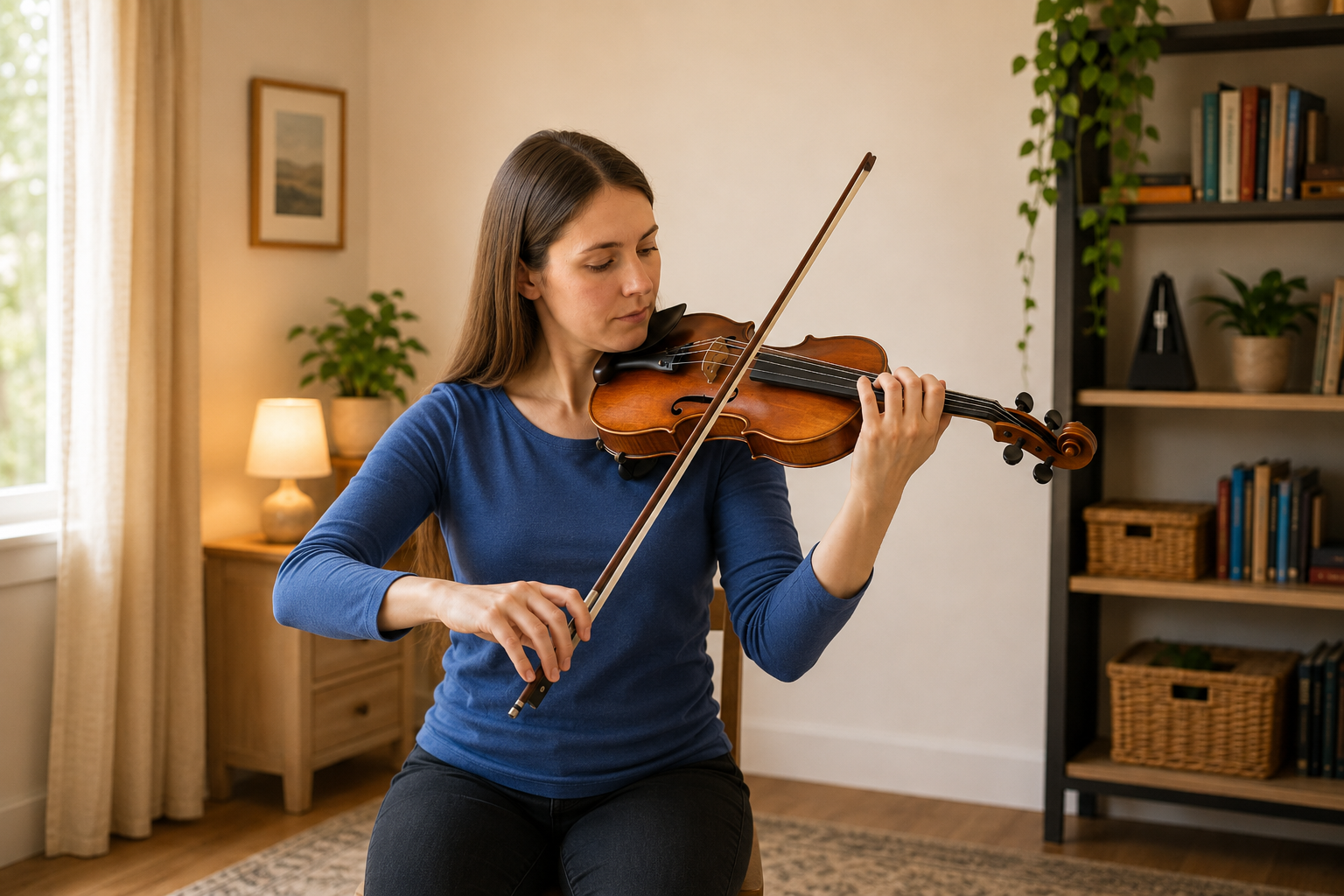
Why Your Left Wrist Hurts When Playing Violin: Bent-Wrist Fixes for Adult Beginners
Left wrist pain is common for adult violin beginners, especially when the wrist collapses, the thumb squeezes, or the left hand tries to hold up the violin. This guide explains the most common causes of wrist discomfort and gives simple posture, setup, and hand-position fixes to help you practice with less tension.
-
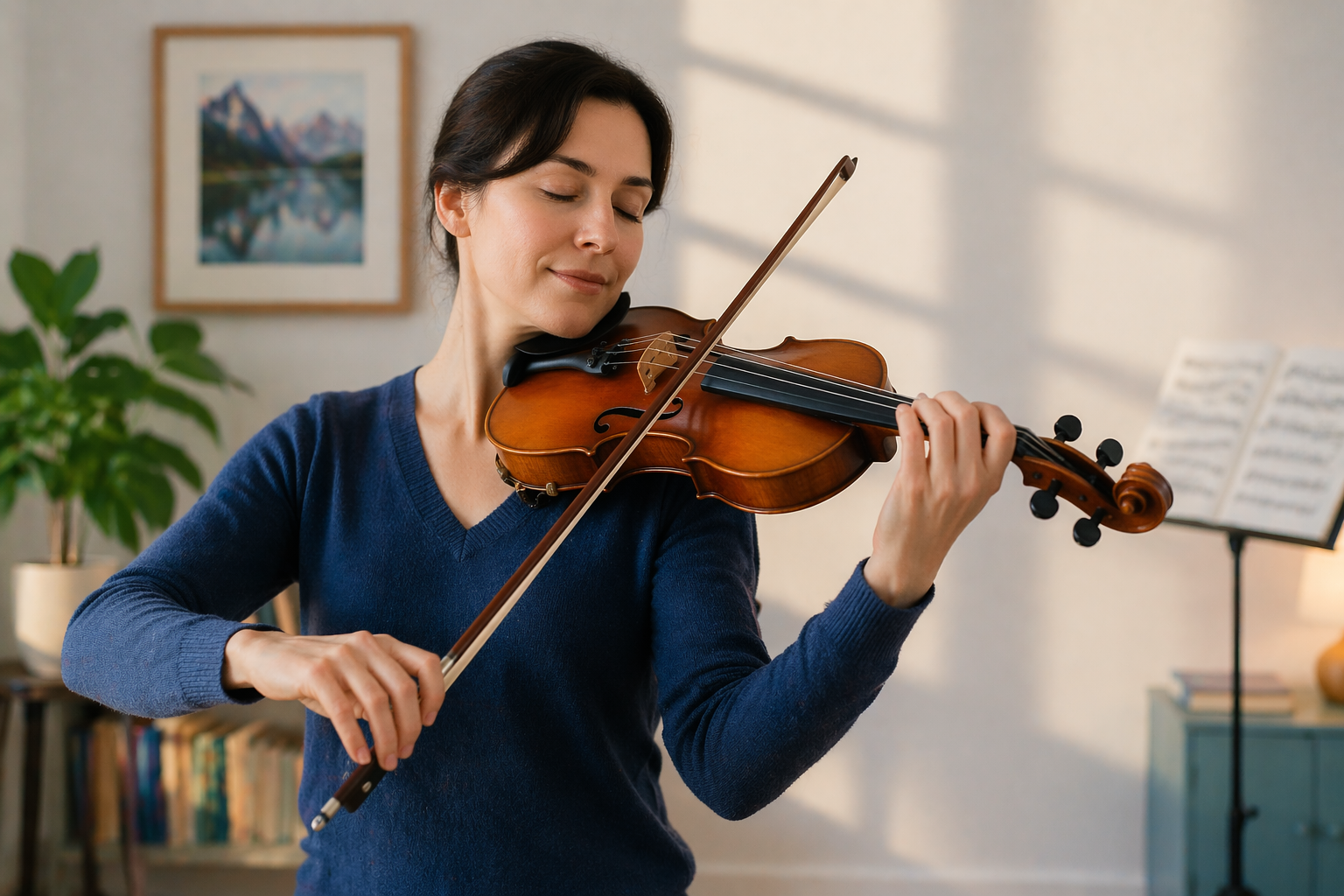
How to Keep Your Violin Stable (Without Tension or Gripping)
If your violin feels unstable or requires constant gripping, the problem is usually balance—not strength. Learn how to keep your violin stable without tension so your left hand can stay relaxed and your playing feels easier.
-

Why Your Upper Back Hurts After Playing Violin: Shoulder Blade Tension Fixes for Adult Beginners
Upper back pain after playing violin is common for adult beginners, especially when the shoulders, neck, or upper back are working too hard to hold the instrument in place. This guide explains common causes of upper back and shoulder blade tension, simple setup checks, and practice adjustments that can help you play with less strain.
-
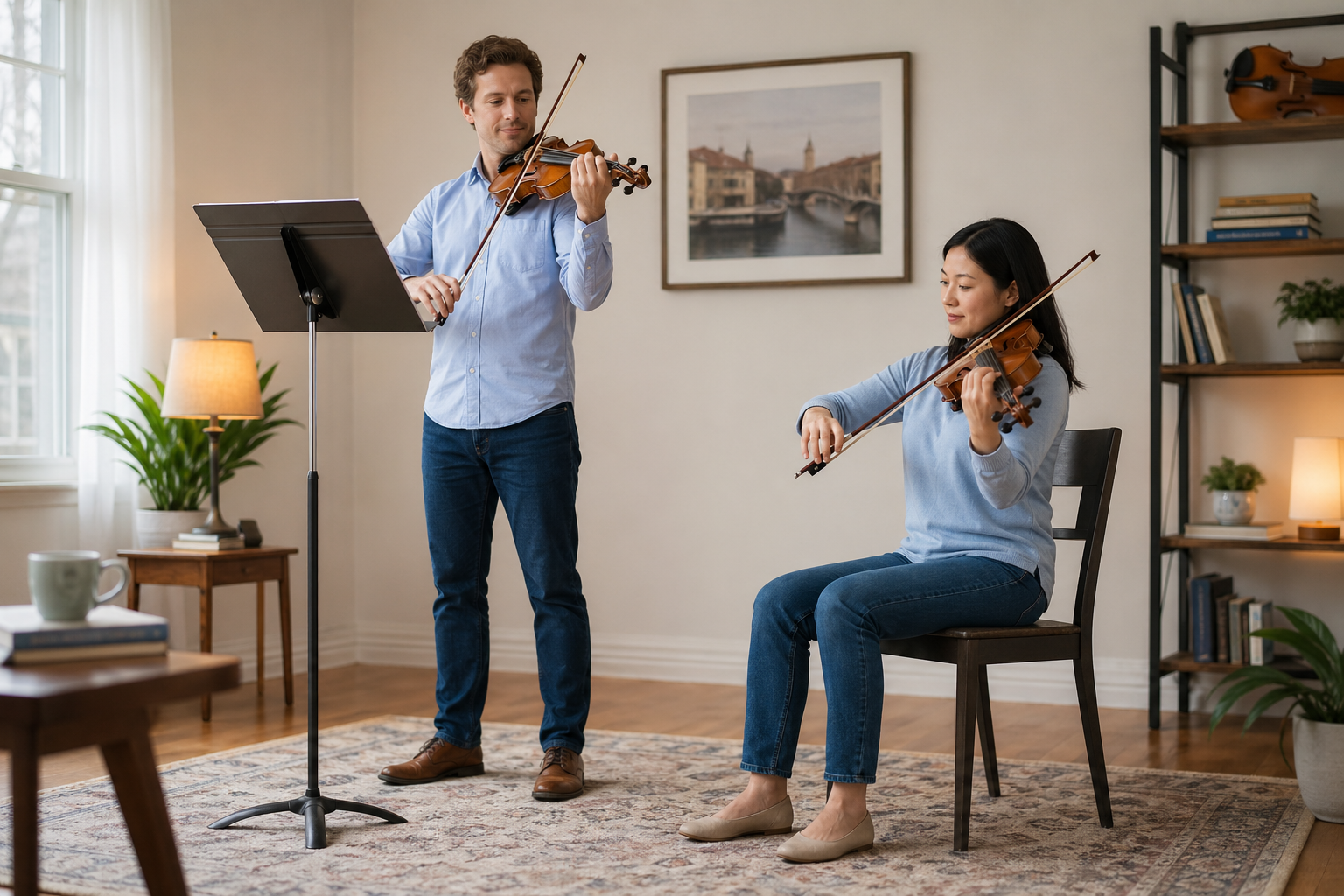
Should You Sit or Stand When Practicing Violin? A Comfort Guide for Adult Players
Should you sit or stand when practicing violin? This comfort guide explains how each position affects posture, balance, tension, and practice comfort for adult violin players.
-
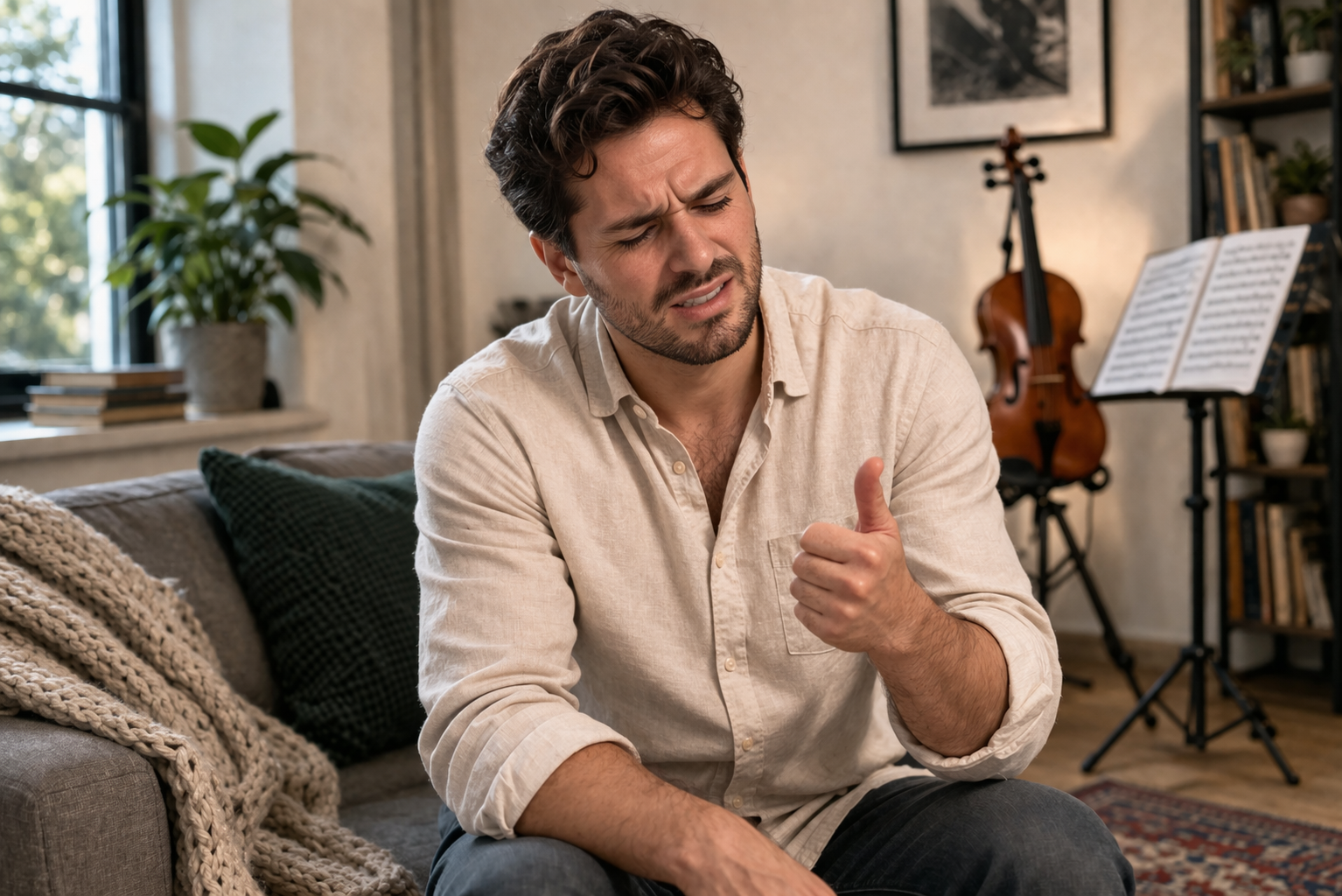
Why Your Left Thumb Hurts After Playing Violin (And How to Fix It)
If your left thumb hurts after playing violin, it’s usually caused by excess tension and gripping. Learn what’s really causing thumb pain and how to fix it with simple, practical adjustments.
-

How High Should a Violin Music Stand Be? (Proper Height, Distance & Setup)
If your neck or shoulders feel tight while playing violin, your music stand setup may be the cause. Learn the ideal height, distance, and placement to stay comfortable and reduce tension.
-

Why the Left Side of Your Neck Hurts After Playing Violin (And How to Fix It)
If the left side of your neck hurts after playing violin, it’s usually caused by tension or setup imbalance. Learn what’s causing the strain and how to fix it with simple, practical adjustments.
-
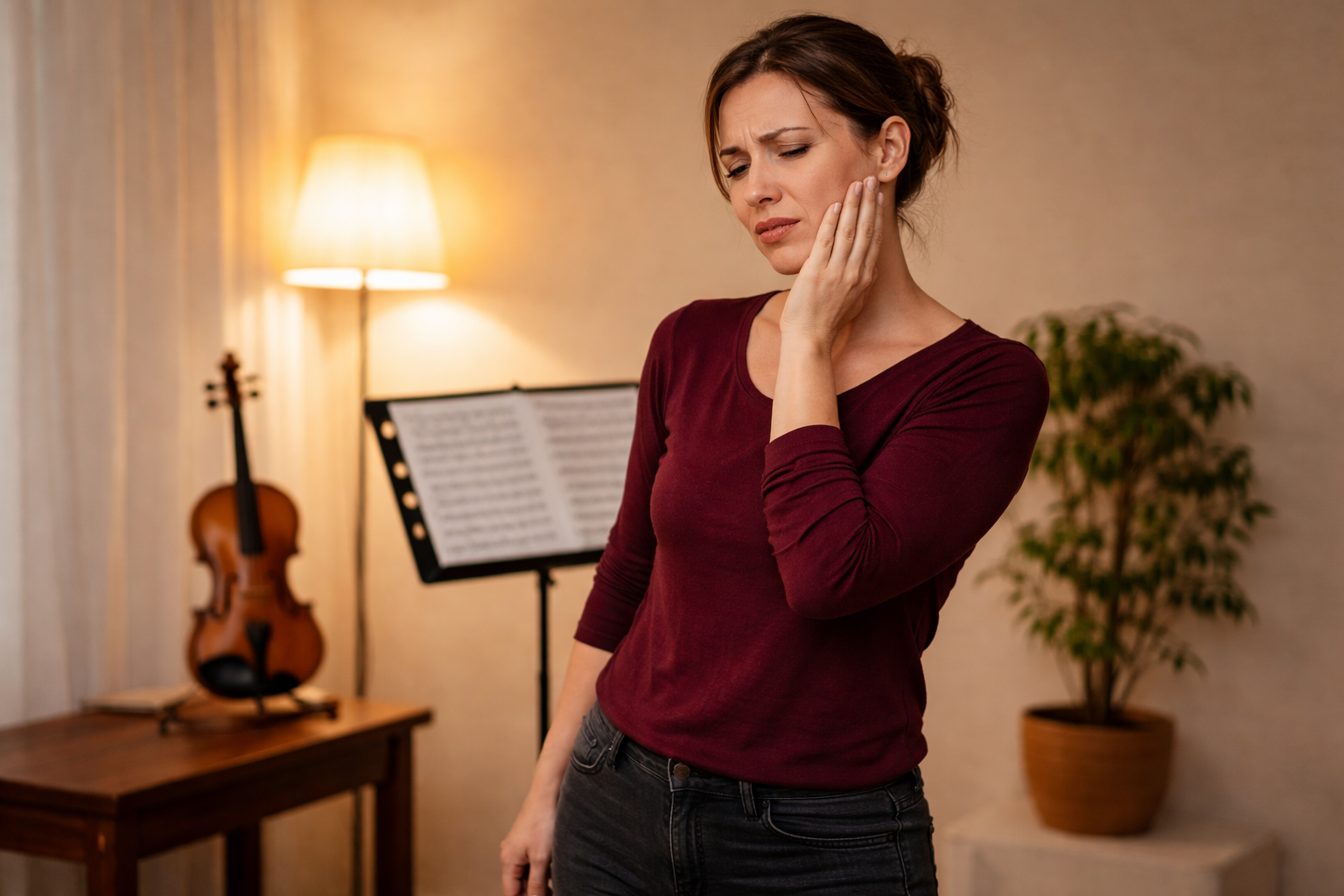
Why Your Jaw Hurts While Playing Violin (And How to Identify the Cause)
Jaw pain while playing violin is usually a sign of tension, setup mismatch, or balance issues—not something you’re doing wrong. This guide helps you quickly identify the cause and points you to the right fix without guesswork.
-

How to Find the Right Chin Rest Height for Violin (Quick Tests & Safe Fixes)
If your jaw, neck, or left hand feels tense when you play, a small chin rest height change can help. This guide shows quick checks, safe temporary padding (1–2 mm), and short tests you can do at home.
-
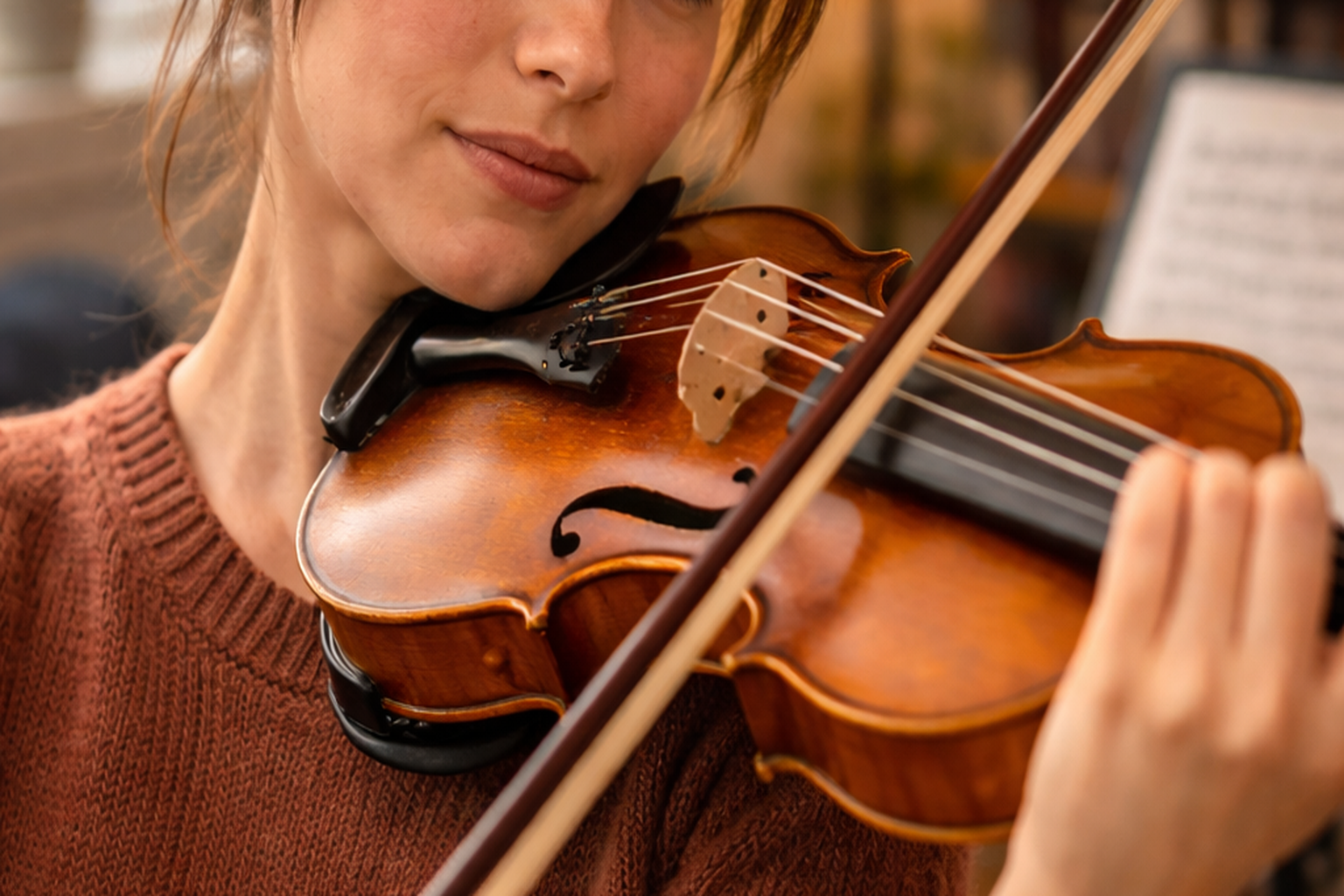
How to Stop a Violin from Sliding on Your Shoulder (Quick Fixes & Setup Checks)
If your violin keeps slipping on your shoulder, start with three quick checks you can do in minutes, then follow the ordered fixes below: clothing, simple pads, shoulder‑rest micro‑adjustments, and short posture drills.
-
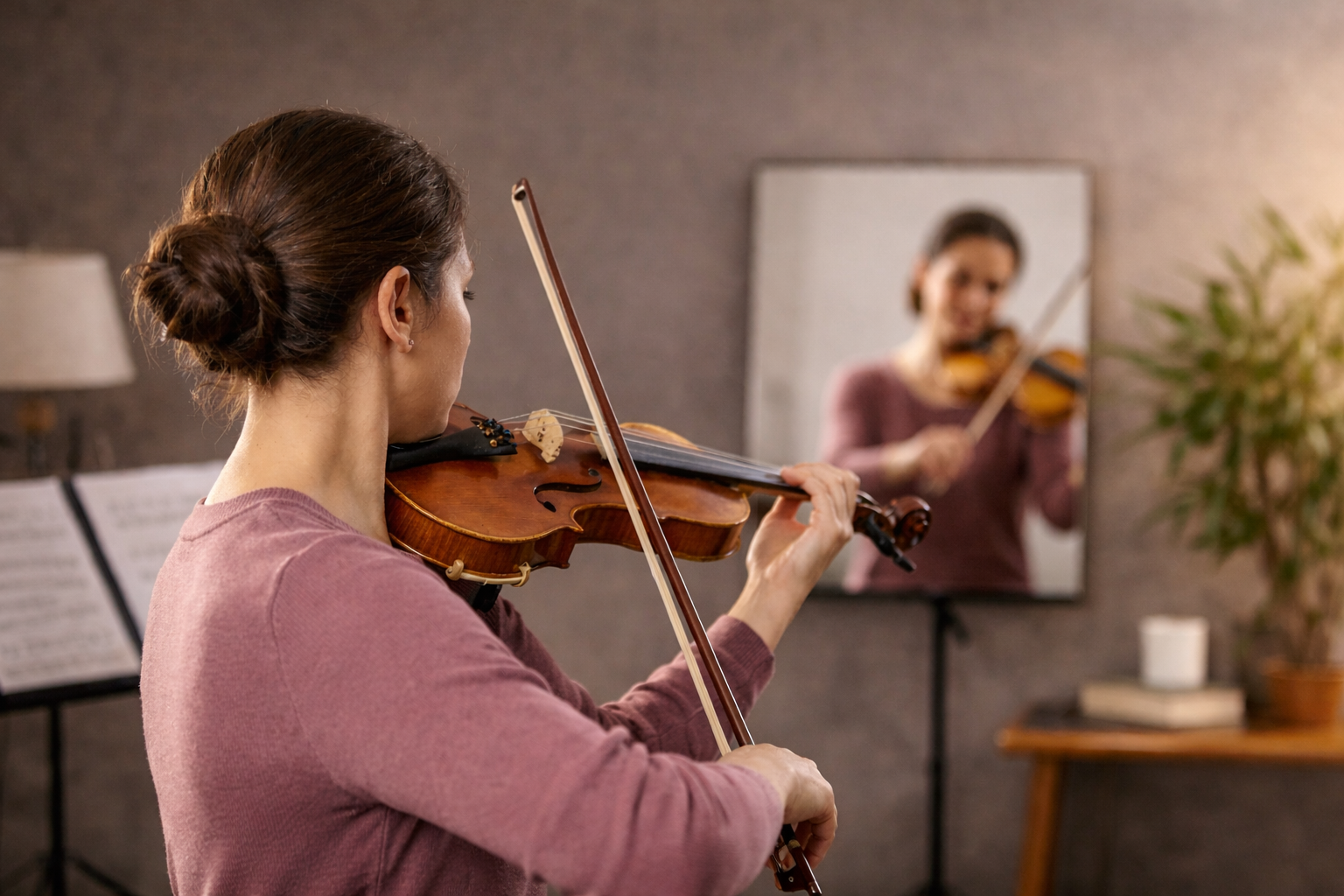
Why Violin Posture Matters for Adult Players (And How to Fix It Without Tension)
Good violin posture isn’t about holding yourself rigid or “doing it right.” For adult players, comfort comes from balanced posture, body awareness, and simple habits that prevent tension from building over time. This guide explains why posture matters, how to fix common issues without overthinking, and how to build sustainable, pain-free practice habits.