
Practice & Technique
-

How to Plan a Week of Violin Practice as an Adult Beginner
Learn how to plan a week of violin practice as an adult beginner with a simple structure for rotating bow control, left-hand accuracy, rhythm, tone, and piece work without feeling scattered.
-
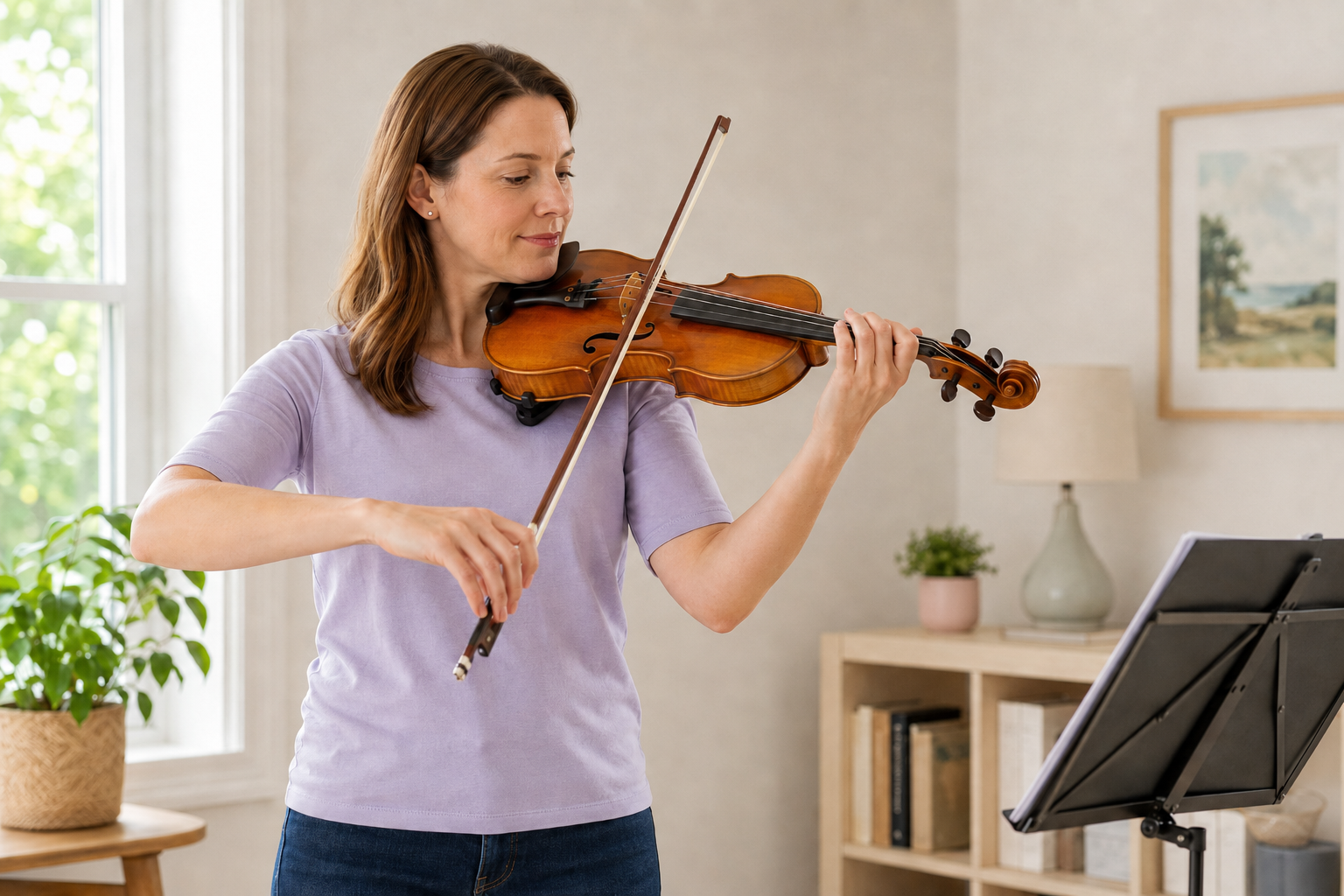
How Close Should the Bow Be to the Bridge When You Play Violin?
Wondering how close your bow should be to the bridge when playing violin? Learn where to place the bow, how contact point affects tone, and simple ways adult beginners can get a clearer, steadier sound.
-

How to Practice Violin Slowly Without Getting Stuck Playing Slowly
Learn how to practice violin slowly in a way that actually leads to progress. This guide shows adult beginners how to choose the right tempo, fix difficult spots, and speed back up without getting stuck playing slowly.
-
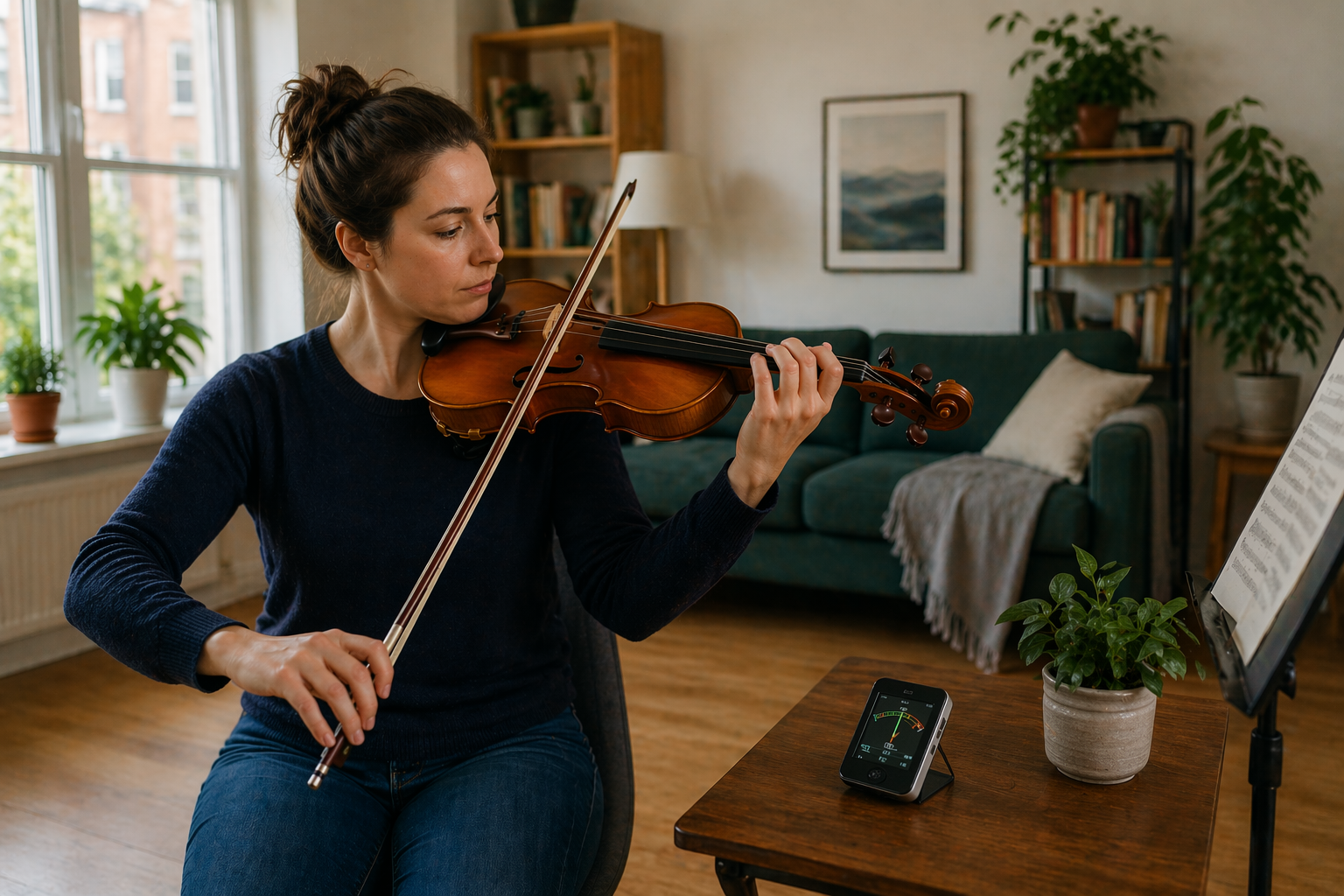
How to Place Your Fingers Correctly on the Violin (Without Guessing)
Struggling to place your fingers correctly on the violin? Learn a simple, repeatable way to build accurate finger placement and start playing more consistently in tune—without guessing.
-
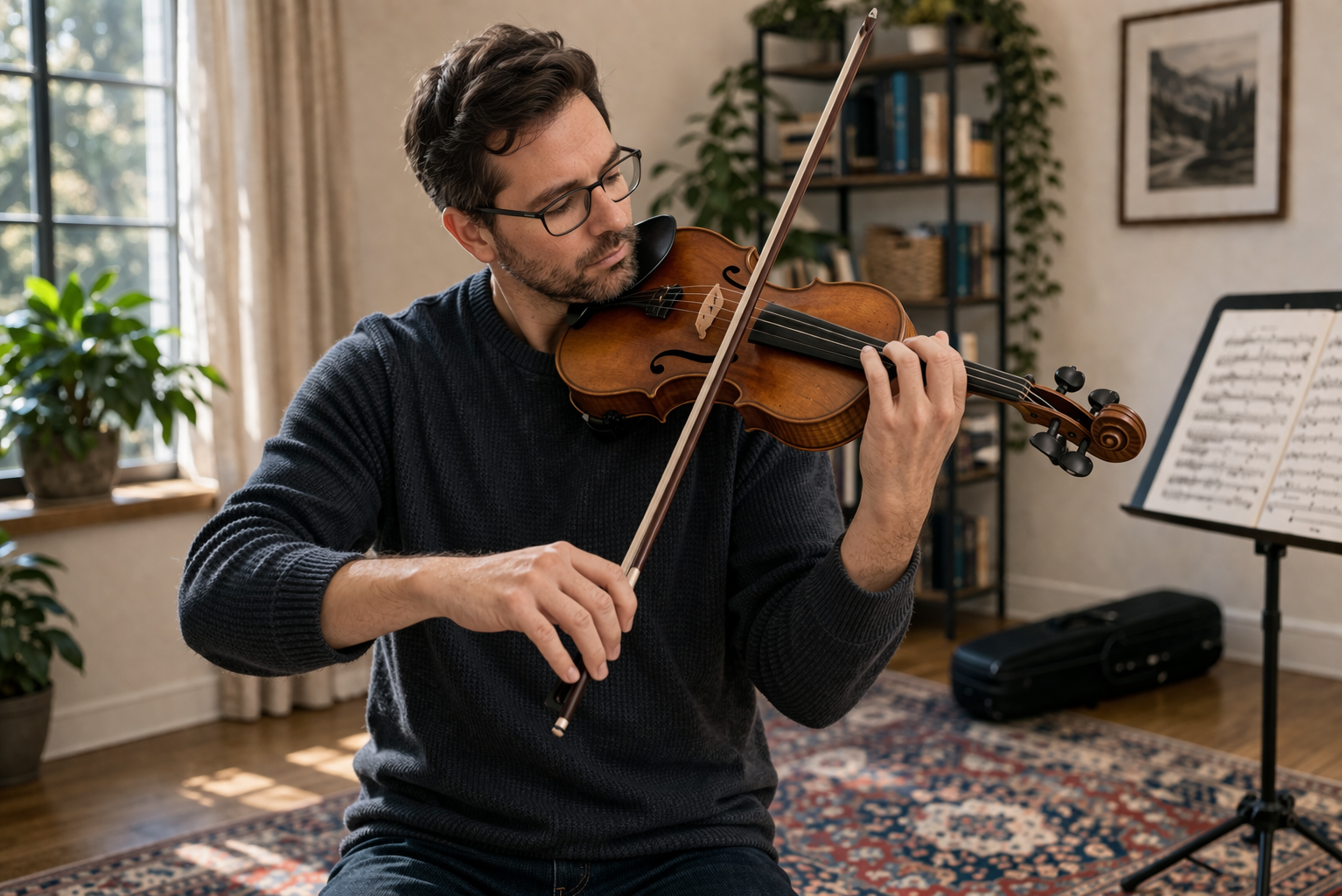
How to Practice Violin Shifting (Easy Exercises for Adult Beginners)
Learn how to practice violin shifting with simple, step-by-step exercises designed for adult beginners. Build smooth, in-tune first-to-third position shifts with a clear, practical routine you can use every day.
-
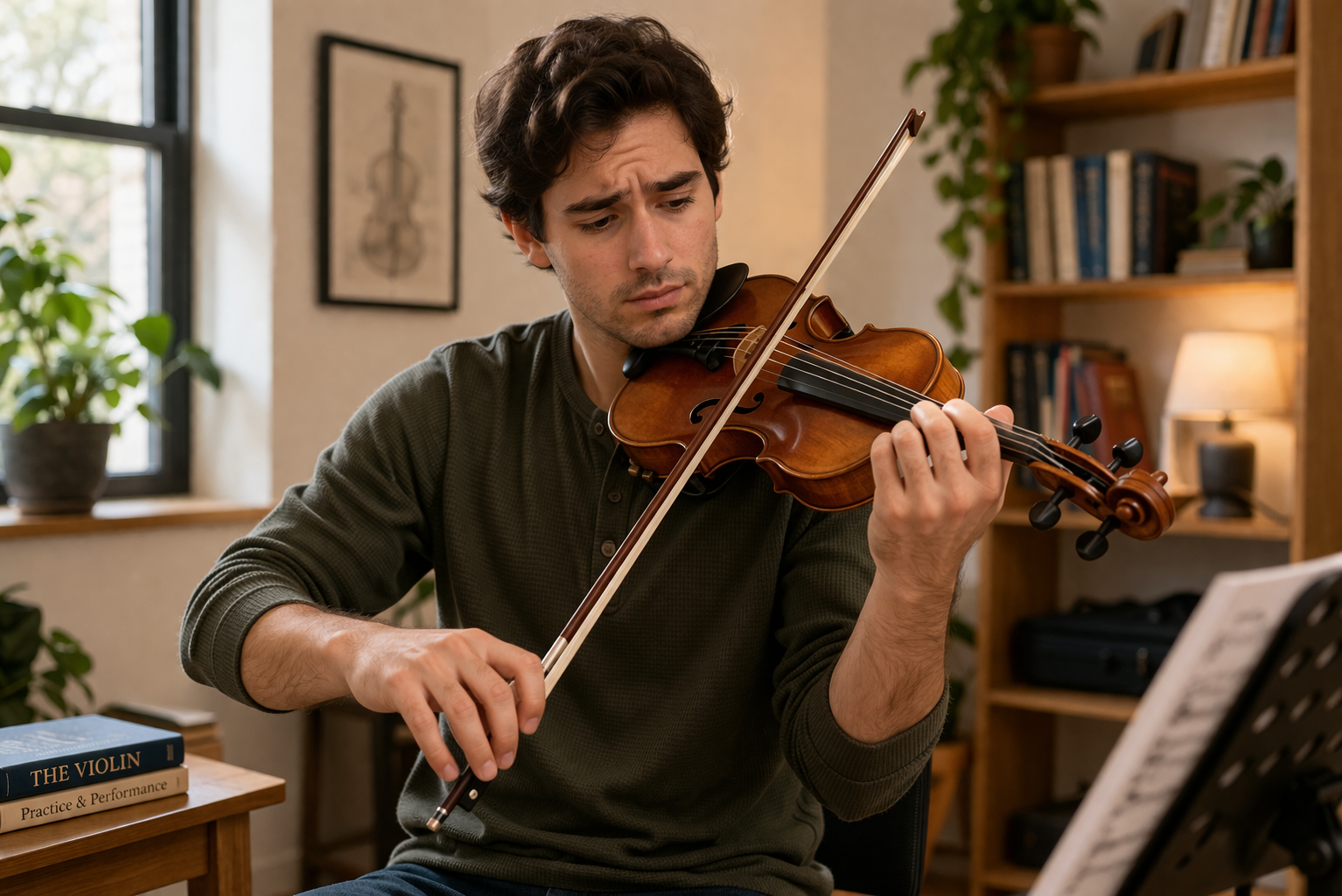
Why Your Violin Bow Shakes (And How to Fix It)
If your violin bow shakes during slow strokes or long notes, the issue isn’t strength—it’s control. Learn what causes bow instability and how to fix it so your sound becomes steady and reliable.
-

How to Learn Vibrato on Violin as an Adult Beginner (Step-by-Step Guide)
Learn vibrato on violin step by step with clear, beginner-friendly instruction. Understand the motion, pitch movement, and how to build vibrato without tension.
-
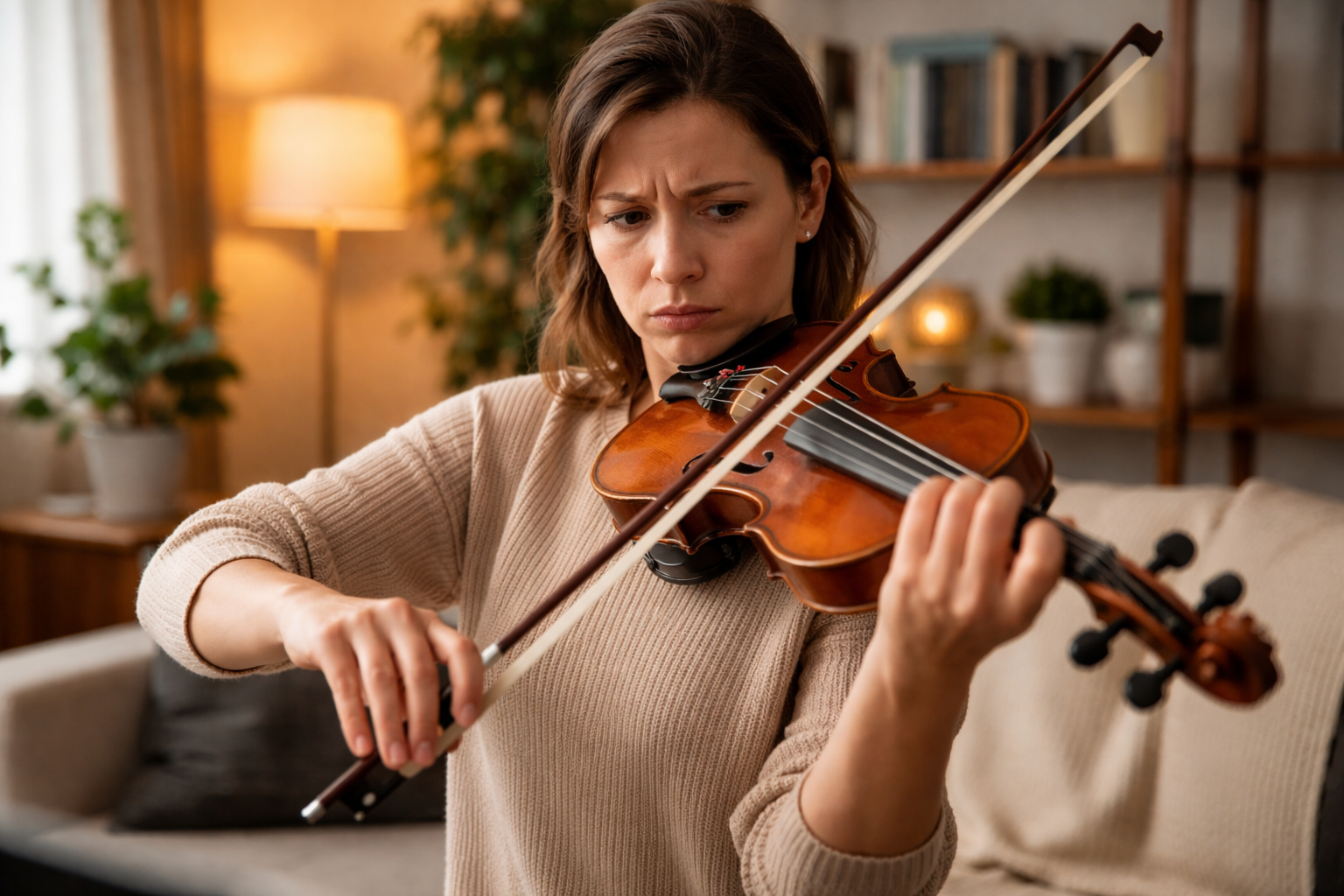
Why Your Violin Sound Breaks or Cuts Out (And How to Fix It)
If your violin sound breaks or cuts out mid-bow—fading, cracking, or dropping out—it’s usually a small control issue, not your instrument. Learn how to fix it with simple adjustments to contact point, bow speed, and hand tension so your sound stays connected from start to finish.
-

Why Your Violin Double Stops Sound Messy (And How to Fix Them)
Struggling with messy double stops on violin? Learn why they sound uneven or rough and how to fix them with simple, practical adjustments you can apply right away.
-
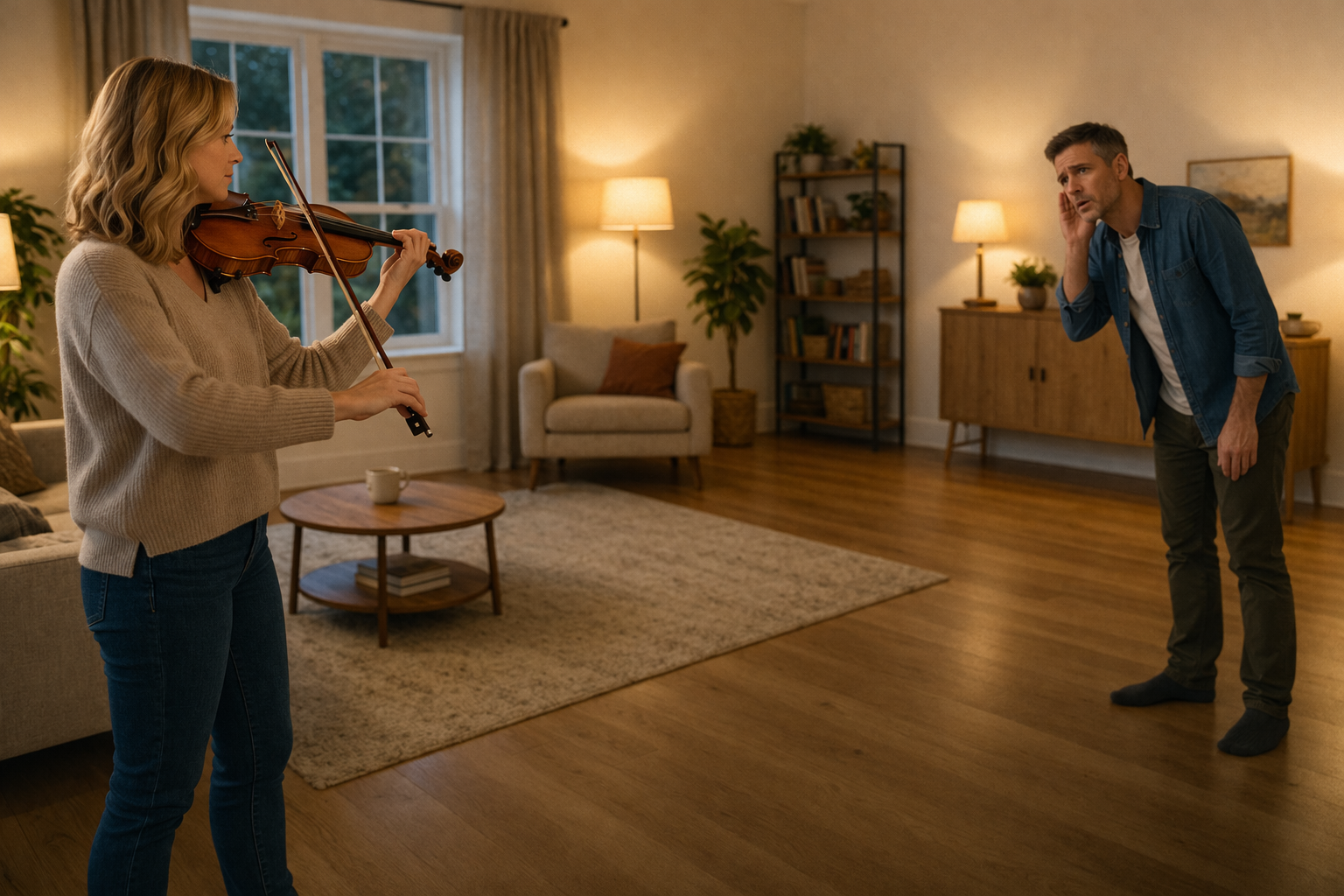
Why Your Violin Sounds Weak or Quiet (And How to Get More Volume Without Forcing It)
If your violin sounds weak or quiet, the issue is usually how the bow is interacting with the string—not the instrument itself. Learn how to increase projection and volume with simple technique adjustments that actually work.
-
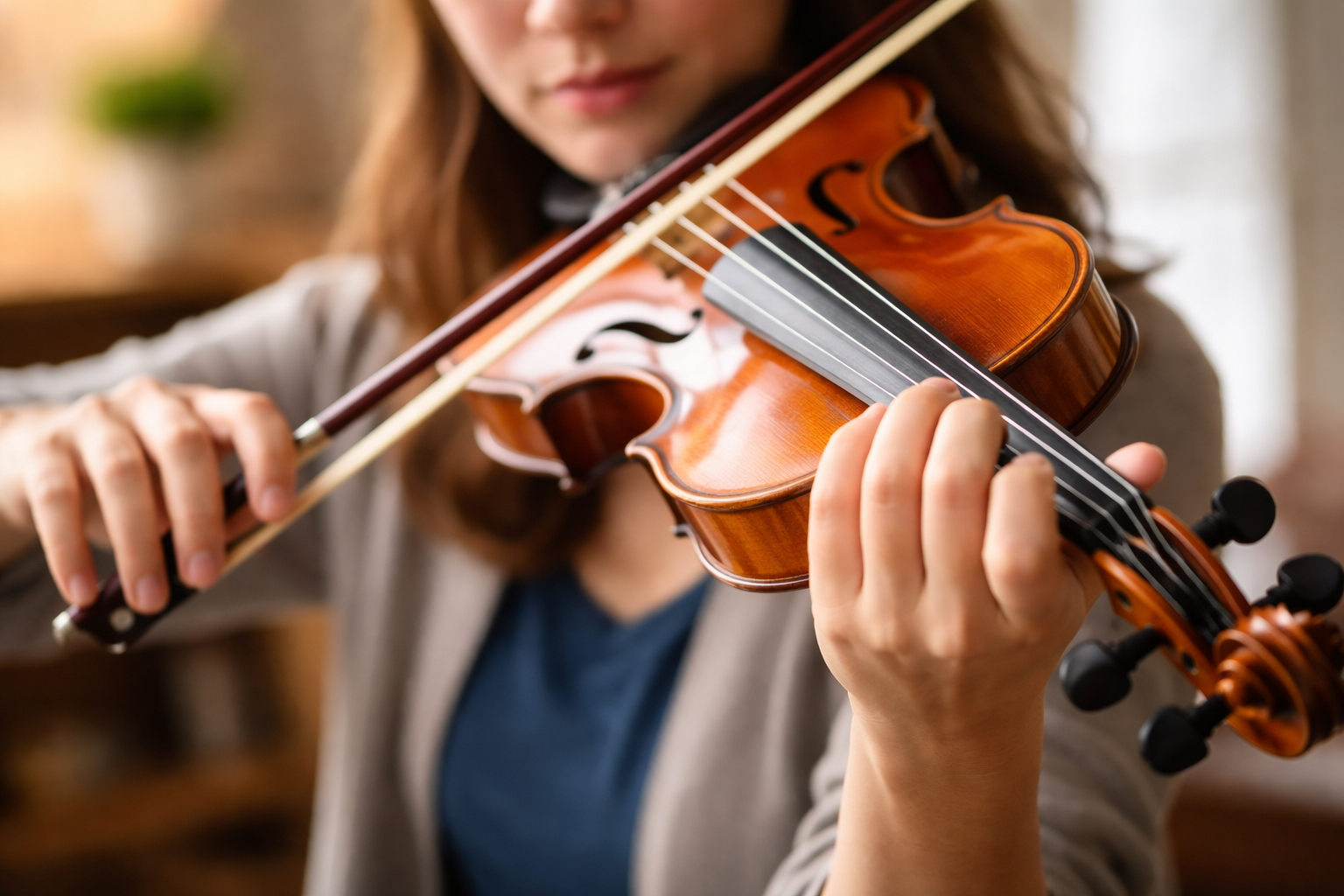
Why Your Violin Bow Slides on the String (Loses Grip) — And How to Fix It
If your violin bow feels like it’s sliding instead of gripping the string, the cause is usually a simple balance issue between rosin, contact point, and bow control. Learn how to identify the problem quickly and fix it with a few focused adjustments.
-
Why Your Violin Sounds Thin (And How to Get a Fuller Tone)
If your violin sounds thin — clear but small, lacking depth or warmth — the issue is usually how the bow interacts with the string. This guide shows you how to quickly diagnose the cause and build a fuller, more resonant tone with simple adjustments and focused practice.