

Last Updated: August 2026
Starting violin can feel confusing before you even play your first note.
There are violins, bows, shoulder rests, rosin, cases, tuners, music stands, finger tapes, humidifiers, practice mutes, and plenty of other accessories that all seem important when you are new.
The truth is simpler.
Most beginners do not need a huge pile of violin gear. They need a playable violin, a few basic accessories, and a setup that makes practice easier instead of more frustrating.
This guide will walk you through what you actually need to start playing violin, what is helpful but optional, and what you can probably skip at first.
The Simple Beginner Violin Starter Kit
For most adult beginners, a good starter setup includes:
A playable violin and bow, a shoulder rest, rosin, a music stand, a tuner or tuning app, a metronome, a soft cleaning cloth, and a way to monitor humidity inside the case.
That is enough for most beginners to start practicing in a reasonable, safe, and comfortable way.
Some players may also want finger tape, a practice mute, or a better case humidifier, but those usually depend on your situation.
If you are trying to keep things simple, start with the basics first. Then add other items only when you know you need them.
1. A Playable Violin and Bow
The violin itself is the biggest purchase in a beginner starter kit, and it is also the one that can cause the most frustration if it is poorly made or poorly set up.
Your first violin does not need to be expensive, but it does need to be playable. If the strings are too high, the pegs slip, the bridge is poorly fitted, or the bow is hard to control, learning will feel much harder than it should. Many beginners think they are the problem when the instrument is actually working against them.
For most adult beginners, the simplest choice is a complete violin outfit. That usually includes the violin, bow, case, and basic accessories, so you are not trying to piece everything together separately before you know what matters.
If you are not sure whether to buy or rent, renting from a good violin shop can be a safe way to start. If you want to buy, choose something that is properly set up and reliable enough to let you focus on learning instead of fighting the instrument.
A good beginner violin should stay in tune reasonably well, feel comfortable under the left hand, and produce a clear sound when played with a steady bow.
Beginner Violin Outfits to Consider
These beginner-friendly outfits keep the choices simple so you can focus on reliable instruments that are more likely to support a new adult player.

Fiddlerman Concert Violin Outfit
Best overall choice
A strong starting point for adult beginners who want good playability, reliable setup, and room to grow.

Fiddlerman Apprentice Violin Outfit
Good value option
A dependable choice for beginners who want a playable outfit without moving into a higher price range.

Fiddlerman Concert Deluxe Violin Outfit
Premium beginner option
A better fit for committed beginners who want a more refined outfit and fewer early upgrade concerns.

Bunnel Premier Violin Outfit
Mid-range beginner option
A solid choice for beginners who want a complete outfit with reliable construction and longer-term usefulness.
Simple recommendation: If you are unsure where to start, the Fiddlerman Concert is the safest overall pick. If budget matters more, look at the Fiddlerman Apprentice. If you are confident you will stay with violin, the Concert Deluxe or Bunnel Premier may make sense.
For the full comparison, see our complete guide: Best Beginner Violins for Adults .
2. A Comfortable Shoulder Rest
A shoulder rest is one of the most important accessories for many adult beginners.
The shoulder rest helps support the violin so you are not squeezing it tightly between your jaw and shoulder. It can also help the violin feel more stable, which makes bowing and left-hand movement easier.
The right shoulder rest should help you hold the violin securely while staying relaxed. The wrong one can create pressure, slipping, neck tension, or the feeling that you have to grip the violin just to keep it in place.
Not every player needs the same type. Some beginners do well with a simple, balanced rest. Others need more height, more adjustability, or a more secure fit. A few players prefer a softer pad-style setup instead of a traditional shoulder rest.
If your violin feels unstable, your neck or jaw gets tired quickly, or your left hand feels like it has to hold the violin up, this is one of the first accessories I would check.
Beginner-Friendly Shoulder Rests to Consider
The choices here focus on comfort, stability, and ease of adjustment rather than trying to find one perfect model for everyone.

Kun Original
Best balanced choice
A reliable all-around shoulder rest for adult beginners who want comfort and stability without too much fuss.

Everest EZ-4A
Good budget option
A simple, lightweight rest that gives many beginners a comfortable starting point without a lot of adjustment.

Wolf Forte Primo
Best for adjustability
A good option if you need more control over height, angle, and fit to match your shoulder shape.

Bon Musica
Best for stability
A more secure, locked-in style rest for players whose violin tends to slip or feel unstable.
Simple recommendation: If you are not sure where to start, the Kun Original is the safest balanced choice. If budget matters most, look at the Everest EZ-4A. If your setup needs more fine-tuning, consider the Wolf Forte Primo. If your violin keeps slipping, the Bon Musica may be worth trying.
For the full comparison, see our complete guide: Shoulder Rests for Adult Violinists: Comfort vs Stability .
3. Rosin
Rosin helps the bow hair grip the string. Without enough rosin, the bow may slide across the string and produce a weak, airy sound. With too much rosin, the sound can become rough or scratchy, and you may see heavy white dust on the strings and violin.
Most beginner violin outfits include a small cake of rosin, and that is usually enough to start. You do not need to buy several different rosins right away.
For most adult beginners, light rosin is the safest starting point because it is usually cleaner and easier to control. Dark rosin can be helpful if your bow feels slippery, your room is cool or dry, or you need a little more grip.
Rosin is helpful, but it is not magic. If your violin sounds scratchy, weak, or uneven, the problem may also be bow pressure, bow speed, contact point, or bow angle.
Beginner Rosins to Consider
You do not need several types of rosin when you are just starting. These three options cover the most common beginner needs: a basic light rosin, a smoother standard light rosin, and a darker rosin for players who need a little more grip.

D’Addario Natural Light Rosin
Budget starter choice
A simple, affordable light rosin that is easy for beginners to use without adding too much grip or dust.

Hill Light Rosin
Best standard choice
A good middle-ground rosin for adult beginners who want a smoother, more consistent feel than the cheapest options.

Hill Dark Rosin
Best for extra grip
A classic darker rosin that can help if your bow feels slippery or your practice space is cooler or drier.
Simple recommendation: If you are brand new, start with a light rosin. D’Addario Natural Light is fine for a basic starter choice, while Hill Light is the better standard option. Try Hill Dark only if your bow feels like it needs more grip.
For the full comparison, see our complete guide: Best Violin Rosin for Adult Beginners .
4. A Music Stand
A music stand may seem like a small thing, but it can affect your posture every time you practice.
If your music is too low, too far away, or sitting flat on a table, you may start bending your neck, twisting your back, or leaning forward without realizing it. That can make violin feel more uncomfortable than it needs to be.
A basic folding stand can work when you are just starting, especially if you need something inexpensive or portable. But if you practice regularly at home, a sturdier stand is often worth it. A heavier stand usually holds music better, moves less, and makes practice feel more settled.
The stand should let you read the music without dropping your head or leaning forward. For most players, that means the music is close to eye level and placed where you can see it comfortably while holding the violin.
If you are an adult beginner practicing at home, this is one of the simplest setup upgrades that can make practice feel easier.
Music Stands to Consider
A good music stand should hold your music at a comfortable height without wobbling or sliding around. These options cover the most common beginner needs, from a simple budget stand to a sturdier home-practice setup.

Manhasset Model #48
Best overall for home practice
A dependable full-size stand with the stability most adult beginners will appreciate once they start practicing regularly.

Peak SMS-20 Collapsible Stand
Best portable choice
A better folding option for players who need something portable but still want more stability than a basic wire stand.

Amazon Basics Folding Stand
Best budget option
A simple low-cost stand for getting started, occasional practice, or keeping as a backup.

K&M 10065 Music Stand
Best upgrade folding stand
A stronger folding stand for players who want portability but do not want the usual flimsy feel.
Simple recommendation: If you practice mostly at home, the Manhasset Model #48 is the safest overall choice. If you need something portable, look at the Peak SMS-20. If you want to spend as little as possible, the Amazon Basics stand is enough to get started.
For the full comparison, see our complete guide: Best Music Stands for Violin Practice .
5. A Tuner or Tuning App
A tuner helps you check whether each string is at the right pitch before you start practicing.
For violin, the strings are tuned to G, D, A, and E. Beginners often need help learning how far to turn the fine tuners or pegs, and a tuner gives you a clear visual guide.
You can use a clip-on tuner, a small digital tuner, or a tuning app. Many beginners start with an app because it is simple and inexpensive. A physical tuner can still be useful if you want something dedicated to practice and less distracting than a phone.
The most important thing is to tune carefully. Violin strings are under tension, and turning a peg too far can break a string. If you are not sure how to tune with the pegs, start with the fine tuners or ask a teacher or violin shop to show you.
A tuner is not just for getting ready to play. Used in small amounts, it can also help train your ear over time.
Tuners to Consider
A beginner tuner should be simple, clear, and easy to use without turning practice into a screen-watching habit. These options cover the most common needs: a clip-on violin tuner, a basic standalone tuner, and a tuner/metronome combination.

D’Addario Nexxus Rechargeable Violin Tuner
Best violin-specific tuner
A clip-on tuner made for violin players who want a clear display and a dedicated practice tool.

Korg CA-50 Chromatic Tuner
Best simple standalone tuner
A straightforward chromatic tuner with a clear screen and simple controls for quick tuning checks.

Korg TM-70T Tuner Metronome
Best all-in-one practice tool
A good choice if you want one small device for both tuning and metronome practice.
Simple recommendation: If you want a tuner that stays with the violin, choose the D’Addario Nexxus. If you want a simple separate tuner, the Korg CA-50 is a safe choice. If you also need a metronome, the Korg TM-70T gives you both tools in one device.
For the full comparison, see our complete guide: Best Metronomes and Tuners for Adult Violinists .
6. A Metronome
A metronome helps you keep a steady beat while you practice.
Beginners often rush when the music gets easier and slow down when something feels harder. A metronome gives you a clear reference so you can notice those changes and practice with more control.
You do not need an advanced metronome when you are starting. A simple digital metronome, a metronome app, or a tuner/metronome combination is enough for most beginners.
The key is to use it gently. Set the tempo slower than you think you need, and use it for short sections instead of forcing yourself to play everything with a click.
A metronome is especially useful for slow practice, scales, bowing patterns, and tricky rhythms. It should help your practice feel clearer, not more stressful.
If you want a little more structure, we designed Practical Violinist Studio as a guided practice planner for adult beginners and returning players. It includes a built-in tuner and metronome, so your tuning checks, rhythm work, and daily practice plan can stay in one place.
Metronomes to Consider
A beginner metronome should be easy to hear, easy to adjust, and simple enough that it does not interrupt your practice. These options cover basic daily practice, simple digital use, and a more advanced choice for players who want extra rhythm features.

Korg MA-2 Digital Metronome
Best simple metronome
A compact, easy-to-read digital metronome for beginners who want a clear tempo reference without extra complexity.

Seiko Quartz Metronome
Best daily practice option
A reliable, easy-to-use metronome with simple controls and a clear click for regular home practice.

Boss DB-90 Dr. Beat Metronome
Best premium option
A more advanced metronome for players who want extra rhythm features, reference tones, and room to grow.
Simple recommendation: If you just need a basic metronome, the Korg MA-2 is the easiest place to start. If you want something simple for daily use, the Seiko Quartz Metronome is a good choice. The Boss DB-90 is more than most beginners need, but it is a strong option if you want advanced rhythm features later.
For the full comparison, see our complete guide: Best Metronomes and Tuners for Adult Violinists .
7. A Soft Cleaning Cloth
A soft, dry cloth is one of the simplest things every violin player should keep in the case.
After each practice session, gently wipe rosin dust off the strings, the top of the violin, and the bow stick. This only takes a few seconds, but it helps prevent buildup before it becomes harder to remove.
Use a clean microfiber cloth and keep it dry. Avoid alcohol, sprays, furniture polish, household cleaners, paper towels, or anything rough. Violin varnish can be delicate, and the wrong cleaner can cause damage.
You do not need a full cleaning kit when you are starting. A dry cloth and a gentle habit after each practice session are enough for normal care.
Simple Cleaning Cloth to Consider
You do not need a full cleaning kit when you are starting. A soft, dry microfiber cloth is enough for normal rosin dust and daily wipe-downs after practice.

Microfiber Cleaning Cloth
Best simple care item
A soft cloth for gently wiping rosin dust from the strings, violin top, and bow stick after practice.
Avoid sprays, alcohol, furniture polish, paper towels, or anything rough. For normal beginner care, dry and gentle is the safest approach.
For more care tips, see our full guide: How to Clean a Violin Safely Without Damaging the Finish or Strings .
8. A Case Hygrometer
A hygrometer measures humidity, and it is one of the simplest tools for protecting a violin.
Violins are made of wood, and wood reacts to dry or damp air. If the air gets too dry, the violin may go out of tune more often, pegs may slip, seams may open, or the instrument may become more vulnerable to cracks. If the air is too humid, the violin can feel sluggish, pegs may become sticky, and the instrument may not respond as well.
For most beginners, the first step is not buying a humidifier. The first step is placing a small digital hygrometer inside the violin case and watching the reading for several days.
That tells you what is actually happening.
If your case stays in a safe range, you may not need to add anything else. If it regularly gets too dry or too humid, then a case humidifier, humidity packs, or room humidity control may be worth considering.
This is especially important in winter, in dry homes, or in rooms where heating and air conditioning run often.
Case Hygrometers to Consider
A hygrometer is the best first step before buying any kind of violin humidifier. These options help you check what is actually happening inside the case, so you are not guessing about whether your violin needs more or less humidity.

D’Addario Humidity & Temperature Sensor
Best violin case option
A small humidity and temperature sensor that is easy to keep inside a violin case for regular checks.

Oasis Caliber IV
Best clear display option
A dedicated digital hygrometer with an easy-to-read screen for checking case humidity at a glance.

2-Pack Mini Digital Hygrometers
Best budget option
A simple low-cost choice if you want one hygrometer for the violin case and another for the practice room.
Simple recommendation: Start with a hygrometer before buying a humidifier. The D’Addario sensor is a good case-specific choice, the Oasis Caliber IV is easy to read, and the mini 2-pack is useful if you want to check both the case and the room.
For more humidity guidance, see our full guide: Violin Humidity Guide: How to Protect Your Violin from Dryness and Moisture Damage .
9. Case Humidifier or Humidity Packs
A case humidifier or humidity pack can help if your violin case regularly gets too dry.
This is not something every beginner needs right away. The safest order is to measure first with a hygrometer, then add humidity only if the case is staying too dry for long periods.
For many adult beginners, Boveda packs are the easiest place to start. They are low-maintenance, do not require soaking a sponge, and help regulate humidity inside a closed case.
A Stretto-style case humidifier is another good option if you want something reusable. It usually sits inside the case and releases moisture gradually, but it does require refilling and careful handling.
For most beginners, I would start with a case-based system before using anything that goes inside the violin itself. The goal is to protect the instrument without putting loose water too close to the wood.
If your case humidity is already in a safe range, you may not need a humidifier at all.
Case Humidity Products to Consider
If your case regularly measures too dry, these are the simplest options to consider first. Boveda packs are the easiest low-maintenance choice, while Stretto is a good reusable option for players who do not mind a little upkeep.

Boveda Music Small Starter Kit, 49% RH
Best simple starter setup
An easy, beginner-friendly way to add safe humidity to a dry violin case without dealing with water or sponges.

Boveda 49% Two-Way Humidity Control Packs, 4-Pack
Best replacement packs
A practical refill option if you already use Boveda packs and want to keep the case humidity stable.

STRETTO 1010 Humidifier
Best reusable case option
A reusable case humidifier for players who want something longer-lasting than replaceable humidity packs.
Simple recommendation: If your case is too dry, the Boveda starter kit is the easiest place to begin. If you prefer a reusable option, the Stretto 1010 is a good alternative. If you already use Boveda, the 4-pack makes sense for replacements.
For more humidity guidance, see our full guide: Violin Humidity Guide: How to Protect Your Violin from Dryness and Moisture Damage .
10. Finger Tape or Finger Guides
Finger tape can be helpful for beginners who are learning where the fingers go.
Because the violin does not have frets, your fingers have to learn the spacing by feel and sound. Tape gives your hand a simple starting point while your ear and muscle memory are still developing.
For most adult beginners, simple thin tape is usually better than a busy full-fingerboard sticker. A few clean tape lines can help you find the basic finger positions without making the fingerboard feel cluttered.
Finger tape is not meant to replace listening. It is a temporary guide. Over time, you still need to learn whether the note actually sounds in tune.
If tape helps you practice with less guessing, it can be useful. If it makes you stare down constantly or ignore your ear, use it more carefully.
Finger Tape and Finger Guides to Consider
Finger tape should be simple, removable, and easy to use without making the fingerboard feel crowded. These options cover the most common beginner needs: visible tape, subtle tape, and a fuller guide without sticky adhesive.

Three-Color Violin Fingerboard Tape
Best visible tape option
A simple multi-color option for beginners who want finger markings that are easy to see at a glance.

Black Violin Fingerboard Tape
Best subtle tape option
A less noticeable choice for adults who want finger placement help without bright colors standing out.

Non-Adhesive Violin Fingerboard Guide
Best fuller visual guide
A removable guide for beginners who want more help seeing the fingerboard layout without using sticky tape.
Simple recommendation: Most beginners should start with simple tape lines. Choose three-color tape if you want the markings to stand out, black tape if you want a subtler look, or the non-adhesive guide if you feel completely lost and want more visual help.
11. A Practice Mute
A practice mute makes the violin quieter by sitting on or near the bridge and reducing some of the vibration that reaches the body of the violin.
This can be helpful if you live in an apartment, practice late at night, share a house, or feel self-conscious while learning. A mute will not make an acoustic violin silent, but it can reduce the ringing and overall volume enough to make practice easier in many homes.
For most beginners, a dense rubber or silicone practice mute is the safest place to start. It gives a noticeable volume reduction without the extra weight and bridge concerns of a heavy metal mute.
A metal practice mute can be quieter, but it should be used carefully. Place it gently, make sure it fits the bridge, and do not leave it sitting on the violin for long periods.
A lighter Tourte-style mute is useful when you want a little less volume but still want the violin to feel more natural under the bow.
Use a practice mute as a tool, not as something you rely on all the time. Muted practice is good for scales, finger placement, rhythm, and quiet technical work. When possible, still spend some time playing without the mute so you can hear your full tone.
Practice Mutes to Consider
A practice mute can make home practice easier when volume is a concern. These options cover the most common beginner needs: a practical rubber mute, a quieter metal mute, and a lighter mute for smaller volume reduction.

eBoot Rubber Violin Practice Mute
Best overall starter mute
A practical rubber mute for beginners who want noticeable volume reduction without the weight of a metal mute.

Mudder Metal Violin Mute
Best maximum quiet option
A heavier mute for stronger volume reduction. Use it gently, make sure it fits well, and do not leave it on the bridge.

Round Tourte Style Rubber Mute, 4-Pack
Best lighter mute option
A good choice when you want a smaller volume reduction while keeping more of the violin’s normal feel.
Simple recommendation: For most beginners, start with a rubber practice mute. Choose the metal mute only if you need the violin as quiet as reasonably possible, and use the Tourte-style mute when you want a lighter reduction instead of heavy quiet practice.
For the full comparison, see our complete guide: Best Violin Practice Mute for Apartments .
12. Extra Strings
You do not need to buy several sets of strings when you first start, but it is helpful to understand when strings matter.
Many beginner violins come with basic factory strings. Some are fine for starting, but others can feel stiff, sound harsh, or make the violin harder to tune. A better beginner-friendly set can make the instrument feel smoother under the fingers and easier to play.
For most adult beginners, medium-tension synthetic-core strings are usually the safest starting point. They tend to feel more comfortable, respond easily to the bow, and give a warmer sound than many basic steel strings.
Steel-core strings can still make sense if you want strong tuning stability, a brighter sound, or a more direct response. They are often durable and stable, but some players find them a little less forgiving under the fingers.
If your current strings stay in tune, feel comfortable, and sound clear enough for practice, you do not need to replace them immediately. But if they feel rough, sound dull, keep slipping out of tune, or came on a very basic violin, a beginner-friendly string upgrade may be worth considering.
Beginner Violin Strings to Consider
You do not need to experiment with several string sets right away. These options cover the most common beginner needs: a comfortable synthetic-core set, a lower-cost synthetic option, and a stable steel-core choice.

D’Addario Ascente Violin String Set
Best overall beginner choice
A comfortable synthetic-core set for adult beginners who want a warmer sound, easier response, and a smoother feel.

Fiddlerman Synthetic Core Violin Strings
Best value synthetic option
A lower-cost synthetic-core set for beginners who want a warmer, more comfortable feel without spending as much.
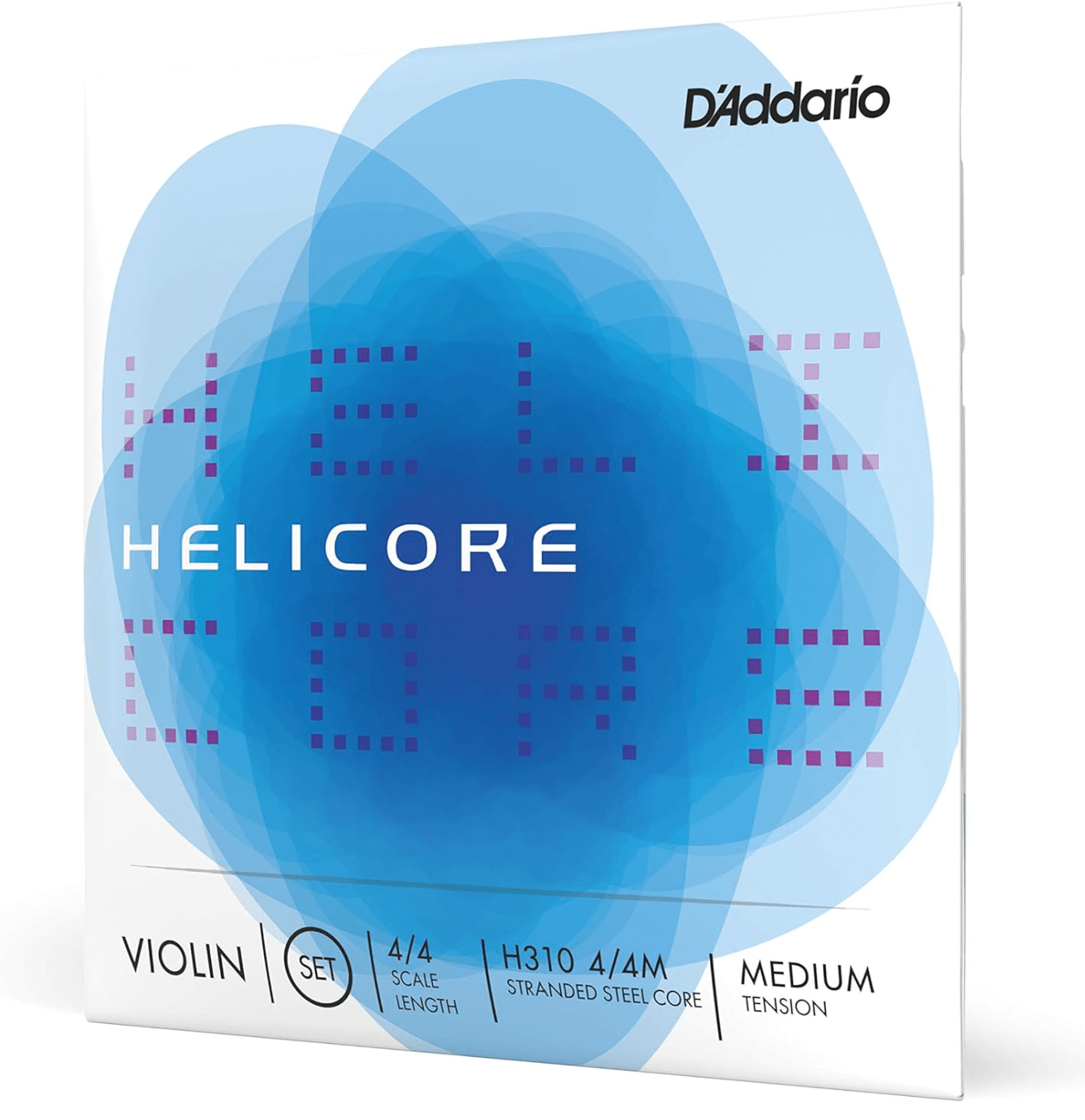
D’Addario Helicore Violin Strings
Best stable steel-core option
A steel-core choice for players who want tuning stability, a brighter response, and a more direct feel.
Simple recommendation: If you are unsure what to choose, start with a comfortable synthetic-core set like D’Addario Ascente. Fiddlerman synthetic strings are a good value option, while Helicore may make sense if tuning stability and a brighter response matter more to you.
For help choosing a set, see our full guide: Best Violin Strings for Adult Beginners. If you are not sure whether it is time to replace your strings, read: Upgrading Your Violin Strings: When It Makes Sense and What to Choose Next .
13. A Notebook or Practice Plan
This one is not really gear, but it can make a big difference.
Beginners often waste practice time because they are not sure what to work on. They play a little of everything, repeat the same mistake, then feel like they are not improving.
A simple notebook can help. Write down what you practiced, what felt better, and what still needs work. You do not need long notes. Even a few words can help you see patterns.
For example:
“Bow sliding toward fingerboard.”
“Second finger too high on D string.”
“Tone better when bow is slower.”
“Shoulder felt tense after 10 minutes.”
Those notes help you practice with more purpose. They also make it easier to notice whether a problem is happening once in a while or showing up every day.
If you want more structure than a notebook, we designed Practical Violinist Studio to help adult beginners and returning players build simple guided practice plans. It can organize warm-ups, bow work, rhythm, technique, and repertoire practice in one place, so you are not guessing what to do next.
What You Can Skip at First
Beginners are often encouraged to buy more than they need, but not every violin accessory matters right away.
You probably do not need a premium bow, expensive strings, multiple rosins, or an upgraded case on day one. Those things can help later, but they will not fix basic setup problems or replace steady practice.
You also do not need every learning aid at once. Simple finger tape can help if you are struggling to find notes, but a full fingerboard sticker is usually unnecessary unless you feel completely lost.
The best beginner gear is gear that removes obstacles. It should help you tune, hold the violin comfortably, care for the instrument, and practice more consistently.
Start simple. Add more only when you know what problem you are trying to solve.
The Simple Starter Kit I’d Recommend for Most Adult Beginners
If you are starting from scratch, this is the setup I would suggest for most adult beginners:
Start with a playable violin outfit, a comfortable shoulder rest, rosin, a sturdy music stand, a tuner or tuning app, a metronome, a soft cleaning cloth, and a small digital hygrometer for the case.
Then add finger tape if you need help finding notes, a practice mute if you need to play more quietly, and a case humidifier only if your hygrometer shows that your case is too dry.
Extra strings are helpful to understand, but you do not need to replace your strings immediately if the ones on your violin are working well. If your strings feel rough, sound dull, or came on a very basic violin, a beginner-friendly upgrade may be worth considering.
That gives you a practical setup without buying things you do not need yet.
The goal is not to own every violin accessory. The goal is to make practice easier, more comfortable, and more consistent.
If your gear helps you pick up the violin more often and practice with less frustration, it is doing its job.
Affiliate Disclosure: Some links in this article may be affiliate links. As an Amazon Associate and participant in other affiliate programs, we may earn from qualifying purchases at no additional cost to you.