
Last Updated: February 2026
Many adult violinists assume discomfort is just part of learning the instrument.
A sore neck. A tight shoulder. Fatigue that shows up long before the end of a practice session.
But in most cases, ongoing discomfort isn’t caused by “playing wrong” or owning the wrong gear. It’s caused by posture habits—especially back, neck, and head positioning—that quietly work against your body over time.
Good posture doesn’t mean sitting rigidly or holding yourself stiff. It means allowing your body to support the violin with as little unnecessary effort as possible, so sound and technique can develop without tension getting in the way.
Why Posture Matters More Than Adults Expect
Posture affects more than comfort. It directly influences:
- Tone stability
- Bow control
- Endurance
- How quickly tension builds during practice
For adult players, posture issues often begin below the violin:
- Slouching or collapsing through the lower back
- Sitting too far back in a chair
- Locking the knees while standing
- Holding the head forward or tilted unnaturally
When the spine and neck aren’t supported naturally, the shoulders and jaw often compensate—leading to pain that feels violin-specific but actually starts with overall alignment.
If pain is already present, it can help to step back and understand how posture and setup interact. For a deeper look at pain-related causes, see How to Play the Violin Without Neck and Shoulder Pain.
The goal isn’t perfect posture. It’s balanced, repeatable posture that feels relaxed.
Comfort Is a System, Not a Single Fix
When discomfort shows up, it’s tempting to look for one solution—a new shoulder rest, a different chin pad, a quick adjustment.
In reality, comfort comes from how posture, setup, and awareness work together.
Shoulder Support
Shoulder rests and pads can help balance the violin and reduce how much your shoulder lifts or grips. Used well, they support the instrument without forcing your body into position.
If you want to explore this further, Shoulder Rests for Adult Violinists: Comfort vs Stability breaks down how different designs affect balance.
Chin and Jaw Support
Chin rests and pads affect how freely your head and neck can rest. Jaw or neck pain often appears when the head is pressing downward or twisting unnaturally to stabilize the violin.
Rather than forcing yourself to adapt, it’s usually better to adjust the support so your head and neck can stay tall and relaxed.
Posture Fixes That Don’t Require Buying Anything
Before changing equipment, it’s worth addressing the habits that create tension in the first place. These adjustments cost nothing—and often make the biggest difference.
Use Micro Checkpoints During Practice
Instead of trying to “hold good posture” the entire time, build in brief posture check-ins:
- Before you start playing
- After tuning
- Once mid-session
Check the whole chain, not just the violin:
- Are you sitting upright or collapsing through the lower back?
- Is your head balanced naturally over your spine?
- Is your neck free, or are you squeezing the violin?
- Are your shoulders heavy and level?
These small moments of awareness often prevent tension from accumulating unnoticed.
Take Timed Breaks That Reset the Body
Adults often practice until discomfort forces them to stop. A better approach is to pause before posture deteriorates.
Setting a short timer—10 to 15 minutes—works well. When it goes off, take a brief reset:
- Adjust how you’re sitting or standing
- Check whether you’ve slouched or leaned
- Re-ground your feet
- Let your shoulders drop
- Allow your head and neck to return to a neutral, easy position
These breaks don’t interrupt progress. They preserve it.
Focus on Release, Not Stretching Routines
You don’t need an exercise program to improve comfort at the violin.
In fact, aggressive stretching can make tension worse. What most players need is release:
- Gentle shoulder rolls
- Letting the arms hang at your sides
- Allowing the neck to lengthen naturally without forcing it
Think of these moments as letting your body reset, not correcting it.
Common Posture Traps Adult Players Fall Into
Many comfort issues come from habits players don’t realize they’ve developed.
Common examples include:
- Leaning the upper body toward the violin
- Collapsing through the lower back while seated
- Lifting the shoulder to “hold” the instrument
- Tilting or pressing the head instead of letting it rest
- Starting practice with good posture, then slouching as fatigue sets in
If shoulder or neck pain keeps returning, it’s often tied to one of these patterns rather than effort or strength. Violin Shoulder Pain for Adult Beginners: Causes and Simple Fixes explores this in more detail.
Use Video to See What You Can’t Feel
One of the most effective—and underused—tools for posture awareness is video.
Setting up your phone to record a short practice session can reveal:
- How you actually sit or stand
- Whether your posture changes as you get tired
- If you start relaxed but end tense or collapsed
You don’t need to analyze every movement. Simply noticing patterns—especially how posture shifts from the beginning to the end of practice—can be eye-opening.
Many players are surprised to discover that discomfort isn’t constant; it builds gradually as posture slips.
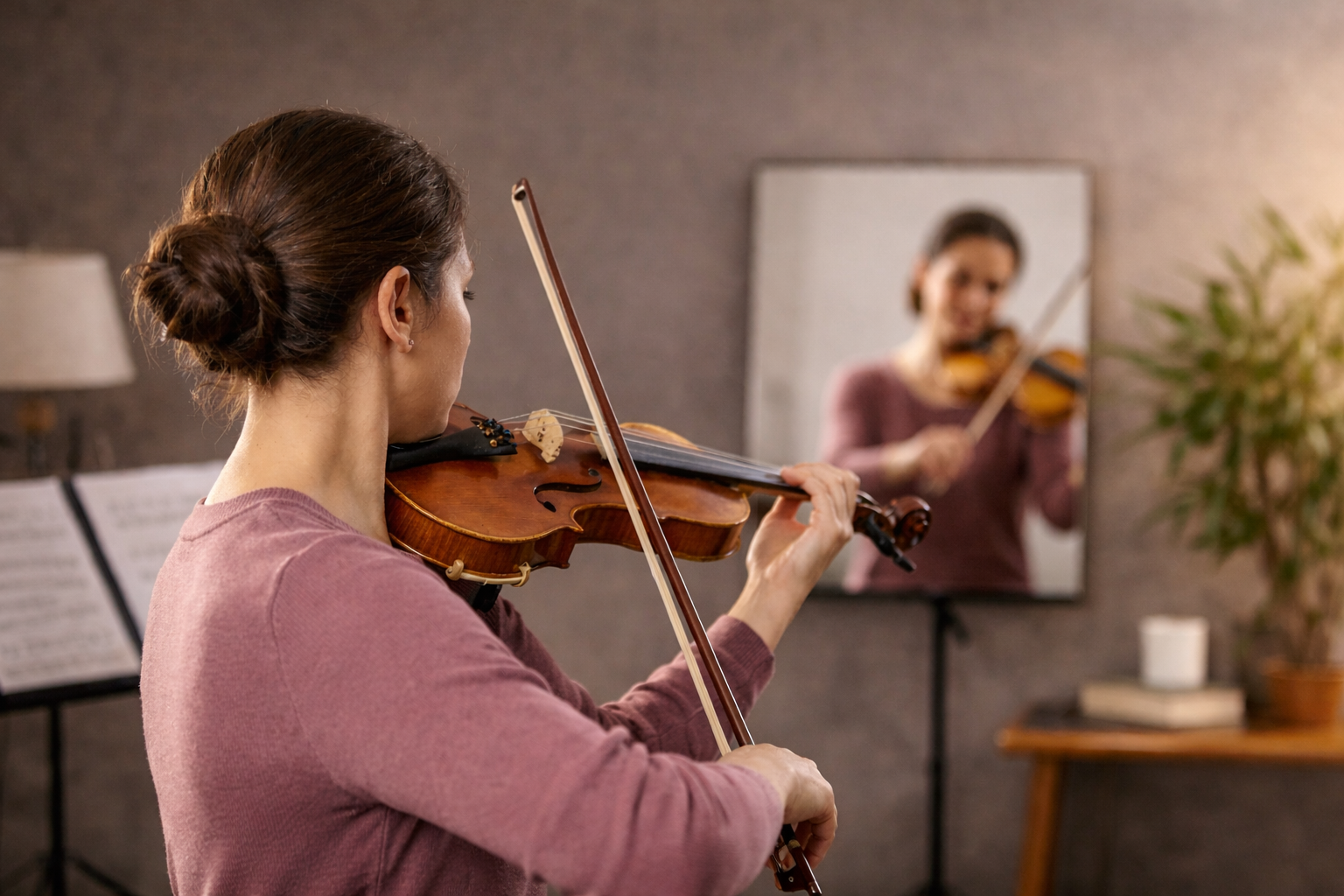
Use a Mirror for Real-Time Posture Feedback
Another simple but powerful tool for posture awareness is a mirror.
Practicing in front of a mirror allows you to see posture changes as they happen—without stopping to review footage later. This can be especially helpful for noticing:
- Slouching or collapsing through the lower back
- Head and neck position as fatigue sets in
- Whether the shoulders rise or twist during difficult passages
- How your posture changes from the start of practice to the end
A mirror works best when you use it briefly and intentionally. You don’t need to watch yourself constantly. Even a few minutes at the beginning or midpoint of practice can reveal habits you may not feel yet.
Many adult players discover that they start with good posture, then gradually lean, squeeze, or collapse as focus shifts to notes and rhythm. Seeing this in real time makes it much easier to reset before tension becomes pain.
If a full-length mirror isn’t available, a wall mirror or mirrored closet door can work just as well. The goal isn’t perfection—it’s awareness.
When Pain Persists: Habits vs Setup
If discomfort doesn’t improve with posture awareness alone, the issue is often a combination of habits and setup.
Jaw and neck pain, in particular, can point to how the chin rest fits—and how much pressure is being used to stabilize the violin. How to Reduce Chin Rest Pain: A Comfort Guide for Adult Violinists walks through this step by step.
The goal isn’t choosing posture or equipment. It’s letting each support the other.
Building Body Awareness Into Daily Practice
One of the hardest parts of improving posture is remembering to notice it consistently.
This is where structure helps.
Practical Violinist Studio supports comfortable playing by building body awareness directly into your daily practice—without turning posture into something you have to constantly think about.
Through short, focused sessions and changing reminders, Studio helps you:
- Notice posture and tension early
- Avoid overplaying on fatigued days
- Reinforce balanced habits over time
It’s not about perfect alignment. It’s about sustainable practice that feels good to return to tomorrow.
Before You Change Your Setup, Ask Yourself…
- Have I checked my overall posture today—not just my violin position?
- Am I slouching or leaning as practice goes on?
- Is my head and neck relaxed, or supporting the violin with tension?
- Did I give my body a chance to reset?
Comfort at the violin usually comes from awareness first—and adjustments second.
Affiliate Disclosure: Some links in this article may be affiliate links. As an Amazon Associate and participant in other affiliate programs, we may earn from qualifying purchases at no additional cost to you.
Leave a Reply