
Last Updated: June 2026
Choosing a violin shoulder rest can feel surprisingly confusing, especially as an adult beginner.
You may see one player recommend a Kun, another swear by an Everest, and someone else say Bonmusica solved all their slipping and tension problems. The hard part is that none of these shoulder rests is automatically “best” for everyone.
The right choice depends on your body, your violin setup, and what problem you are trying to solve.
For most adult beginners, the goal is simple:
You want the violin to feel secure enough that you are not gripping with your jaw, shoulder, or left hand.
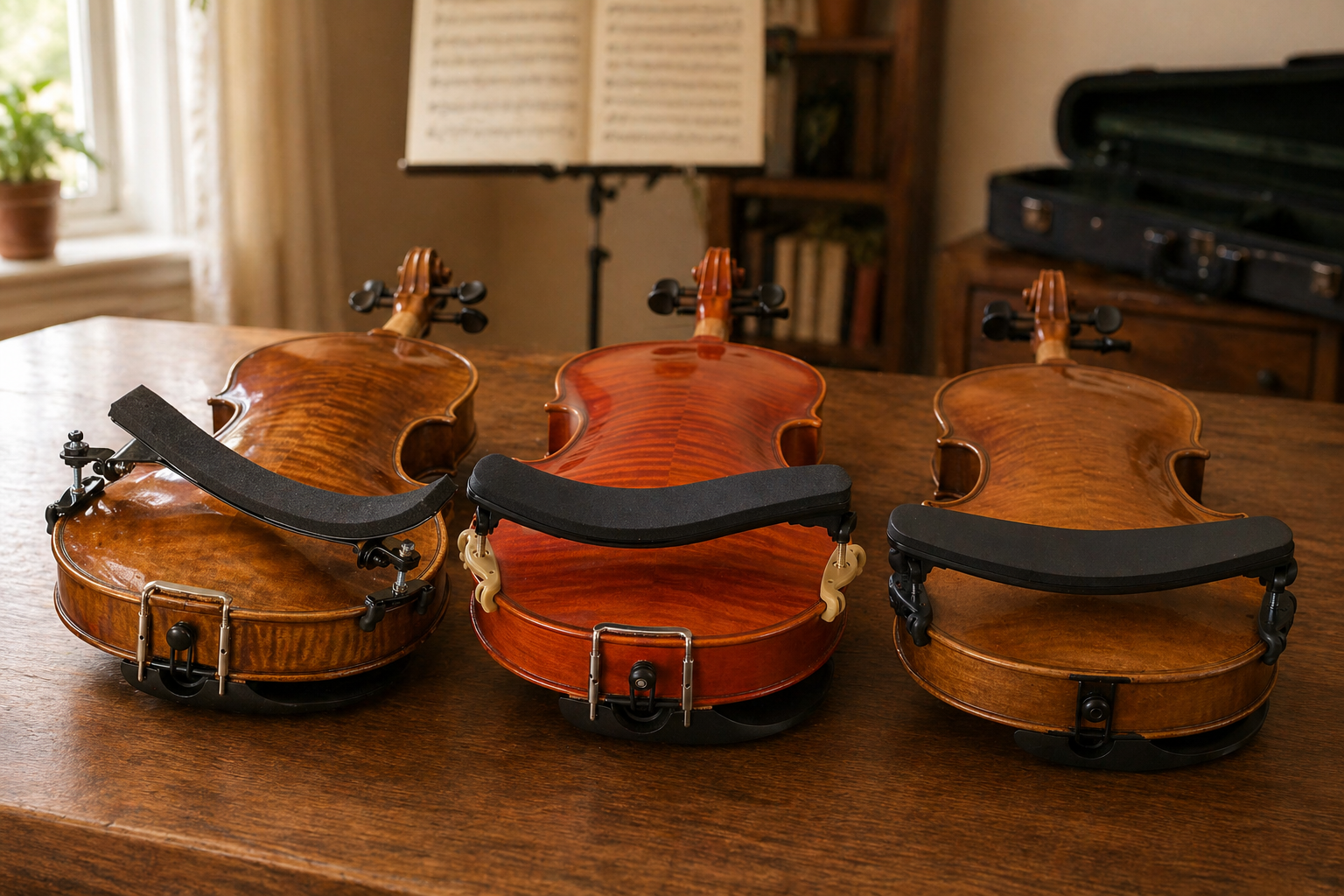
This comparison looks at three of the most common shoulder rest choices for adult violinists:
- Kun
- Everest
- Bonmusica
Each one can work well, but they feel different under the violin.
Quick Recommendation: Which Shoulder Rest Should You Try First?
If you want the simplest starting point, here is the short version:
Kun Original is the safest all-around choice for many adult beginners. It offers a good balance of comfort, adjustability, and stability without feeling too bulky.
Everest EZ is a good budget-friendly option if you want something simple, sturdy, and easy to use.
Bonmusica is best for players who need maximum stability, especially if the violin keeps sliding or you feel like you are constantly fighting to hold the instrument in place.
For many adult players, I would start with Kun or Everest before moving to Bonmusica. Bonmusica can be very helpful, but it has a more shaped, secure feel that not everyone wants right away.
Recommended Shoulder Rests Compared
| Shoulder Rest | Best for | Why adult players choose it |
|---|---|---|

Kun Original View details → |
Best all-around starting point | A balanced, widely used shoulder rest that offers good comfort and stability without feeling overly restrictive. |
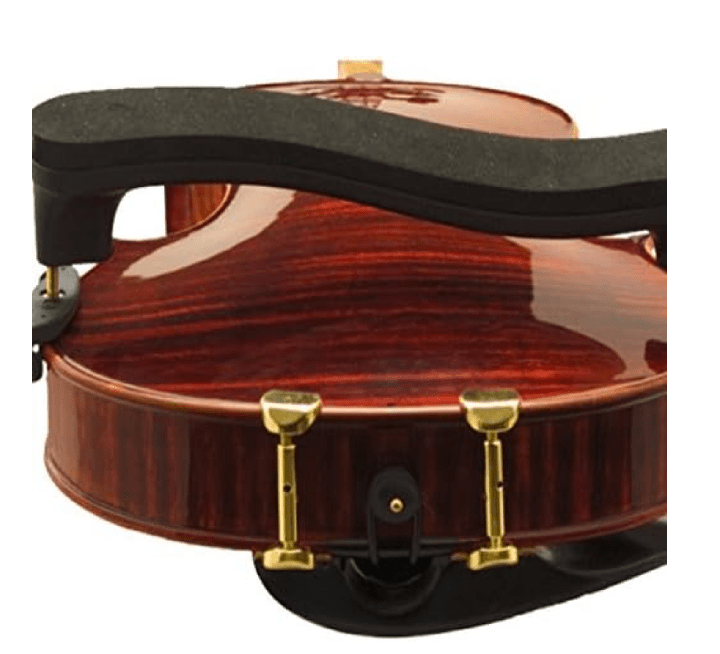
Everest EZ-4A View details → |
Budget-friendly beginner choice | A simple, sturdy option that feels comfortable for many beginners without requiring much adjustment or setup fuss. |

Bonmusica View details → |
Maximum stability | A highly adjustable, secure-feeling shoulder rest for players whose violin tends to slip or feel unstable. |
Why Shoulder Rest Choice Matters for Adult Beginners
A shoulder rest is not just a piece of gear you attach to the violin.
It affects how the instrument sits against your body, how much your head has to drop, how relaxed your left hand feels, and whether the violin stays stable while you play.
For adult beginners, this matters because tension can sneak in quickly. Many adults already carry stiffness from desk work, driving, stress, or general posture habits. If the violin setup does not feel secure, it is easy to compensate by:
- Clamping with the jaw
- Raising the shoulder
- Pressing the violin down with the chin
- Gripping the neck of the violin with the left hand
- Freezing the upper body while trying to play
A shoulder rest should reduce those habits, not create new ones.
If you are still deciding whether you need a shoulder rest at all, start with Do You Really Need a Shoulder Rest for Violin? first. This comparison is more useful once you already know you want to try a full shoulder rest.
The Main Difference Between Kun, Everest, and Bonmusica
The easiest way to understand these three rests is by feel.
Kun feels balanced and familiar. It gives support without forcing a very specific position.
Everest feels simple and stable. It is often a little more molded and straightforward, with less adjustment to think about.
Bonmusica feels secure and shaped. It can almost “hug” the shoulder, which some players love and others find too restrictive.
That difference matters more than the brand name.
The best shoulder rest is not the one with the most features. It is the one that helps your violin feel stable while your neck, shoulder, jaw, and left hand stay relaxed.
Kun Shoulder Rest: Best All-Around Starting Point
The Kun Original is one of the most common shoulder rests for violin, and for good reason. It is adjustable, widely available, and familiar to many teachers and players.
For adult beginners, Kun is often a practical first choice because it does not overcomplicate the setup. It gives enough support to help stabilize the violin, but it usually does not feel as locked-in as a Bonmusica.
Best for:
Adult beginners who want a reliable, balanced shoulder rest that is easy to understand.
Why adult players like it:
Kun offers a good middle ground between comfort and stability. The feet are adjustable, the shape is not extreme, and it works well for many average builds.
It can be especially useful if you are still learning how the violin should rest on your body and do not yet know whether you need a very high, curved, or specialized setup.
Possible downside:
Kun may not be stable enough for every player. If your violin slides a lot, or if you have a longer neck or sloped shoulders, you may feel like you still need more support.
That does not mean Kun is bad. It just means your body may need a different shape or more adjustability.
Everest Shoulder Rest: Best Budget-Friendly Beginner Option
The Everest EZ-4A is another popular shoulder rest, especially for beginners and students. It is simple, sturdy, and usually affordable.
Compared with Kun, Everest often feels a little more molded and direct. Some players find it very comfortable right away because there is not much to adjust or figure out.
Best for:
Adult beginners who want a simple, affordable shoulder rest that feels stable without much fuss.
Why adult players like it:
Everest is easy to use. You put it on the violin, make basic adjustments, and start playing. For many beginners, that simplicity is a benefit.
It can be a good fit if you do not want to spend a lot while you are still figuring out your setup.
Everest also tends to feel secure enough for many adult beginners who are struggling with a sliding violin, especially if the issue is mild to moderate.
Possible downside:
Everest is not as customizable as some other rests. If you need a very specific height, curve, or angle, it may not give you enough flexibility.
For many beginners, that is not a problem. But if you are dealing with ongoing neck discomfort, jaw pressure, or violin slipping, you may eventually want something with more adjustment.
Bonmusica Shoulder Rest: Best for Maximum Stability
The BonMusica shoulder rest is different from Kun and Everest because it is more adjustable and more shaped around the shoulder.
Many players notice the difference immediately. Instead of simply sitting between the violin and shoulder, Bonmusica can be shaped to create a more secure, “held” feeling.
For some adult violinists, this is exactly what they need.
Best for:
Adult players whose violin slips, who feel insecure holding the instrument, or who need a more customized fit.
Why adult players like it:
Bonmusica can provide a strong sense of stability. If you constantly feel like the violin is sliding away, this can reduce the urge to clamp down with your jaw or grip with your left hand.
It may also help players with sloped shoulders, longer necks, or body shapes that do not match flatter shoulder rests well.
The extra adjustability is the main advantage. You can shape the rest more specifically to your body than you can with many simpler models.
Possible downside:
Bonmusica can feel bulky or restrictive. Some players love the secure feeling, while others feel like it locks them into one position.
For a brand-new beginner, Bonmusica may be more shoulder rest than you need at first. But if you have already tried simpler rests and still feel unstable, it is worth considering.
Kun vs Everest vs Bonmusica: Which One Feels Most Comfortable?
Comfort depends on the player, but here is a practical way to think about it.
Kun usually feels like the most balanced option. It gives support without being too aggressive.
Everest often feels simple and comfortable right away, especially for beginners who want something lightweight and straightforward.
Bonmusica feels the most secure, but not always the most free. It may feel wonderful if you struggle with slipping, but too controlling if you prefer a lighter setup.
For most adult beginners, comfort does not mean “softest.” It means you can play without clenching, lifting the shoulder, or constantly adjusting the violin.
A shoulder rest is comfortable when it helps you forget about holding the violin and focus on playing.
Which Shoulder Rest Is Best for Neck Pain?
No shoulder rest can automatically fix neck pain. Neck discomfort can come from several things, including chin rest height, shoulder tension, posture, and the habit of clamping down to hold the violin.
That said, the right shoulder rest can help reduce one common cause of neck pain: feeling like you have to squeeze the violin in place.
If your neck pain comes from instability, Bonmusica may help because it gives the most secure feeling.
If your neck pain comes from too much height or a forced posture, Kun or Everest may be better because they are simpler and less restrictive.
If you are dealing with ongoing discomfort, also read How to Play the Violin Without Neck and Shoulder Pain and How to Find the Right Chin Rest Height for Violin. The shoulder rest and chin rest work together, so changing only one piece may not solve the whole problem.
Which Shoulder Rest Is Best If Your Violin Slides?
If your violin slides a little, start with Kun or Everest.
If your violin slides a lot, Bonmusica may be the better option.
A sliding violin often causes adult beginners to compensate by gripping with the left hand or pressing harder with the jaw. That can make playing feel tense and tiring.
Before assuming you need the most secure shoulder rest, check a few basics:
- Is the shoulder rest attached firmly?
- Are the feet gripping the violin safely?
- Is the violin sitting too far forward or too far down?
- Are you raising your shoulder to meet the violin?
- Is your chin rest helping or making the angle worse?
If the violin still feels unstable after basic setup checks, Bonmusica is worth trying.
For a fuller setup discussion, see How to Stop a Violin from Sliding on Your Shoulder here.
Which Shoulder Rest Is Best for a Long Neck?
Players with longer necks often need more support, but that does not always mean choosing the tallest shoulder rest.
A long neck may require a combination of:
- Shoulder rest height
- Chin rest height
- Violin angle
- Better balance between head, shoulder, and instrument
Kun can work for some long-necked players, especially with careful adjustment.
Everest may work if the player only needs moderate support.
Bonmusica may be helpful if the player needs both height and a more secure shape.
However, if you have a long neck and still feel like you are dropping your head heavily onto the violin, the chin rest may be part of the problem. This is a good place to internally link to How to Find the Right Chin Rest Height for Violin.
Which Shoulder Rest Is Best for Adult Beginners?
For most adult beginners, I would narrow it down this way:
Choose Kun Original if you want the safest all-around starting point.
Choose Everest EZ-4A if you want a simple, affordable rest that is easy to use.
Choose Bonmusica if you already know stability is your biggest problem.
The mistake many beginners make is trying to solve every setup issue with one piece of gear. A shoulder rest can help, but it cannot replace relaxed posture, a suitable chin rest, and good playing habits.
Start with the simplest option that solves your actual problem.
What About Wolf, Kun Bravo, or Other Shoulder Rests?
Kun, Everest, and Bonmusica are not the only good shoulder rests.
Other popular options include:
Wolf Forte Primo or Secondo
These are useful for players who want more adjustability, especially with height and angle.
Kun Bravo
This is a more premium Kun option that may appeal to consistent players who already like the Kun feel but want an upgrade.
Mach One
This has a lighter, more natural feel that some players prefer.
Pirastro KorfkerRest
This is a premium shoulder rest that may appeal to advanced or highly committed players, but it is probably more than most beginners need.
Common Mistakes When Choosing a Shoulder Rest
Choosing the tallest rest automatically
More height is not always better. Too much height can push the violin into an awkward angle and make your neck feel boxed in.
Ignoring the chin rest
The chin rest and shoulder rest work together. If the chin rest is uncomfortable or too low for your body, changing the shoulder rest may only partly help.
Expecting the shoulder rest to hold the violin by itself
A shoulder rest should support the violin, not clamp it to your body. You still need balance, relaxed posture, and a natural playing position.
Keeping a rest that makes you tense
If a shoulder rest makes you raise your shoulder, tighten your jaw, or lock your head in place, it is not helping.
Buying the most advanced-looking option first
Adult beginners usually do better starting simple. A more adjustable shoulder rest can help later, but too many variables can also make setup more confusing.
Simple At-Home Fit Test
Once you try a shoulder rest, do this quick check before deciding whether it works.
Place the violin on your shoulder in playing position and ask:
Does the violin feel supported without squeezing?
Your jaw should not be clamping down. Your shoulder should not be lifting. Your left hand should not feel responsible for holding the violin up.
Next, gently bring your left hand to the violin neck.
Can your left thumb stay relaxed?
If your thumb immediately grips the neck, the violin may not feel stable enough.
Then check your head and neck.
Can your head rest naturally without dropping heavily?
You should not feel like you are forcing your head down to reach the chin rest.
Finally, play for a few minutes.
Does your setup still feel comfortable after actual playing?
Some rests feel fine for ten seconds but become irritating once you start bowing, shifting, or reading music.
Best Overall Choice
For most adult beginners, the Kun Original is the best first shoulder rest to try.
It is adjustable enough to be useful, simple enough for beginners, and balanced enough to work for many body types.
If budget matters most, the Everest EZ-4A is a strong beginner-friendly choice.
If stability is your biggest issue, especially if the violin keeps sliding, the Bonmusica may be the better fit.
There is no perfect shoulder rest for everyone. The best choice is the one that helps you hold the violin securely while staying relaxed.
Final Thoughts
Choosing between Kun, Everest, and Bon Musica is really about choosing the kind of support your body needs.
Kun is the balanced starting point. Everest is the simple budget-friendly option. Bon Musica is the more secure choice for players who struggle with slipping or instability.
If you are an adult beginner, start with the option that solves your clearest problem. The right shoulder rest should make practice feel easier, not more complicated.
Once your violin feels stable, you can focus less on holding the instrument and more on building a calm, consistent practice routine.
Affiliate Disclosure: Some links in this article may be affiliate links. As an Amazon Associate and participant in other affiliate programs, we may earn from qualifying purchases at no additional cost to you.
Leave a Reply