
Last Updated: January 2026
Neck and shoulder pain is one of the most common reasons adult violinists struggle to practice consistently. Even players who love the instrument may cut sessions short — or stop altogether — because of discomfort.
The good news is that pain is not normal and not something you have to push through. In most cases, it comes from posture, tension, or setup issues that can be corrected.
This article walks through practical steps to help you play more comfortably and reduce strain while practicing.
Why Violin Pain Is So Common for Adults
Adult beginners bring habits from daily life into their playing:
- Tight shoulders from desk work
- Forward head posture
- General tension from stress
When combined with holding the violin, these habits can quickly lead to soreness or pain.
Poor posture often interferes with efficient practice, making progress slower and more frustrating than it needs to be.
Pain is usually a signal — not a requirement of progress.
Check Your Head and Neck Position
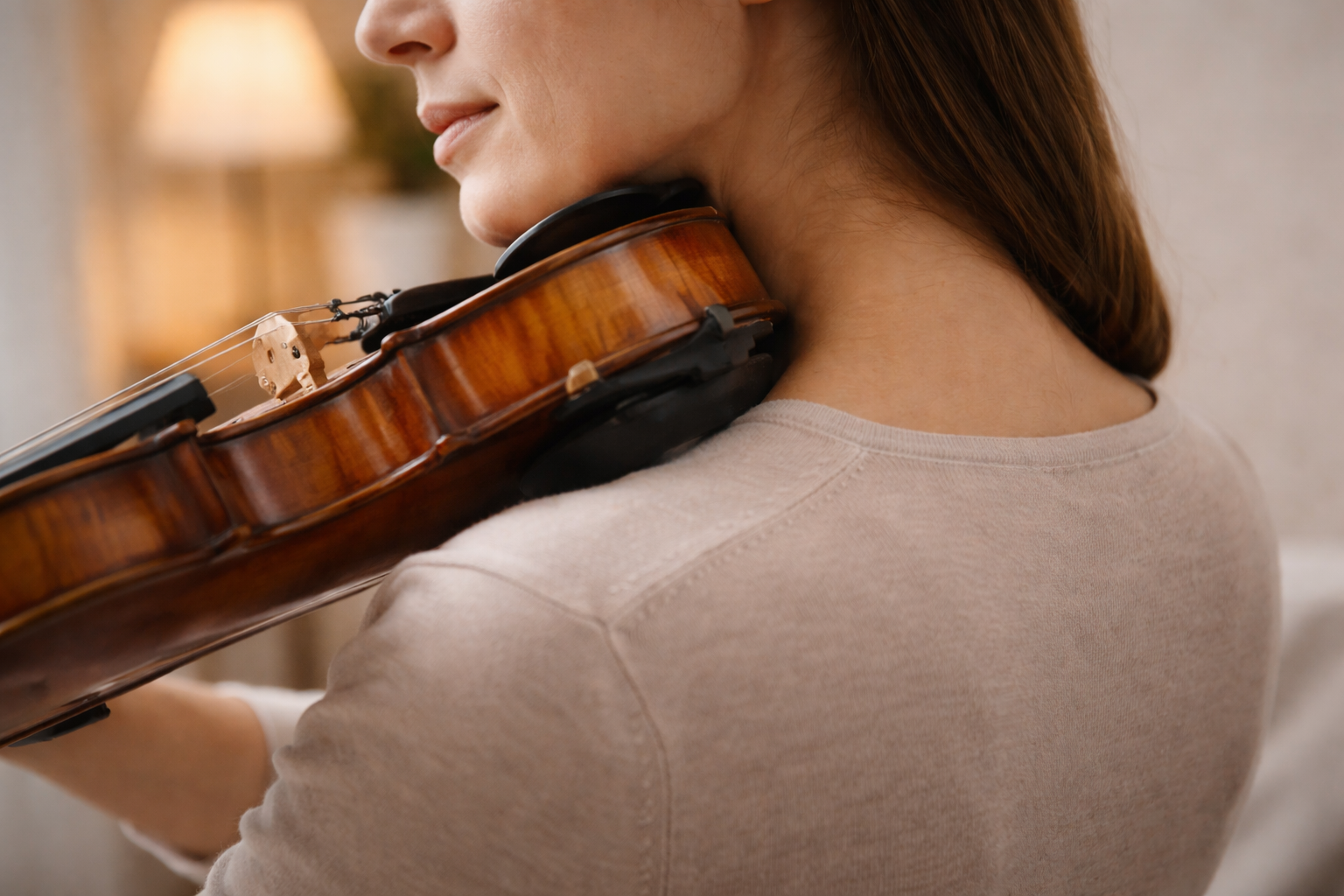
One of the biggest mistakes adult players make is pressing the head down onto the violin.
Instead:
- Let the violin rest between the jaw and shoulder naturally
- Keep the neck long, not tilted sharply
- Avoid clamping with your jaw
Your head should rest on the instrument, not grip it.
If you feel pressure building in your neck, pause and reset.
If discomfort feels concentrated more under your jaw than in your neck or shoulders, this guide on how to reduce chin rest pain explains how chin rest fit and pressure often contribute to the problem.
Relax the Left Shoulder
Raising the left shoulder to “meet” the violin creates tension fast.
Try this:
- Let the shoulder drop naturally
- Bring the violin to you using setup, not muscle
- Check in periodically during practice
If your shoulder is creeping upward, stop and reset before continuing.
Use the Right Amount of Support
Many comfort issues come from poor setup rather than poor posture.
Pay attention to:
- Whether the violin feels secure without squeezing
- Whether your head can stay relaxed
- Whether your shoulders feel even
If you feel like you’re constantly holding the violin up with effort, your setup likely needs adjustment.
For some players, a simple shoulder rest cushion provides enough support to reduce tension without locking the body into a rigid position.
Poor instrument setup can force your body to compensate in ways that create unnecessary strain.
Take Micro-Breaks During Practice
Adult bodies benefit from frequent resets.
Every few minutes:
- Drop your arms
- Roll your shoulders gently
- Take a breath
Short breaks prevent tension from building unnoticed.
A short daily routine makes it easier to stay aware of posture without letting tension build up.
Practice in Front of a Mirror (Occasionally)
A mirror can reveal posture habits you may not feel while playing:
- Head tilting
- Shoulder lifting
- Leaning or twisting
You don’t need a mirror every day — just often enough to stay aware.
When Discomfort Is a Warning Sign
Stop and reassess if you experience:
- Sharp pain
- Tingling or numbness
- Pain that worsens during practice
Mild soreness can happen early on, but ongoing pain should always be addressed.
Final Thoughts
Playing the violin should challenge your coordination — not hurt your body.
Comfortable posture allows you to:
- Practice longer
- Improve technique more efficiently
- Enjoy the instrument without dread
Small adjustments make a big difference over time.
Affiliate Disclosure: Some links in this article may be affiliate links. As an Amazon Associate and participant in other affiliate programs, we may earn from qualifying purchases at no additional cost to you.
Leave a Reply