
Last Updated: March 2026
Many adult violinists wonder whether a shoulder rest is truly necessary — or whether it’s something they can skip altogether.
The answer isn’t universal. Some players benefit greatly from a shoulder rest, while others play more comfortably with minimal or no added support. What matters most is understanding why a shoulder rest might help, and when it actually causes more problems than it solves.
This article will help you decide whether a shoulder rest makes sense for your body and playing style.
What a Shoulder Rest Is (and What It Isn’t)
A shoulder rest is designed to:
- Help stabilize the violin
- Reduce the need to grip with the left hand or jaw
- Improve comfort during longer practice sessions
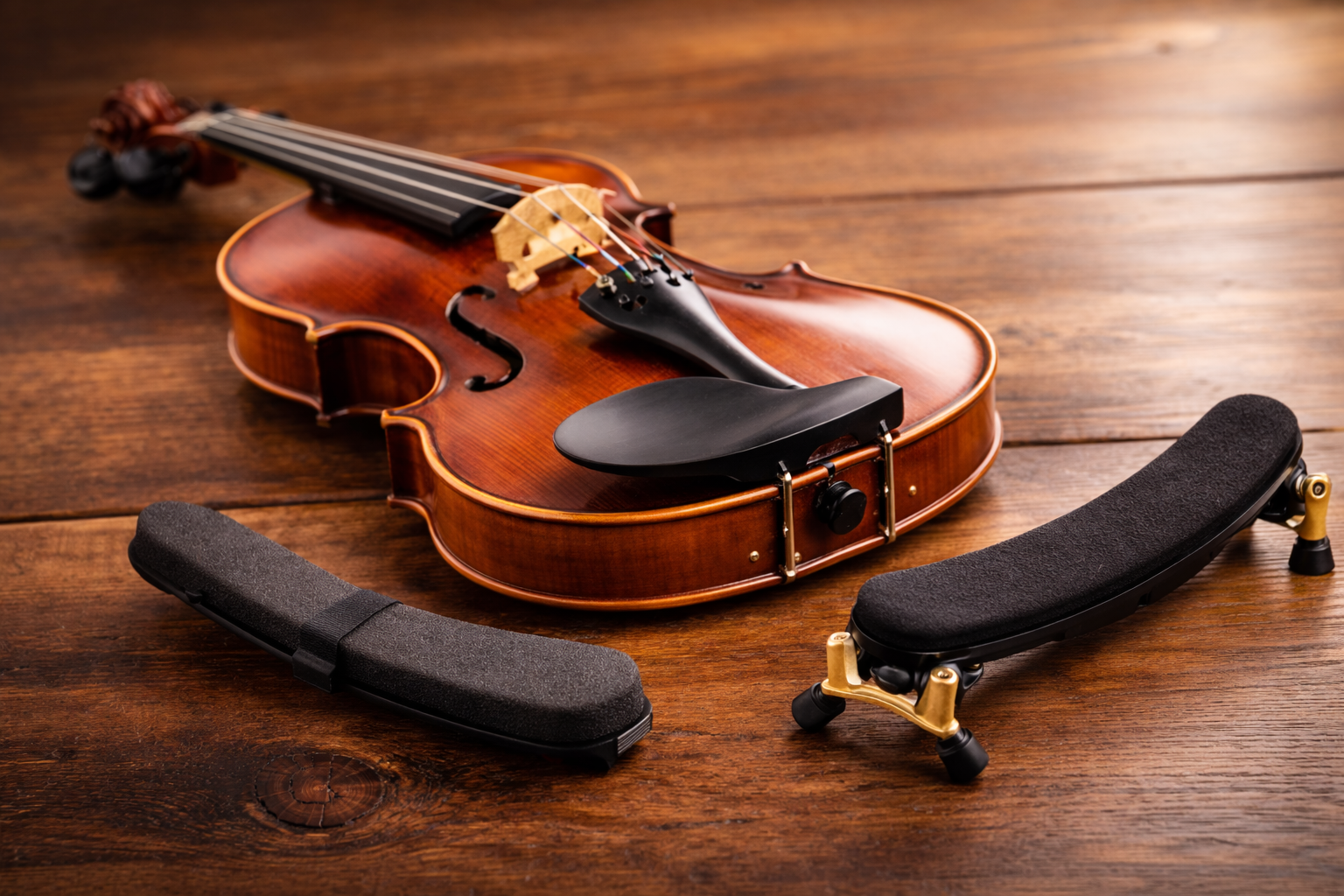
For many adult beginners, a popular adjustable shoulder rest like the Kun Original helps the violin sit more securely on the shoulder, reducing unnecessary tension while learning proper posture.
It is not meant to:
- Lock your posture into one rigid position
- Replace relaxed balance between head, shoulder, and instrument
- Force the violin into a height or angle that feels unnatural
Used well, a shoulder rest can support good posture. Used poorly, it can increase tension.
When a Shoulder Rest Often Helps
You may benefit from a shoulder rest if:
- Your violin slips without extra support
- You feel pressure in your jaw or neck trying to hold the instrument
- Your left hand feels tense or overworked
- You practice seated or for longer sessions
In these situations, a simple, budget-friendly shoulder rest like the Everest EZ is often enough to improve comfort and stability without overcomplicating your setup.
For many adult beginners, a small amount of added support reduces strain and makes practice more enjoyable.
When a Shoulder Rest May Not Be Necessary
Some players are comfortable without a shoulder rest, especially if:
- Their neck and shoulder naturally fit the violin’s shape
- They play for shorter sessions
- They feel more freedom of movement without added equipment
Even among players who prefer a minimalist setup, a low-profile option like the Wolf Forte Secondo can provide light support without feeling intrusive.
There is no requirement to use a shoulder rest if your setup feels secure and pain-free.
Cushion vs. Full Shoulder Rest: What’s the Difference?
Shoulder Rest Cushions
- Soft foam or padded supports
- Minimal structure
- Easy to experiment with
- Often preferred by players seeking comfort without rigidity
Cushions are a good starting point for adult players who want relief without committing to a full rest.
Cushion-style supports, such as a cushion-style option like the Playonair Deluxe, provide light padding and flexibility, appealing to players who want minimal contact with the instrument.
Full Shoulder Rests
- Adjustable frames with feet
- More stable and consistent support
- Helpful for longer sessions or specific body types
These work well once you understand your comfort needs, but they can feel restrictive if chosen too early.
In contrast, full shoulder rests like the Kun Original offer a simple, adjustable design, while contoured options such as the Bon Musica allow for a more personalized fit depending on body shape and comfort preferences.
Common Shoulder Rest Mistakes
Avoid:
- Choosing the tallest rest by default
- Over-tightening adjustments
- Ignoring neck and chin rest interaction
- Assuming discomfort is “normal”
If a rest increases tension, it’s not the right setup.
Most shoulder rest problems aren’t actually caused by the rest itself.
They come from small adjustments, posture habits, and how you’re holding tension while you play.
That’s why changing equipment sometimes helps — but the problem keeps coming back.
If you’ve been going in circles with setup and comfort, what usually helps is a clear, step-by-step way to approach your practice so small issues don’t turn into bigger ones.
How to Decide What’s Right for You
Ask yourself:
- Does the violin feel secure without squeezing?
- Can my head rest comfortably without pressure?
- Do my shoulders stay relaxed during practice?
If the answer is no, some form of support may help — starting simple is usually best.
Final Thoughts
A shoulder rest is a tool, not a requirement.
The goal is comfort, balance, and freedom of movement — not forcing your body into a textbook position. Many adult violinists find that experimenting gradually leads to the best results.
Start with comfort. Add structure only if needed.
Comfort issues aren’t always caused by setup alone — environmental factors and equipment choices both play a role.
Affiliate Disclosure: Some links in this article may be affiliate links. As an Amazon Associate and participant in other affiliate programs, we may earn from qualifying purchases at no additional cost to you.
Leave a Reply