
Last Updated: October 2026
If you’re learning violin as an adult, you’ve probably spent more time thinking about the instrument and its strings than the bow that came with it. But the bow has a major influence on how easily you produce sound, control dynamics, and move between notes.
Many beginner violin outfits include an inexpensive bow that is perfectly adequate for getting started. As your playing improves, however, you may begin noticing differences in how bows respond. Some feel comfortable and predictable, while others require more effort to produce the sound you want.
Upgrading your violin bow can be worthwhile, but not every bowing problem means you need a new one. Sometimes the issue is worn bow hair, incorrect tension, or a technique adjustment you haven’t quite mastered.
Here’s how to recognize when an upgrade makes sense, what improvements you might notice, and how to choose a bow that’s worth the investment.
What Can a Better Violin Bow Actually Improve?
Two bows can weigh almost the same and still feel surprisingly different when you play them. Much of that difference comes from how the weight is distributed, the flexibility of the stick, and how the bow responds to changes in speed and pressure.
A well-made bow that suits your playing may offer several advantages:
- Cleaner note beginnings. The bow responds more predictably when you start a stroke, without requiring excessive pressure.
- More consistent tone. It may be easier to maintain an even sound from frog to tip.
- Better control of dynamics. Playing softly or increasing volume can feel more manageable.
- Easier bow changes and articulation. The bow responds naturally as you change direction or play shorter, more separated notes.
- Improved playing comfort. A bow with suitable balance may require fewer unnecessary corrections from your hand and arm.
These improvements aren’t guaranteed simply because a bow costs more. A good student bow can perform very well, while a more expensive bow may feel uncomfortable or respond poorly with your particular violin.
The important question is whether a different bow allows you to play more comfortably and consistently than your current one.
Signs It May Be Time to Upgrade Your Violin Bow
There isn’t a specific number of months or years after which you should replace your first bow. Your playing experience and the condition of the bow matter much more.
Your Bow Feels Difficult to Balance
If your bow consistently feels awkward near the frog or tip, you may be struggling with its balance.
Most full-size violin bows weigh approximately 60 grams, but the number alone doesn’t tell you how a bow will feel. A bow with more weight toward the tip can feel quite different from one with a balance point closer to your hand.
As your technique develops, you may discover that another bow makes long strokes and changes of direction easier to manage.
You’re Developing More Advanced Bow Control
When you’re first learning, much of your attention goes toward holding the bow comfortably and producing a steady sound.
As you progress, you begin working on more precise articulation, dynamic changes, and different bow strokes. At that point, you may notice limitations that weren’t apparent when you started.
A more responsive bow can sometimes make these techniques easier to develop, particularly if your original bow has poor balance or inconsistent flexibility.
Another Bow Clearly Feels and Sounds Better
This is one of the strongest reasons to consider upgrading.
If you try a properly maintained bow at a violin shop or during a lesson and find that you can produce a steadier tone, control soft playing more easily, or make cleaner bow changes, that difference is worth investigating.
A noticeable improvement when playing the same music on the same violin is more meaningful than the price or brand of the bow.
Before purchasing, try to determine whether the improvement remains consistent across several different exercises rather than just one passage.
Before Buying a New Bow, Check These Things First
It’s easy to assume that an older or inexpensive bow has reached its limit when the problem may be something relatively simple.
Check the Bow Hair
Bow hair gradually wears out, and it can become contaminated with oils or accumulate excessive rosin. As the hair deteriorates, the bow may have difficulty gripping the strings consistently.
If your bow has become slippery, sounds weak, or requires increasing pressure to produce a clear tone, check whether the hair needs attention.
A professional rehair may restore the performance of an otherwise good bow.
Our guide to Violin Bow Hair: Types, When to Rehair, and When to Replace the Bow explains how to recognize worn hair and when replacement makes more sense than maintenance.
Make Sure the Hair Tension Is Correct
A bow that is too loose or excessively tightened can feel difficult to control.
The hair needs enough tension to maintain appropriate clearance from the stick during normal playing, while the stick retains its intended flexibility.
If you’re uncertain about the adjustment, see How Tight Should a Violin Bow Be? A Simple Guide for Beginners.
Also check whether the tightening screw operates smoothly. If the bow won’t tighten properly, has visible damage, or the stick appears twisted, have a violin shop inspect it before continuing to use it.
Consider Whether Technique Is the Real Issue
Scratchy tone, unwanted bouncing, and inconsistent bow changes can result from bow speed, pressure, contact point, and hand tension.
These problems don’t automatically indicate a poor-quality bow.
If your sound is consistently rough, our article Why Your Violin Sounds Scratchy (And How to Fix It) covers the adjustments worth trying before spending money on new equipment.
A teacher can also help you separate technique problems from equipment limitations.
What Type of Violin Bow Should You Upgrade To?
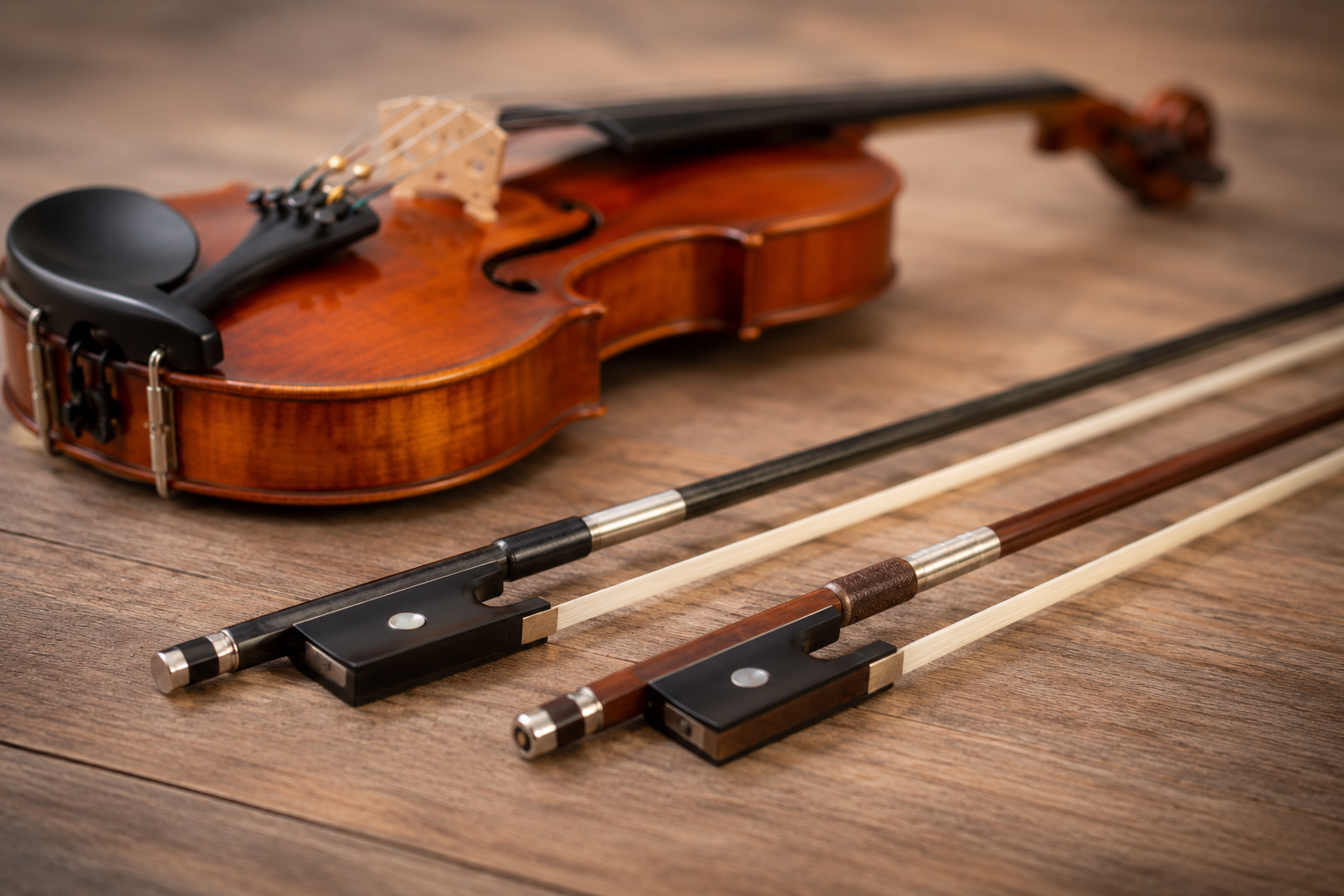
For adult beginners and intermediate players, the most common choices are carbon fiber, brazilwood, and pernambuco bows.
Each material has advantages, but construction quality and how the bow feels in your hand matter more than the material by itself.
Carbon Fiber Bows: A Practical First Upgrade
A well-made carbon fiber bow is an excellent option for many adult players, particularly those moving beyond the basic bow included with a beginner outfit.
Carbon fiber bows are generally durable and less sensitive to humidity changes than wooden bows. They’re available at several price levels, and good models can offer consistent balance and response.
They’re worth considering if you:
- Want a dependable bow for regular practice.
- Prefer a relatively durable, low-maintenance stick.
- Are upgrading on a modest budget.
- Plan to purchase online from a reputable seller with a return policy.
However, not all carbon fiber bows perform equally well. Very inexpensive models can have poor balance or feel excessively stiff, just as inexpensive wooden bows can.
Brazilwood and Pernambuco Bows: Traditional Wooden Options
Brazilwood is a broad trade term used for several woods found in more affordable wooden bows. Quality varies considerably, and a well-made brazilwood bow can be a perfectly good choice for a developing player.
Pernambuco is traditionally associated with higher-quality wooden bows. It has long been valued by bow makers for its mechanical properties, although the quality and responsiveness of individual bows vary.
Some players prefer the feel and tonal response of a particular wooden bow, while others find a carbon fiber model more comfortable.
If you’re considering wood, trying several bows in person is especially helpful.
For a closer comparison, see Pernambuco vs Carbon Fiber Violin Bows: Which Should You Choose?.
How Much Should You Spend on a Violin Bow Upgrade?
You don’t need to spend hundreds of dollars simply because you’re becoming more serious about learning violin.
The following approximate ranges can help you establish a budget.
| Price range | What to expect |
|---|---|
| $60–$120 | Budget-friendly bows that may offer an improvement over a very basic outfit bow |
| $120–$300 | A wider selection of student and developing-player bows, including well-made carbon fiber options |
| $300–$500 | More choices for players seeking a particular balance, response, or level of refinement |
| Above $500 | Higher-end carbon fiber and wooden bows, where individual preferences and careful comparison become increasingly important |
These are general shopping ranges rather than guarantees of quality. A bow costing $250 won’t necessarily play better than one costing $120, and prices vary by manufacturer and retailer.
For many adult beginners, a well-chosen bow in the $100–$300 range is a reasonable place to begin looking, provided it represents a genuine improvement over what they already own.
If your current bow performs well, there’s no reason to replace it simply to reach a particular price category.
How to Test a Violin Bow Before Buying
If possible, visit a violin shop that allows you to compare several bows using your own violin.
You don’t need advanced technique to recognize useful differences. Play familiar music and listen to how each bow responds.
Try these simple tests:
- Play a few long, open-string strokes. Notice how easily you can maintain a smooth, even sound from frog to tip.
- Try short, separate notes in the middle of the bow. Does the bow respond cleanly, or does it feel difficult to start and stop?
- Experiment with soft and louder playing. See whether you can change the volume without the sound becoming unexpectedly rough or thin.
- Play a familiar passage with string crossings. Pay attention to how comfortably the bow moves between strings.
- Return to your original bow. Switching back helps you decide whether the new bow genuinely feels better or simply feels different.
Try to use similarly maintained and rosined bows during the comparison. If possible, have a teacher or experienced violinist listen as well.
Don’t judge a bow by one impressive note or by how expensive it feels. The best choice is the one that performs reliably across the music and techniques you actually play.
Consider an In-Home Bow Trial
If you don’t have a violin shop nearby, some manufacturers and retailers offer in-home bow trials, allowing you to compare several bows on your own violin before making a purchase.
For example, CodaBow offers an in-home trial program for its carbon fiber bows. Fiddlershop also offers in-home trials on qualifying bows, providing another way to compare different options without visiting a store.
An in-home trial gives you the opportunity to evaluate bows over several practice sessions rather than making a decision after just a few minutes in a shop. You can compare their balance, tone, and responsiveness using music you already know, and you may be able to ask your teacher to help evaluate them.
Check the current trial fees, eligibility requirements, return deadlines, and damage policies before ordering, since terms vary between companies.
Should You Upgrade Your Bow or Violin Strings First?
Both strings and bows affect your sound, but they address different issues.
If your strings are old, worn, or no longer producing a consistent tone, replacing them may be the more sensible first step.
If your strings are in good condition but the bow feels poorly balanced, difficult to control, or noticeably less responsive than other bows you’ve tried, a bow upgrade may be more worthwhile.
Sometimes neither purchase is necessary. A properly adjusted instrument, fresh bow hair, and improved technique can make a considerable difference.
Our guide to Upgrading Your Violin Strings: When It Makes Sense (And What to Choose Next) can help you evaluate that decision separately.
Which Violin Bows Are Worth Considering?
Once you’ve established that an upgrade would be useful, the next step is finding specific bows that fit your budget and playing level.
We’ve put together a separate guide to the Best Violin Bows for Adult Beginners and Intermediates (Smooth Tone & Control).
It compares several carbon fiber bows across different price ranges, including affordable first upgrades and more refined options for advancing players.
That guide is a good starting point for narrowing your choices before trying a bow or making a purchase.
Final Thoughts
A violin bow can last for many years, and there’s no set point in your progress when you must upgrade.
If your current bow feels comfortable, produces a reliable sound, and responds well to the techniques you’re learning, continuing to use it is perfectly reasonable.
If you’ve addressed maintenance and technique concerns but consistently play better with another bow, upgrading may be a worthwhile investment.
Choose a bow for the improvement you can actually hear and feel, rather than its material, price, or the assumption that an advancing player automatically needs more expensive equipment.
Affiliate Disclosure: Some links in this article may be affiliate links. As an Amazon Associate and participant in other affiliate programs, we may earn from qualifying purchases at no additional cost to you.
Leave a Reply