
violin maintenance
-
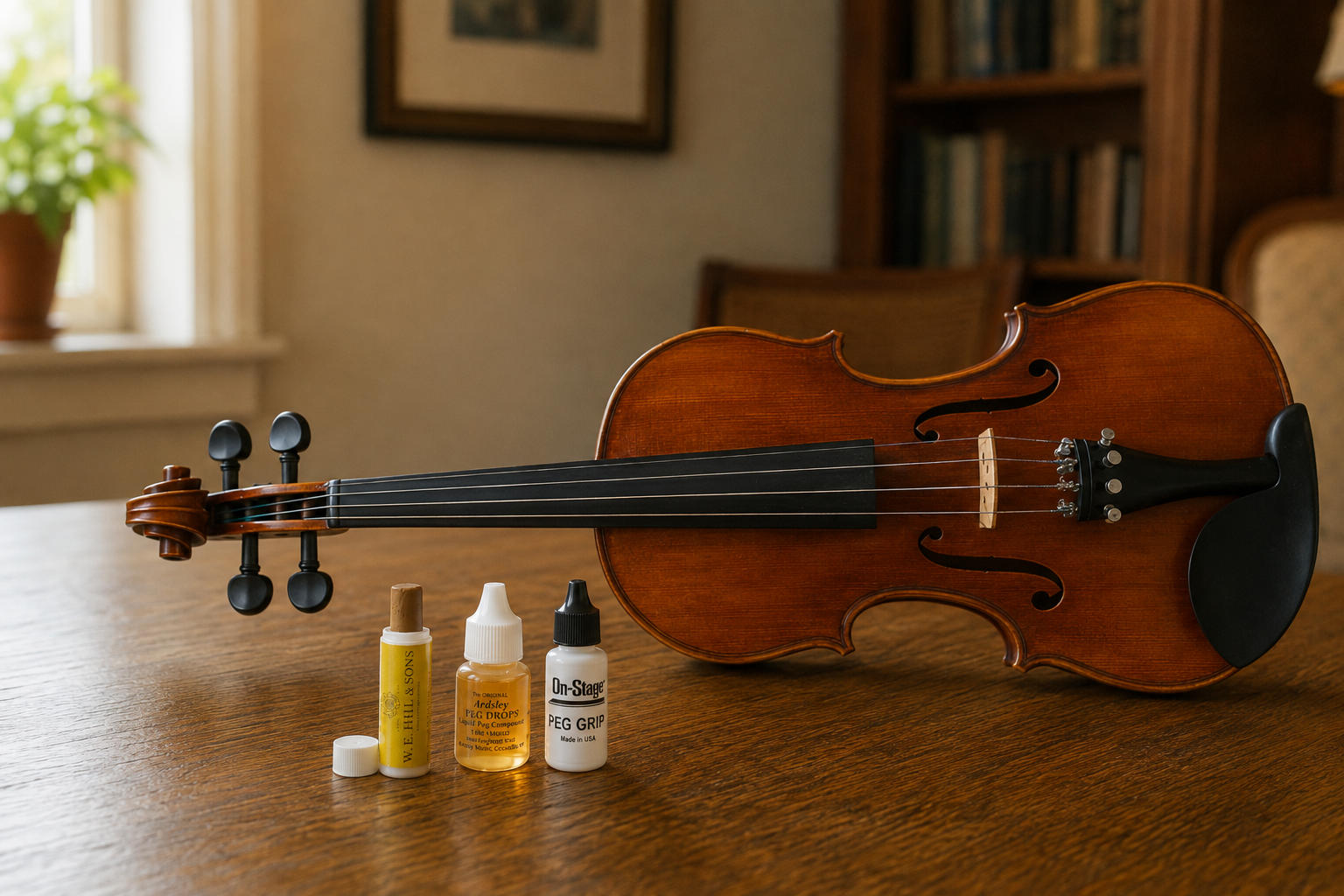
Violin Peg Compound and Peg Drops: The Simple Fix for Slipping, Sticking, and Squeaking Pegs
Slipping, sticking, or squeaking violin pegs can often be fixed without a trip to the repair shop. Learn how peg compound and peg drops work, which products are worth trying, and when geared pegs may be a better option.
-

Why Your Violin Neck Feels Sticky When Shifting
If your violin neck feels tacky or grabby under your thumb during shifts, here’s what’s actually causing it, the daily habit that prevents most of it, and how to clean it safely without damaging the varnish.
-

Why Is My Violin Bridge Leaning? How to Check It Before It Warps
Learn why a violin bridge starts leaning, how to check the bridge angle safely, when you can gently correct it, and when a luthier should take a look before the bridge warps.
-
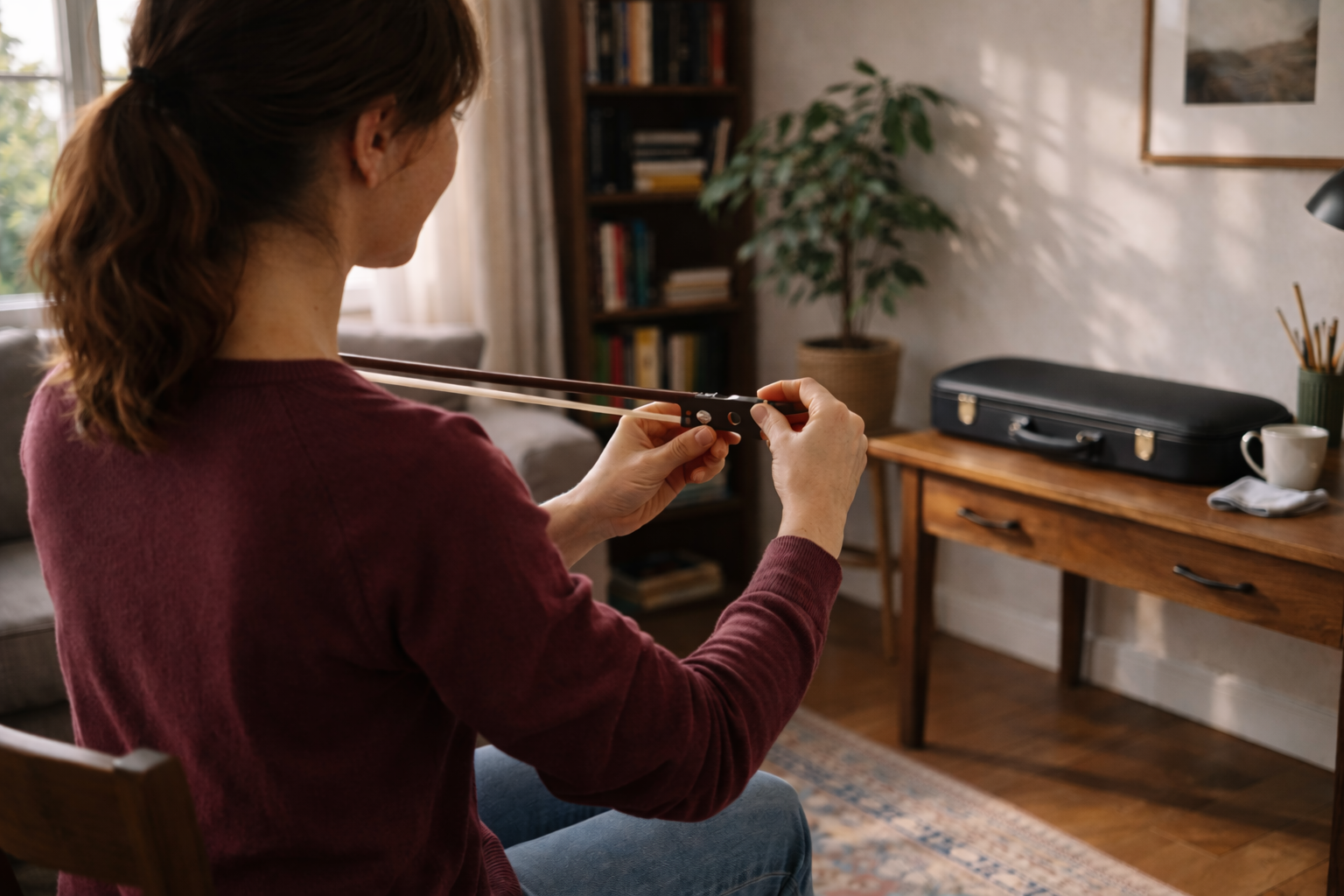
Should You Loosen Your Violin Bow After Playing? (And What Happens If You Don’t)
Should you loosen your violin bow after playing? Leaving it tight can lead to wear, reduced control, and long-term damage. Learn the simple habit that keeps your bow responsive and your sound consistent.
-
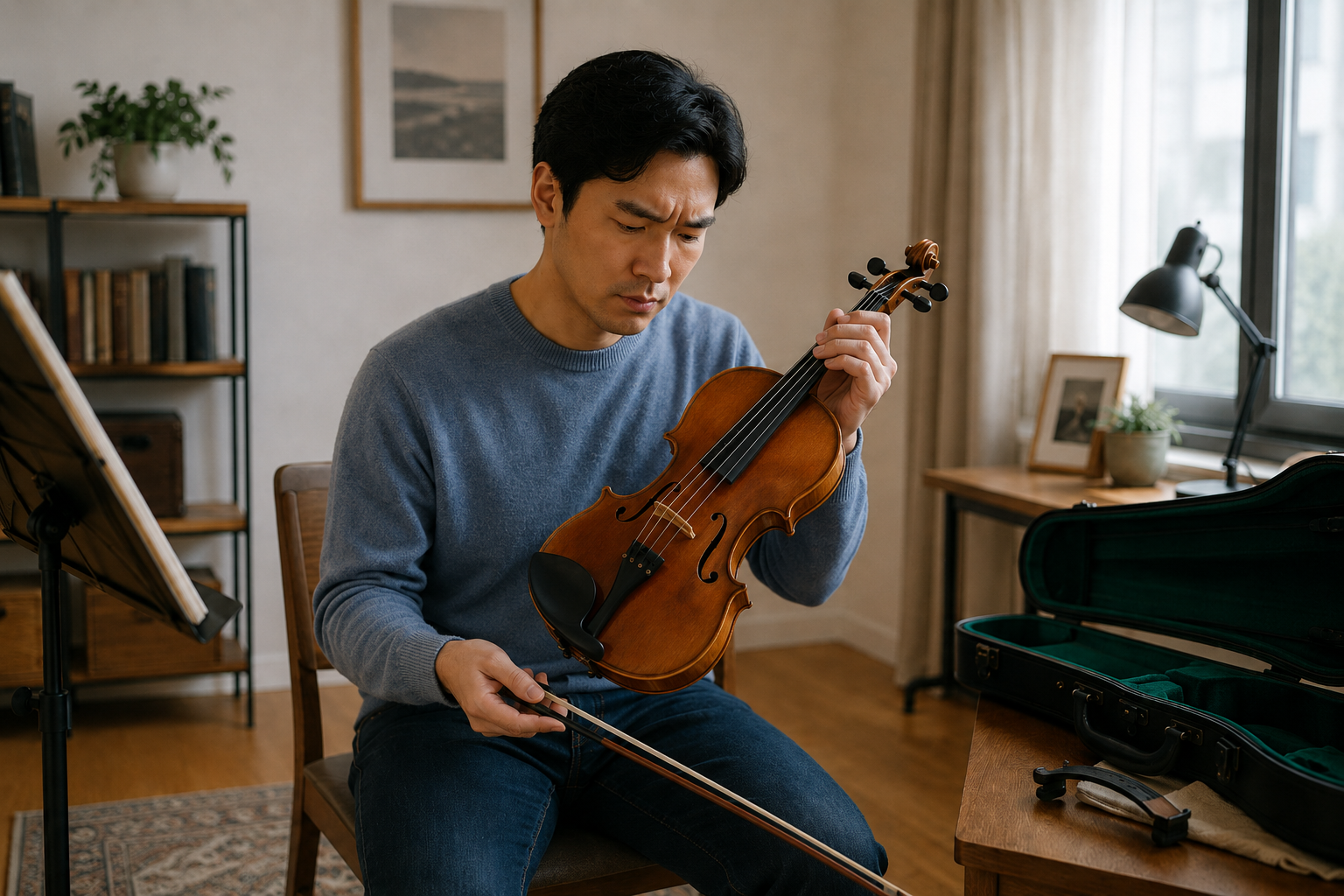
Why Is My Violin Buzzing or Rattling? Simple Checks Before You Visit a Luthier
Is your violin buzzing or rattling when you play? Learn the most common causes, simple checks you can do safely at home, what not to adjust yourself, and when it’s time to visit a luthier.
-

Do Violin Strings Stretch? (And Why New Strings Won’t Stay in Tune at First)
Do violin strings stretch? If your new strings won’t stay in tune, this guide explains why it happens, how long it lasts, and what to expect so you can play with confidence.
-

How to Clean a Violin Safely Without Damaging the Finish or Strings
Learn how to clean a violin safely without damaging the finish or spreading rosin buildup. This simple guide covers what to clean, what to avoid, and how to maintain your instrument with minimal effort.
-
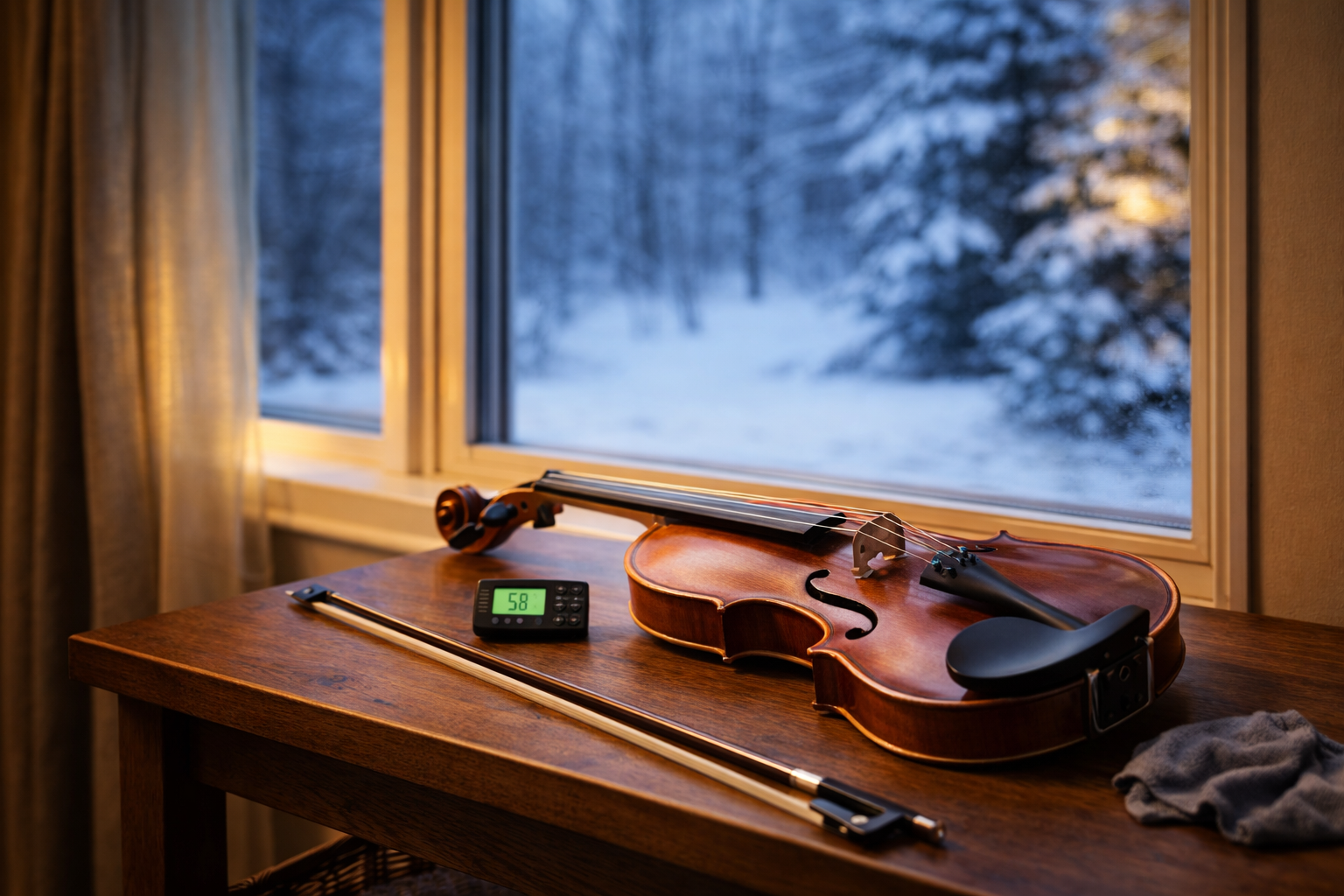
How Temperature Affects Violin Tuning (And What to Do About It)
Temperature changes can make your violin go out of tune—but it’s not just the strings. Learn what’s really happening, how to stabilize tuning, and how to prevent issues caused by cold, heat, and humidity.
-

Signs Your Violin Needs a Luthier (What You Can Fix Yourself)
Not sure if your violin needs a luthier? Learn the key signs of setup and structural issues, what you can safely fix yourself, and when it’s time to get professional help.
-

How Often Should You Replace Violin Rosin (Signs, Tests & Timeline)
Quick checks to know if your rosin cake still works, realistic replacement ranges by use level, and simple cleaning and application tips to protect your tone.
-

Why Do My Violin Strings Go Out of Tune Quickly (And How to Fix It)
If your violin strings keep slipping after tuning, this article walks you through quick checks, safe at‑home fixes, expected timelines by string type, and clear signs you should see a luthier.
-

How to Stop a Violin from Sliding on Your Shoulder (Quick Fixes & Setup Checks)
If your violin keeps slipping on your shoulder, start with three quick checks you can do in minutes, then follow the ordered fixes below: clothing, simple pads, shoulder‑rest micro‑adjustments, and short posture drills.