
Last Updated: March 2026
If your bow suddenly sounds thin, slides on the string, or starts producing extra dust, your rosin may not be doing its job anymore. Rosin is what gives the bow hair enough grip to catch and release the string cleanly.
This guide shows quick tests to check your rosin cake, how to apply it without overdoing it, realistic replacement ranges, and simple cleaning habits that protect your tone.
Short answer
Replace a rosin cake when its surface becomes dirty, gritty, crumbly, or stops transferring grip to the bow hair. For most adult hobby players, that’s roughly every 6–12 months. Casual players may get a year or more, while heavier daily players may replace every 3–6 months.
Quick check
If your sound suddenly feels off, start simple. Add a few light strokes of rosin and test again. If the bow still slides, you likely needed more grip.
If the sound turns scratchy or you see dust building on the strings, wipe the strings clean and test again before adding more.
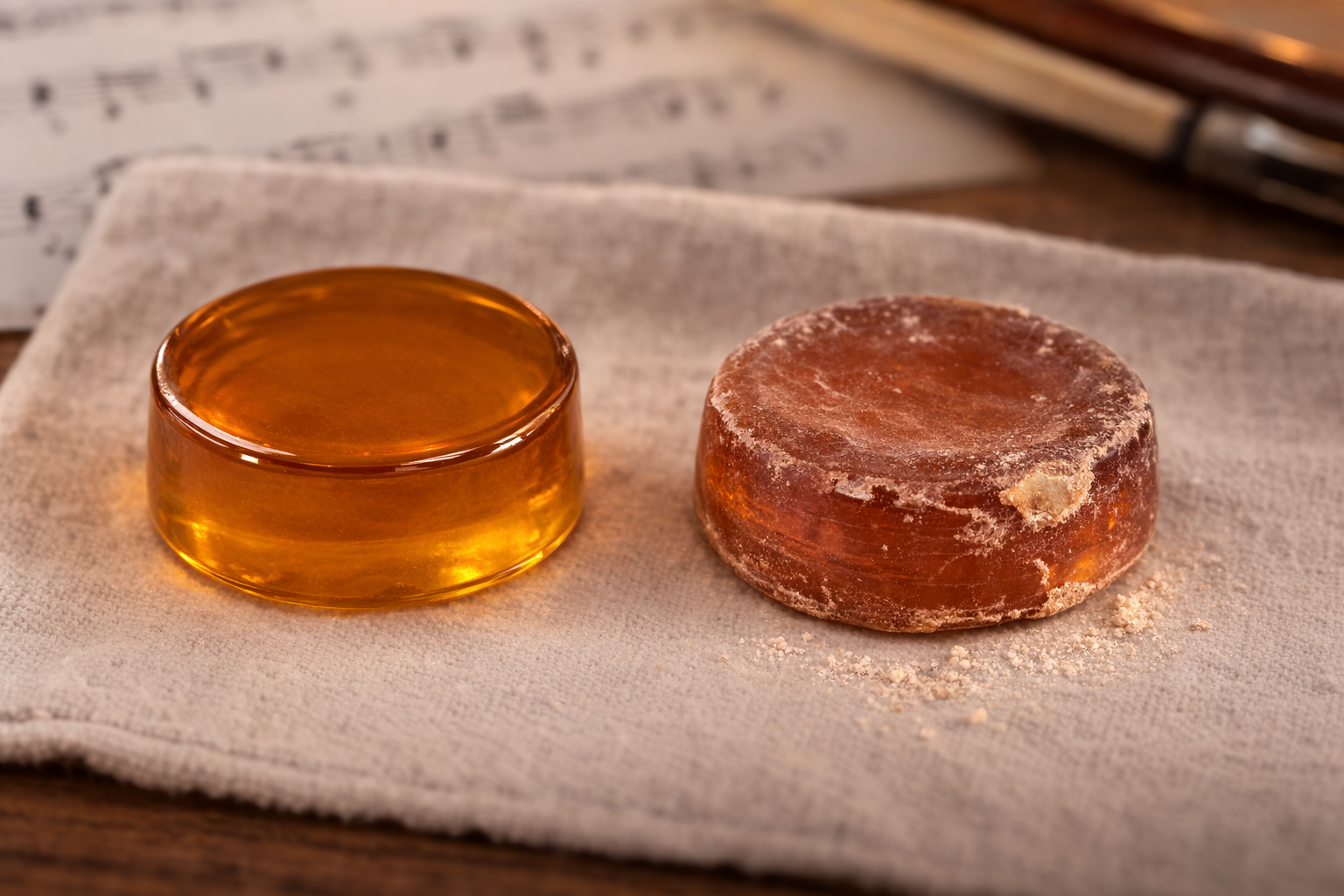
If neither helps, take a quick look at the rosin cake itself. A gritty, glazed, or crumbly surface is usually a sign it’s time to replace it.
Simple tests to confirm the problem
You can quickly confirm what’s going on with a few simple checks while you play.
Start with an open-string test. Play a slow, steady bow stroke near the middle between the bridge and fingerboard. If the bow slides and the tone feels thin, you likely need more rosin. If the sound turns scratchy instead, buildup on the strings or a contaminated rosin cake is more likely.
You can also do a quick dust check. Lightly brush a few hairs across a clean white tissue (without snagging the hair). A small amount of dust is normal. Thick residue, colored streaks, or gritty particles usually point to contamination.
Finally, take a look at the rosin itself. A shallow groove from normal use is fine, but embedded grit, crumbly sections, or a glassy surface that won’t transfer tack are strong signs it’s time to replace it.
How to apply rosin without overdoing it
Start light, test sound, then add only what you need. Too much rosin causes dust, scratchiness, and extra cleanup.
- Set up: Tighten the bow to normal playing tension. Hold the cake steady. Use gentle, even strokes from frog to tip and back. Rotate the cake a little each time so you don’t dig a deep groove. Avoid pressing.
- Typical stroke ranges: Softer rosins usually need fewer strokes (around 3–6), while harder rosins may need a bit more (6–10).
- What “enough” feels like: The bow grips cleanly at the start of the note without a burst of dust on the strings. If the bow still slides, add 1–2 more light strokes and retest.
- After a rehair or brand‑new cake: Prime the hair with more strokes the first time (often 20–30 gentle passes), then return to the light ranges above for regular use.
Replacement timeline: what’s realistic
There’s no fixed expiration date. How long rosin lasts depends on how often you play, the type of rosin, and your environment.
Casual players may use one cake for a year or more. If you practice several times a week, expect something closer to 6–12 months. Daily or heavy playing can shorten that to 3–6 months.
More important than time is condition—if the surface becomes contaminated or stops improving your sound, it’s time to replace it.
Clear signs it’s time to replace
A healthy rosin cake should transfer clean grip without excess dust or noise. If you notice visible grit, large crumbly pieces, or a hard, glassy surface that won’t grab the bow, it’s usually no longer usable.
Persistent dust buildup, unusual smell, or discoloration are also signs the cake has been contaminated and should be replaced.
Cleaning and maintenance to extend rosin life and protect tone
- After each session: Wipe strings (and the top of the fingerboard under the strings) with a soft, dry microfiber cloth to remove loose rosin dust.
- If strings feel sticky: Use a string‑safe cleaner or a slightly dampened cloth on the string only, then dry immediately. Keep moisture and any cleaner away from the varnish. When in doubt, follow the string maker’s instructions or ask a luthier.
- Instrument surfaces: Use a clean, dry soft cloth. For heavy dust or grime, consult a luthier or use a violin‑safe cleaner. Never use household solvents on varnish.
- Rosin storage: Keep the cake in a small box, pouch, or zip‑top bag to protect it from dust and skin oils. Store in a cool, dry place away from direct sun and hot cars.
- Minor surface debris: If a few specks sit on top, you can gently wipe the surface with a clean paper towel. Do not use metal tools. If contamination is more than superficial, it’s safer to replace the cake.
Choosing rosin: soft vs hard and when to switch
The type of rosin you use should match your environment and how you like the bow to feel.
- Soft rosin: Transfers easily, grips quickly, but can leave more dust and be used up faster. Often helpful in cold/dry conditions.
- Hard rosin: Needs more strokes to build grip, leaves less dust, and often lasts longer. Often a better match in warm/humid conditions.
- Still not happy? If you constantly need heavy reapplication or hear persistent scratchiness after cleaning, try a small sample of a different hardness (some brands also offer low‑dust synthetic blends) before assuming your cake is “bad.”
If you’re not sure which type or brand to try, a few well-tested options can make this much easier.
→ Best Violin Rosin for Adult Beginners
When replacing the cake won’t help — what to check next
If a fresh rosin cake doesn’t improve your sound, the issue is usually somewhere else.
Start by cleaning the strings and testing again. Buildup on the strings is one of the most common causes of dull or scratchy tone, and it often gets mistaken for a rosin problem.
Next, take a look at the bow hair. If it looks uneven, feels gummy, or doesn’t respond consistently across the ribbon, it may be time for a rehair rather than more rosin.
This is where a lot of players get stuck—not because the fixes are complicated, but because small inconsistencies in bow control and daily playing habits start to add up.
A clear, structured practice routine makes those issues much easier to spot and correct over time. If you want help building that kind of consistency, you can try a guided practice plan.
If the problem continues, it’s worth stepping back and checking fundamentals. Bow speed, pressure, and contact point all affect how the string responds. If needed, a teacher can quickly spot these issues, and a luthier can check setup problems like strings, bridge, or soundpost.
Common mistakes to avoid
A lot of rosin problems come from small habits that are easy to fix once you notice them.
One of the most common is over-rosining. Adding more doesn’t improve grip—it usually just creates extra dust and a rougher sound. It’s better to apply lightly and adjust as needed.
Another mistake is assuming the cake needs replacing too often. You can use the same rosin for months as long as the surface is clean and it’s still working well.
String cleaning is often overlooked. Buildup on the strings can make the sound dull or scratchy, which leads players to keep adding more rosin—making the problem worse.
Finally, avoid exposing your rosin to heat or dirt. Leaving it in a hot car or open case can soften it and introduce contamination, which shortens its usable life.
FAQ
How long does violin rosin last?
It depends on use and care. Casual players may use a cake for a year or more; regular hobbyists often replace it every 6–12 months; daily heavy players may replace every 3–6 months. Replace sooner if the cake is contaminated or performance declines.
Can rosin go bad?
Rosin doesn’t “expire” quickly, but it can become contaminated, crumbly, or glazed. Any of these reduce performance and are good reasons to replace the cake.
Should I change rosin type if tone is scratchy?
Clean the strings and check your application first. If scratchiness continues, try a small sample of a different hardness. Technique (bow speed/pressure/contact point) is often the bigger factor.
Can I sand a glazed rosin cake to revive it?
It’s safer for beginners to replace the cake. Light scuffing with very fine, clean sandpaper can work, but you risk embedding grit or creating uneven dust. Replacement avoids that risk.
Where to learn more
For tone problems related to buildup or bow grip, see Why Your Violin Sounds Scratchy (And How to Fix It). For safe string handling and step‑by‑step string changes, see How to Change Violin Strings. If you suspect your strings are past their best, read How Often Should You Change Violin Strings (Adult Players).
Final reassurance
You don’t need a rigid replacement schedule. Use the quick checks above, keep your strings wiped, apply rosin lightly, and replace the cake when it shows contamination or no longer adds clean grip. A small, steady routine keeps your tone clear and your practice time productive.
Leave a Reply