
Last Updated: April 2026
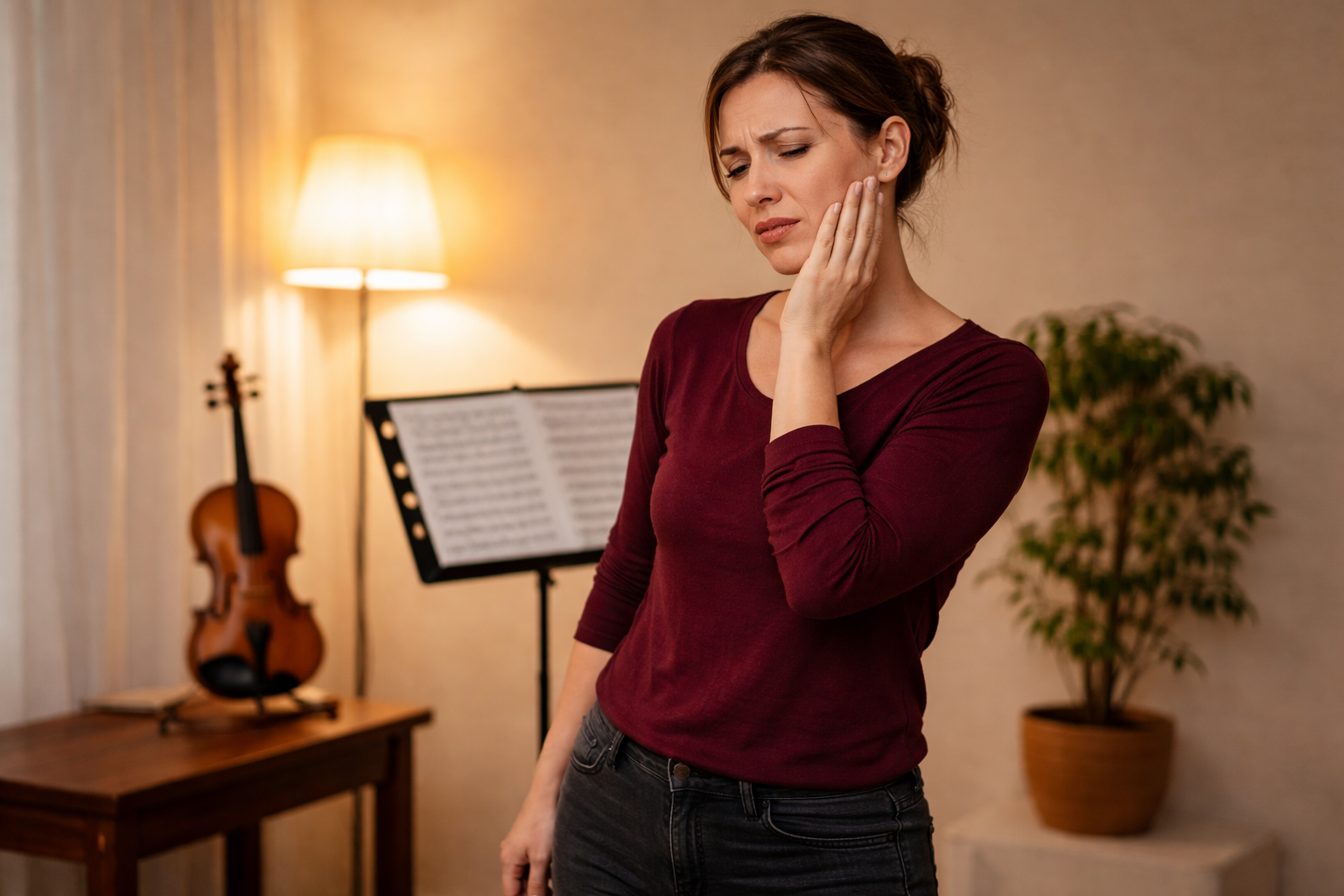
If your jaw hurts while playing the violin, you’re not alone — and it’s usually not because you’re doing something wrong.
In most cases, jaw pain comes from a small mismatch in setup, balance, or tension, not a major technique problem.
The goal isn’t to treat the pain directly. It’s to figure out what’s causing it, so you can fix the right thing instead of guessing.
Start Here: Quick Self-Check
Before changing anything, take a moment to notice:
- Does the pain start immediately or after 10–15 minutes?
- Is it pressure (aching in one spot) or tension (tightness or clenching)?
- Does it go away as soon as you stop playing?
- Is it in one exact spot or more spread out?
These quick observations will point you toward the most likely cause.
The 5 Most Common Causes of Violin Jaw Pain
Most players fall into one of these categories. Find the one that matches you.
1. You’re Pressing Down with the Jaw (Clamping)
Signs:
- Jaw feels tight or fatigued quickly
- Teeth touch or clench while playing
- Pain shows up even in short sessions
What’s happening:
The jaw is doing more work than it should to hold the violin in place.
What to do next:
This is usually a balance or posture issue.
→ Read: How to Play the Violin Without Neck and Shoulder Pain
2. Chin Rest Shape or Height Doesn’t Fit You
Signs:
- Pain in one exact spot
- Feels like pressure or soreness, not tension
- Irritation where your jaw touches the rest
What’s happening:
The contact point may not match your jaw shape or height, creating pressure.
What to do next:
This is a fit issue, not a technique issue.
→ Read: How to Reduce Chin Rest Pain
→ Read: Best Violin Chin Rests for Adult Players
3. Shoulder Rest Setup Is Forcing Jaw Pressure
Signs:
- The violin only feels stable when you press down
- Pain increases during shifting or bowing
- The instrument feels unstable or like it’s slipping
What’s happening:
If the violin isn’t balanced well, the jaw compensates by gripping.
What to do next:
This points to a setup issue rather than a jaw problem.
4. Head Tilt and Alignment Are Off
Signs:
- Jaw and neck both feel strained
- You noticeably tilt or twist your head
- Discomfort builds gradually during playing
What’s happening:
The angle of your head is increasing pressure on the jaw.
What to do next:
This connects to overall posture and alignment.
→ Read: How to Play the Violin Without Neck and Shoulder Pain
5. General Playing Tension (Not Setup-Related)
Signs:
- Pain gets worse during difficult passages
- Comes and goes depending on focus or stress
- You notice tension in other areas too
What’s happening:
Tension from playing is transferring into the jaw.
What to do next:
This is a tension and awareness issue, not equipment.
What Your Jaw Pain Is Actually Telling You
Jaw pain is usually a compensation signal.
- Your jaw is working harder than it should
- Something else isn’t supporting the violin properly
- Your body is overcompensating for instability or tension
The jaw’s role is to rest lightly, not to grip or hold.
If it feels like it’s doing real work, something else needs adjustment.
Quick Tests to Narrow the Cause
These are not fixes — they’re simple ways to identify what’s going on.
- Loosen the jaw slightly
Let your teeth separate and notice whether the discomfort changes - Reset your hold
Take the violin off, place it back gently, and see if the pain returns immediately or builds over time - Use your left hand briefly for support
Notice whether reducing jaw pressure changes the sensation - Change your clothing surface
Try a less slippery shirt and see whether the urge to clamp decreases
If one of these changes makes an immediate difference, you’ve likely found the main cause.
How to Tell What Needs Fixing
Use this quick guide:
- Sharp pressure in one spot → likely chin rest fit
- Tight, tired jaw → likely clamping or tension
- Only stable when pressing → likely setup or balance issue
- Jaw + neck discomfort → likely posture or alignment
Focus on identifying the primary cause, not fixing everything at once.
When to Fix It Yourself vs Get Help
Try simple adjustments first if:
- Pain is mild and recent
- It improves when you reduce pressure
- It goes away after playing
Get help if:
- Pain lasts more than a week
- You feel clicking, locking, or sharp pain
- You can’t find a comfortable position
A teacher or luthier can often identify setup issues quickly. If symptoms feel more serious, a medical professional is the right next step.
Related Fixes
Once you’ve identified the cause, go deeper in the right place:
- Chin rest discomfort → How to Reduce Chin Rest Pain: A Comfort Guide for Adult Violinists
- Balance and stability issues → Shoulder Rests for Adult Violinists: Comfort vs Stability
- Alignment and tension → How to Play the Violin Without Neck and Shoulder Pain
This keeps your approach focused and avoids unnecessary changes.
Common Mistakes to Avoid
- Using the jaw as the main support
- Buying new equipment before testing simple changes
- Practicing through pain
- Trying to fix multiple things at once
- Assuming it’s a medical issue right away
Most jaw pain improves once the real cause is identified.
Takeaway
Jaw pain while playing violin is almost always a signal, not the problem itself.
- Your jaw is compensating for something else
- The solution is usually small once you identify it
- Awareness and testing lead to the right fix
Start simple, change one thing at a time, and let the discomfort guide you toward the real issue.
Turn This Into Daily Practice
Understanding the cause is one thing — applying it consistently is another.
Practical Violinist Studio helps turn small adjustments like these into a calm, structured routine so you can play with less tension and more consistency.
Create your first guided practice plan →
Free to try. No account required.
FAQ
Should I press the violin with my jaw?
No. The jaw should rest lightly, not hold or grip the instrument.
Is jaw pain normal for beginners?
It’s common, but it’s a sign something needs adjusting.
Will a different chin rest fix this?
Sometimes — but only if fit is the actual issue. Identify the cause first.
When is this a medical problem?
If you experience locking, clicking, sharp pain, or symptoms that don’t improve after a week, consult a professional.
Leave a Reply