
Last Updated: April 2026
A music stand is a small part of your setup, but it affects every practice session.
If it’s unstable, too low, or awkward to read from, you feel it immediately. It pulls your attention away from playing and makes it harder to stay relaxed.
Most adult violinists don’t think much about their stand at first. But once you start practicing regularly, the difference between a basic stand and a good one becomes very clear.
This guide focuses on what actually works for violin practice — especially at home.
What Matters More Than You Expect
For violin, the biggest issue isn’t convenience — it’s stability.
A stand that shifts when you turn a page or moves slightly while you’re bowing becomes distracting very quickly. Even small movement forces you to adjust your posture or your focus, and that adds up over time.
Height matters just as much. Many adult players practice seated, and if the stand sits too low or doesn’t lock securely, it encourages you to look down instead of forward. That usually leads to tension in the neck and shoulders without you realizing it.
If that sounds familiar, it’s often not just the stand — small posture habits play a bigger role than most players expect.
→ Learn how to play the violin without neck and shoulder pain
The size of the music tray also becomes important sooner than most expect. Once you’re working from two pages, method books, or printed sheets, a narrow stand starts to feel limiting.
The Difference Between Stand Types
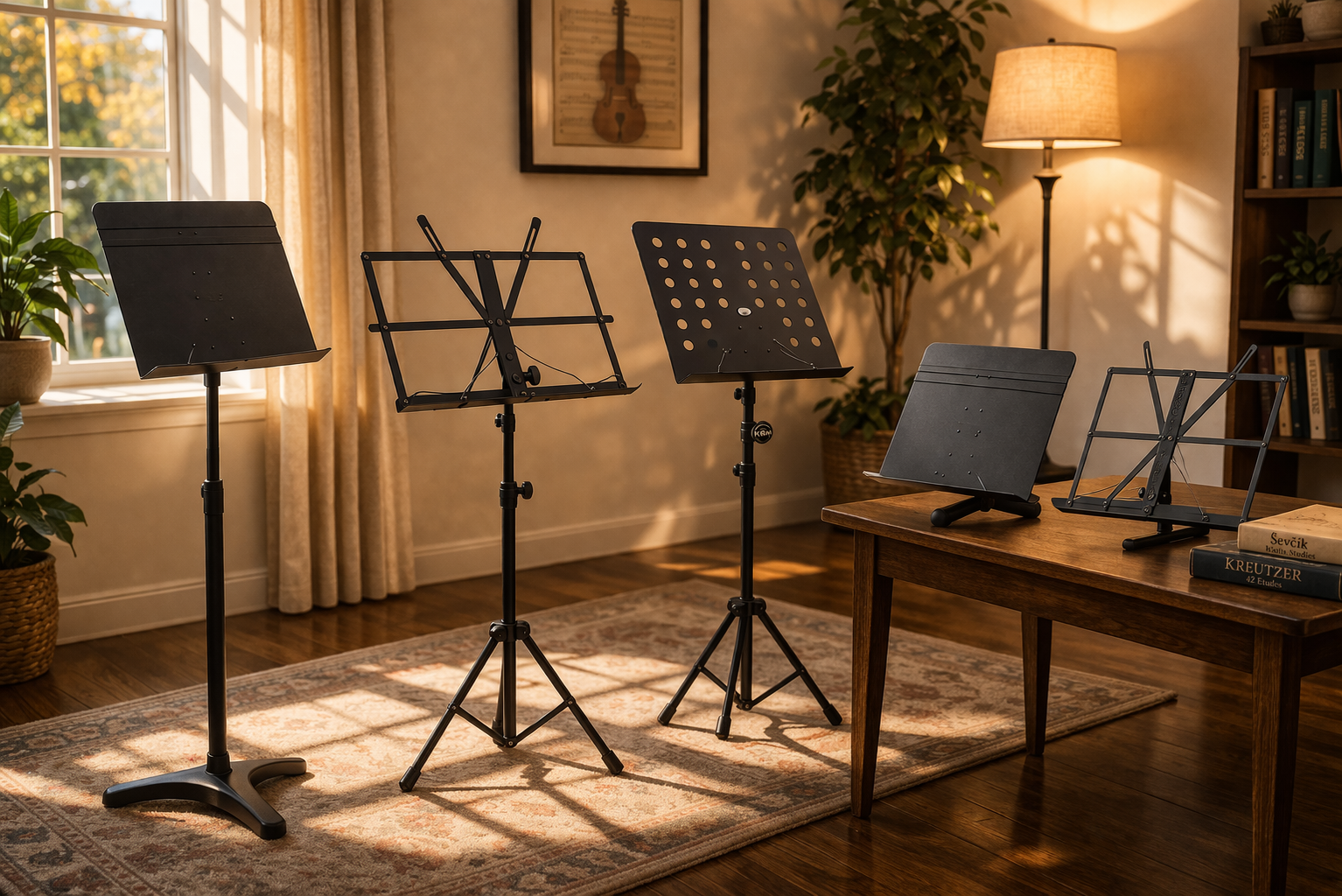
Most music stands fall into a few broad categories, and the differences between them matter more than the brand name.
Lightweight folding stands are everywhere. They’re inexpensive, easy to carry, and perfectly fine when you’re just getting started or need something portable. The downside is that many of them feel unstable during regular use. Over time, that instability becomes more noticeable than the convenience.
Heavier, orchestral-style stands are built differently. They use a solid base and a wider tray, and they tend to stay in place no matter what you’re doing. For most adult players practicing at home, this type of stand simply feels better to use day to day.
There are also smaller desktop stands, which can work in tight spaces. They’re useful if you’re practicing at a desk or don’t have room for a full setup, but they limit how you position your music and aren’t always ideal for longer sessions.
A Simple Way to Choose
If you’re just starting out or need something portable, a basic folding stand is usually enough.
If you’re practicing regularly at home, it’s worth moving to something more stable. That’s the point where most players notice a clear difference in comfort.
If space is limited, a smaller stand can work — but it’s usually a compromise rather than a long-term solution.
Most players end up preferring stability once they experience it. It removes small distractions and makes practice feel more settled.
Recommended Music Stands for Violin Practice
These options cover the most common needs for adult violin practice, from portable stands to stable, full-size setups.
| Music Stand | Best for | Why it works |
|---|---|---|

Manhasset Model #48 |
Best overall for home practice | A dependable full-size stand with the stability most adult violinists end up wanting at home. The wide desk holds music securely, and the solid non-folding base stays put better than lightweight folding stands. |

Peak SMS-20 Collapsible Stand |
Best folding stand (portable + stable) | A better portable option than many basic folding stands. It stores easily for travel or lessons, but still feels more secure and usable for regular practice than the cheapest tripod-style models. |

Amazon Basics Folding Stand |
Best budget option | A simple low-cost stand that works for getting started without spending much. It is best for occasional practice or as a backup stand, though it will not feel as sturdy or stable as heavier options. |

K&M 10065 Music Stand |
Best upgrade folding stand | A stronger folding stand for players who want portability without the usual flimsiness. It is a good middle ground if you need something collapsible but still want better build quality, locking, and day-to-day reliability. |

Hercules Desktop Music Stand |
Best for small spaces | A practical choice for tight practice areas, desks, or multipurpose rooms where a full stand feels bulky. It keeps music visible in a compact footprint, though it is more limited in height and positioning than a standard floor stand. |
What Tends to Go Wrong
A lot of frustration comes from stands that “almost work.”
They’re just slightly too light, slightly too low, or slightly too narrow. None of those problems seem major at first, but together they make practice feel less comfortable than it should.
That’s why many players replace their stand fairly quickly after starting.
Choosing something stable from the beginning usually avoids that cycle.
A Small Change That Helps Consistency
A music stand won’t improve your technique on its own, but it removes friction.
When your setup feels comfortable and predictable, it’s easier to focus on playing instead of adjusting.
That’s what makes it easier to stay consistent over time.
If you’re at the point where your setup feels fine but you’re unsure what to practice, a simple structured plan helps connect everything.
→ Try a guided plan with Practical Violinist Studio
Final Thoughts
A good stand stays out of your way.
It holds your music where you need it, doesn’t move when you use it, and lets you focus on playing without distraction.
That’s all you need — and once you have it, you’ll notice the difference every time you practice.
Affiliate Disclosure: Some links in this article may be affiliate links. As an Amazon Associate and participant in other affiliate programs, we may earn from qualifying purchases at no additional cost to you.
Leave a Reply