
Last Updated: March 2026
If you’re buying a violin case as an adult player, the goal isn’t just protection — it’s finding something you’ll actually use every day without thinking about it.
A good case keeps your violin stable, protects it from bumps and climate changes, and feels comfortable enough that you don’t hesitate to bring your instrument to lessons or rehearsals.
This guide walks you through how to choose the right type of case for your situation, what features actually matter, and which models are worth considering at different price levels.
For Most Adult Players
If you just want a safe, reliable choice:
- Regular lessons or commuting: a lightweight molded case with backpack straps
- Frequent travel or flights: a rigid hardshell or composite case with strong suspension
- Mostly at home: a well-padded case with room for a hygrometer and humidifier
If you’re unsure, start with a mid-range molded case — it’s the best balance of protection, weight, and comfort for most adult players.
Best Overall Choice for Most Adult Players

Crossrock Fiberglass Violin Case (colors available) — Best Overall Mid-Range Option
A reliable, well-balanced case that offers strong protection, comfortable carry, and a design that works for most adult players.
Why it works:
- Fiberglass shell provides solid protection without excessive weight
- Suspension interior keeps the violin stable
- Comfortable for regular lessons and commuting
What a violin case actually needs to do
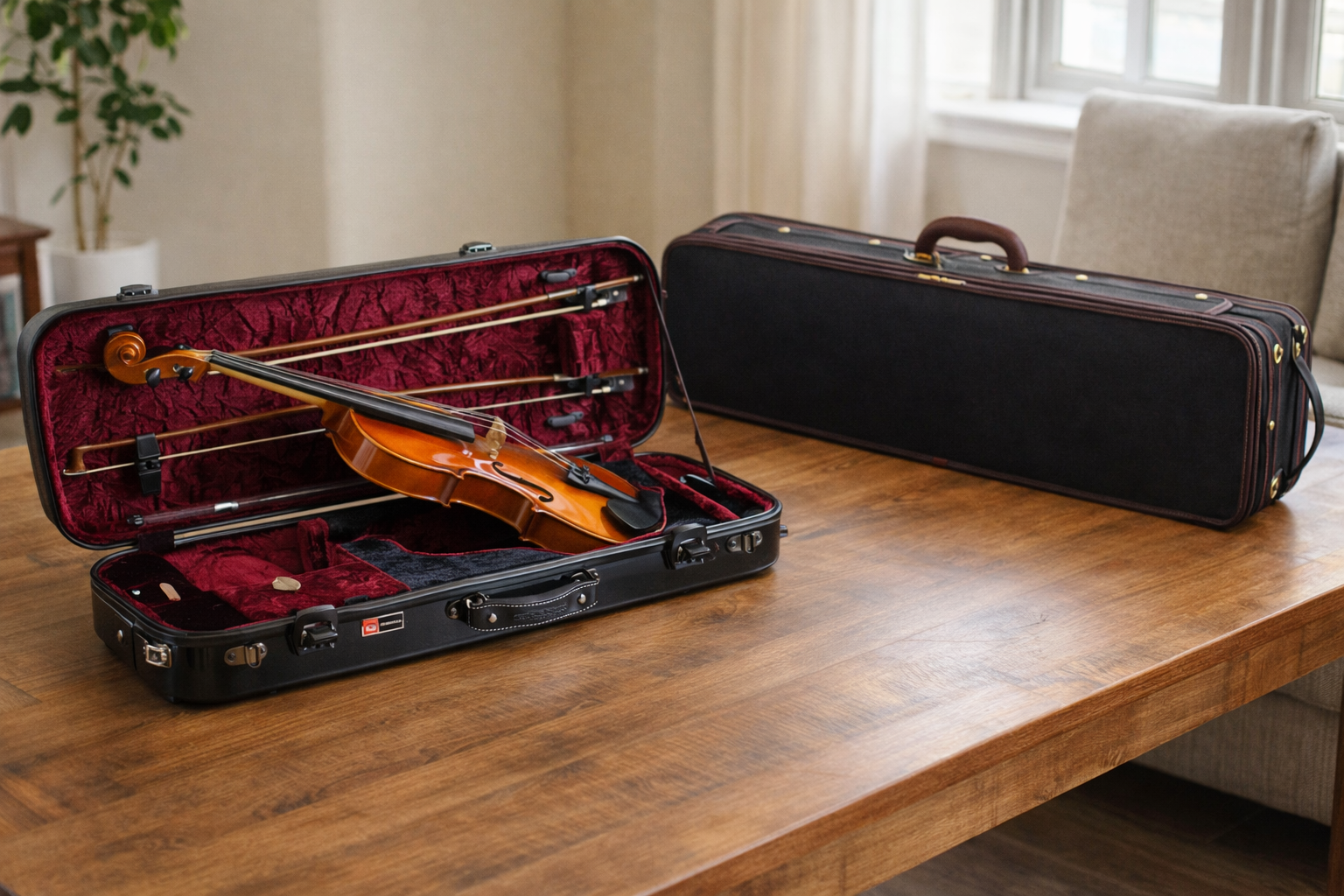
A case isn’t just a box — it’s a protection system with two parts working together:
The shell protects against impact, pressure, and weather.
The interior suspension keeps the violin from moving and prevents stress on the bridge and top.
The biggest mistake players make is focusing on the outside and ignoring the inside.
A good case should:
- hold the violin firmly without pressure points
- support the neck so the bridge doesn’t take impact
- keep bows secure and away from the instrument
- allow space for basic accessories without touching the top
If the violin can shift inside the case, even a “hard case” can still lead to damage over time.
Choosing the right case for how you play
Instead of searching for the “best” case overall, match the case to your real use.
Daily commuting (lessons, rehearsals, short travel)
If you’re carrying your violin regularly, comfort matters just as much as protection.
Look for:
- backpack straps that feel balanced
- a lightweight molded or hybrid shell
- secure bow holders and a snug internal fit
A case that’s slightly lighter and comfortable will get used more — and that matters more than maximum protection you never take advantage of.
Travel and flights
If your violin travels often — especially by plane — durability becomes the priority.
Choose:
- a rigid hardshell or composite case
- strong latches and reliable hardware
- proven internal suspension
Even when carrying on, cases can get bumped or compressed in overhead bins. A stronger shell and stable interior make a big difference here.
Mostly home storage
If your violin rarely leaves the house, you don’t need maximum protection — but you still need stability.
A well-padded case works fine as long as:
- the violin fits securely
- there’s room for a hygrometer and humidifier
- nothing presses against the instrument when closed
If you’re managing humidity, it’s worth understanding how climate affects your instrument — this violin humidity guide explains what to watch for and how to protect it.
What features actually matter (and what doesn’t)
When comparing cases, a few features matter far more than everything else.
Must-haves
- Secure internal fit — no shifting or rattling
- Neck support / suspension — the violin should not rest on the bottom
- Reliable bow holders — no pressure on bow hair or stick
- Comfortable carry options — straps you’ll actually use
- Accessory storage — without pressing on the instrument
Nice to have (but not essential)
- Built-in hygrometer or humidifier slots
- Lockable latches for travel
- Extra pockets for accessories
- Lightweight composite materials
These are helpful — but only after the basics are right.
Best violin cases by category
Best budget violin cases (light use, short distances)
Best for: beginners, home use, short walks
These are typically padded or entry-level molded cases. They’re lighter and affordable, but offer less protection.
Use these if:
- you’re not traveling far
- your instrument stays mostly indoors
- you want something simple and lightweight
Trade-off: less protection against drops or heavy impact
For players who want a simple, lightweight option for short trips or home use, a good entry-level case like this works well:
ADM Professional Suspension Violin Case (colors available) — Best Budget Overall

A solid entry-level case that avoids the biggest issue with cheap options — poor internal support.
Why it works:
- Suspension-style interior helps keep the violin stable
- Lightweight foam shell for easy everyday use
- Backpack straps for comfortable carrying
Gator Lightweight Violin Case — Best Budget Lightweight Option

A simple, lightweight case designed for short trips and basic daily use.
Why it works:
- Lightweight molded design with better structure than soft cases
- Simple, reliable interior fit
- Comfortable for short-distance carrying
VEVOR Lightweight Violin Case — Best Ultra-Budget Option

A very affordable, lightweight case designed for short trips and basic everyday use.
Why it works:
- Lightweight design makes it easy to carry
- EVA foam padding helps absorb minor bumps
- Very low price point for simple, everyday use
Best mid-range violin cases (most players)
Best for: commuting, lessons, general use
This is where most adult players should be.
You get:
- solid protection
- manageable weight
- good internal suspension
- comfortable straps
This category offers the best balance between safety and usability.
For most adult players, a mid-range case is the best place to start — it offers the right balance of protection, weight, and comfort without paying for premium features you may not need. One of the strongest options in this range is:
Crossrock Fiberglass Violin Case (colors available) — Best Overall Mid-Range Option
A durable fiberglass case that offers strong protection at a more accessible price point than premium models. It’s a great choice for adult players who want solid build quality without spending on high-end composite cases.
Why it works:
- Fiberglass shell provides good impact resistance
- Suspension-style interior helps stabilize the violin
- Comfortable backpack straps for everyday use
Bobelock 1002 Oblong Suspension Violin Case — Best Traditional Mid-Range Option

A durable, traditional-style case built with a solid multi-layer wood shell and reliable suspension system.
Why it works:
- Multi-layer wood construction provides stronger protection than budget foam cases
- Suspension interior helps prevent pressure on the bridge
- Proven long-term durability and build quality
MI&VI Lightweight Suspension Violin Case — Best Lightweight Mid-Range Option

A lightweight, structured case that offers a noticeable upgrade in protection over entry-level foam designs while staying easy to carry.
Why it works:
- High-density molded shell provides more structure than basic foam cases
- Suspension-style interior helps keep the violin stable
- Lightweight design makes it comfortable for regular use
Best premium / travel violin cases
Best for: frequent travel, higher-value instruments
These cases prioritize durability and long-term protection.
Expect:
- reinforced shells
- excellent suspension systems
- higher-quality hardware
- better environmental protection
Trade-off: higher cost and slightly more weight
For players who want strong protection without carrying excessive weight, one of the most reliable premium options is:
BAM Hightech Contoured Case — Best Premium Overall

A lightweight but extremely durable case designed for adult players who travel or commute regularly. It combines strong protection with a slim profile, making it easier to carry without sacrificing safety.
Why it works:
- Advanced suspension system protects the bridge and body
- Lightweight composite shell with excellent impact resistance
- Comfortable backpack straps for daily use
GEWA Air 2.1 Violin Case (colors available) — Best Lightweight Travel Option

A popular choice for players who want premium protection without extra weight. The shell is rigid but noticeably lighter than traditional hard cases, making it ideal for frequent travel.
Why it works:
- Extremely light while still offering strong protection
- Secure interior fit with reliable suspension
- Clean, compact design that travels well
How to choose the right case online (without guessing)
When you’re buying online, you can’t test the case in person — but you can still make a confident decision by focusing on a few key details.
Start by checking the interior design, not just the outside shell. Look for clear signs of a suspended setup, where the violin rests on shaped supports rather than sitting flat. Product photos should show a raised neck area and padding around the bridge.
Next, review how the bows are secured. Good cases hold the bow at multiple points and keep the hair away from the instrument. If this isn’t clearly shown, it’s a red flag.
Pay attention to real-world use feedback. Look for reviews that mention fit, comfort while carrying, and long-term durability — not just first impressions.
Finally, check whether the case has space for your actual setup, especially if you use a shoulder rest. Many issues come from cases that technically “fit” a violin but don’t accommodate accessories properly.
If a case checks these boxes, it will almost always perform well in real use — even without trying it in person.
Daily habits that protect your violin (no matter the case)
Even the best case won’t help if it’s used carelessly.
A few simple habits go a long way:
- always loosen your bow before storing it
- keep loose items in pockets — never on the instrument
- close all latches before lifting the case
- avoid leaving the case in hot cars or extreme cold
If your violin ever starts sounding off after transport, it’s worth checking whether it’s a setup issue — this guide on why violins sound scratchy can help you diagnose problems early.
Common mistakes to avoid
Most case problems come from simple oversights:
- choosing based on looks instead of fit
- assuming “hard case” automatically means safe
- ignoring bow storage quality
- overfilling accessory pockets
- skipping humidity control in dry climates
These are small decisions that can lead to real damage over time.
Final takeaway
The best violin case is one that keeps your instrument stable and is easy enough to carry that you actually use it every day.
If you’re unsure where to start:
- choose a mid-range molded case
- make sure the violin fits securely
- prioritize comfort and internal support over appearance
Once those are right, everything else is secondary.
At that point, the real progress comes from actually using your instrument consistently.
A simple, structured routine makes it much easier to stay consistent without overthinking what to practice each day.
→ Start your first practice plan
How to choose the right case for you
If you’re still unsure, use this quick filter:
- Mostly commuting or lessons: choose a lightweight molded or hybrid case with backpack straps
- Frequent travel or flights: choose a rigid hardshell or composite case with strong suspension
- Mostly home use: choose a well-padded case with room for a hygrometer and accessories
If you’re between two options, choose the one that feels more comfortable to carry — that’s the one you’ll actually use consistently.
Affiliate Disclosure: Some links in this article may be affiliate links. As an Amazon Associate and participant in other affiliate programs, we may earn from qualifying purchases at no additional cost to you.
Leave a Reply