
Last Updated: February 2026
If you’re an adult beginner, you’ve probably asked yourself this at least once:
“Do I really need a teacher… or can I just learn on my own?”
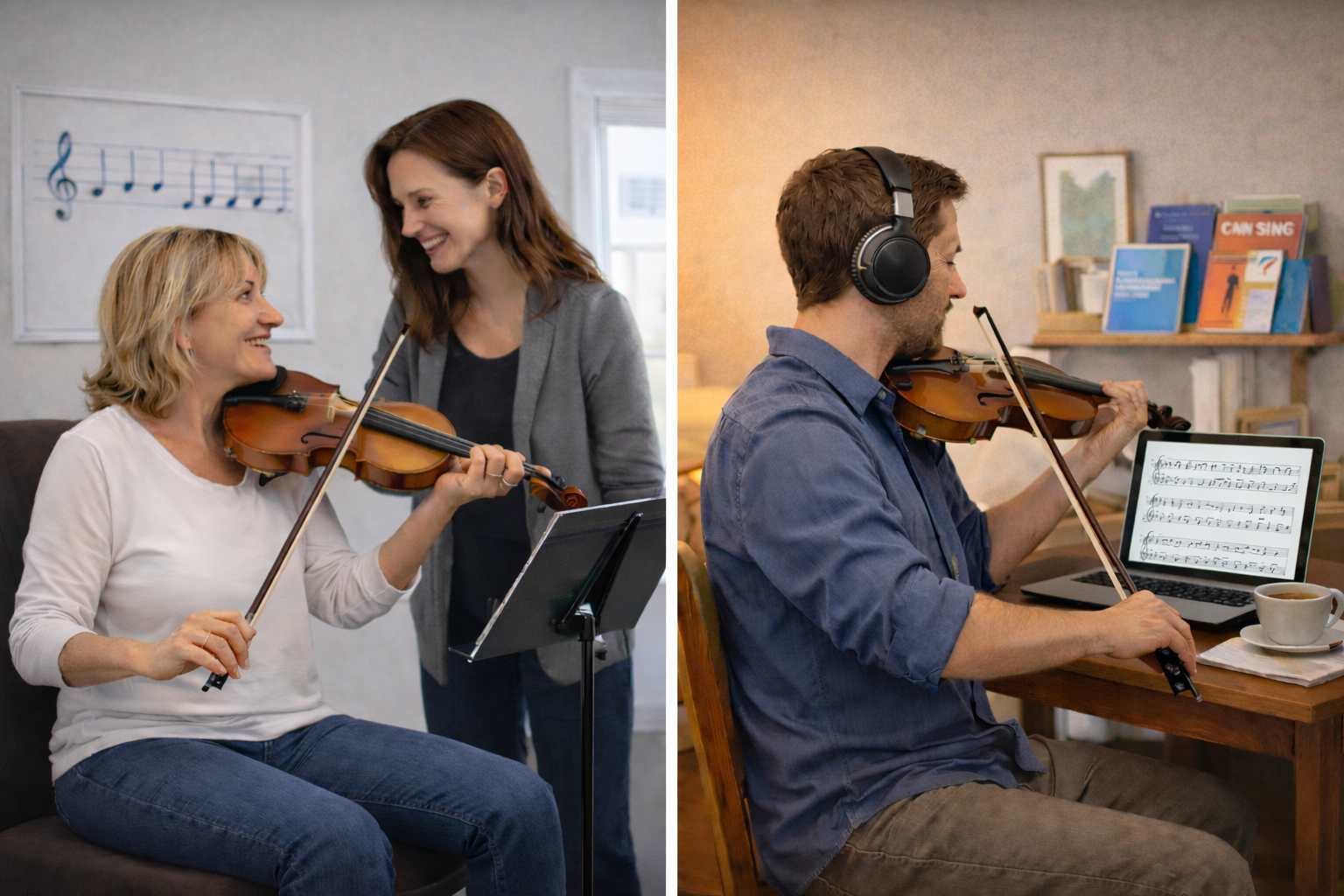
Unlike kids, adults often juggle work, family, and limited practice time. You may be motivated and independent, but you also don’t want to waste months building bad habits. The truth is: both paths can work—but they work best for different kinds of learners.
This guide will help you decide with clarity and confidence.
The Case for Self-Teaching as an Adult
Learning on your own has never been more accessible. Between YouTube, apps, and online courses, you can get started today for little or no cost.
Why self-teaching works for some adults:
- Total flexibility – Practice when you want, how you want.
- Lower cost – No weekly lesson fees.
- Comfort at home – No pressure to perform for anyone.
- Strong autonomy – Great for self-motivated learners.
Self-teaching can be ideal if you:
- Enjoy figuring things out independently
- Are patient with slow progress
- Like experimenting and learning from multiple sources
- Have realistic expectations about your pace
The hidden risks
Most adult beginners don’t fail because they lack talent—they stall because they don’t see what they’re doing wrong.
Common self-teaching pitfalls include:
- Tense posture that causes pain
- Bow grip habits that limit sound
- Inconsistent intonation
- Plateauing without knowing why
These issues can become ingrained before you realize there’s a problem.
The Case for Learning With a Teacher
A good teacher doesn’t just tell you what to practice—they show you how and why.
What a teacher gives adult beginners:
- Immediate feedback on posture, tone, and technique
- Faster correction of bad habits
- Personalized pacing
- Accountability and momentum
- Reassurance when progress feels slow
Lessons are especially helpful if you:
- Want efficient progress
- Get discouraged easily
- Struggle to diagnose problems
- Prefer structured guidance
For many adults, even monthly lessons can dramatically improve outcomes.
A Hybrid Path Many Adults Love
You don’t have to choose one extreme.
A popular middle ground is:
- Self-study for daily practice
- Occasional lessons for guidance and correction
This might look like:
- Weekly YouTube or course-based learning
- A teacher check-in every 2–4 weeks
- Using lessons to fix technique and set goals
It’s flexible, affordable, and effective.
If You Want Structure Without Weekly Lessons
Many adult beginners want guidance and structure—but don’t want the cost, scheduling pressure, or intensity of weekly lessons.
Practical Violinist Studio is designed for that middle ground.
It turns core technique, tone, and practice principles into calm, guided, time-aware practice sessions—so you’re not guessing what to work on or worrying whether you’re missing something important.
Studio works especially well if you’re:
- Self-teaching but want reassurance you’re practicing the right things
- Using a hybrid approach (occasional lessons + independent practice)
- Short on time and prone to overthinking what to practice
Create your first guided practice plan →
Free to try. No account required.
How to Decide What’s Right for You
Ask yourself:
- Do I enjoy independent learning, or do I prefer guidance?
- Am I okay progressing slowly if it means full flexibility?
- Do I tend to get stuck without feedback?
- Is my goal casual enjoyment—or steady improvement?
Use this simple framework:
| If you value… | Consider… |
|---|---|
| Freedom & low cost | Self-teaching |
| Faster progress | A teacher |
| Structure & reassurance | A teacher |
| Independence & experimentation | Self-teaching |
| Balance | Hybrid approach |
There’s no “wrong” choice—only the one that fits your life.
Once you’ve chosen a path, the next question most adults ask is: How much should I actually practice to make progress?
If you’re unsure what’s realistic, see How Often Should Adults Practice the Violin? for clear, adult-focused guidance.
What Comes Next?
If you decide lessons are right for you, your next question will be:
How do I find the right violin teacher as an adult?
And if you’re considering remote options:
Online vs In-Person Violin Lessons for Adults: Which Is Right for You?
Those are the next steps in this learning path—and they’re much easier to navigate once you know why you’re choosing guidance in the first place.
Whether you self-teach, work with a teacher, or blend both, the most important thing is this:
Consistent, thoughtful practice beats the “perfect” method every time.
No matter which path you choose—teacher, self-teaching, or a blend of both—progress comes from showing up consistently.
If you want a gentle place to start, A Simple 5-Minute Daily Practice Routine for Adults gives you a realistic way to build momentum without overwhelm.
Your violin journey is yours to shape.
Leave a Reply