
Last Updated: January 2026
Finding the right violin chin rest can make the difference between relaxed, comfortable playing and constant jaw or neck discomfort. For adult violinists especially, chin rest fit matters far more than most people realize.
This guide walks through the best types of violin chin rests for adult players, focusing on comfort, fit, and jaw relief — not just brand names. Instead of pushing one “best” option for everyone, you’ll learn how to choose a chin rest that works with your anatomy and playing habits.
If you’re currently experiencing soreness or pressure while playing, you may want to start with this comfort-focused guide on how to reduce chin rest pain before choosing a new chin rest.
Why Chin Rest Choice Matters More for Adult Players
Adult violinists tend to experience chin rest discomfort more often because:
- Adult jaw and neck anatomy varies widely
- Many adults bring tension from daily posture (desk work, stress)
- Starter instruments often include poorly fitted chin rests
- Adults practice longer, more focused sessions
A chin rest that fits your jaw allows the violin to rest securely without clamping, reducing pressure and fatigue.
Key Factors to Consider Before Choosing a Chin Rest
Before looking at specific styles, keep these factors in mind:
Mount Position
- Center-mounted rests place the chin over the tailpiece
- Side-mounted rests shift the contact slightly left
Some players find center-mounted designs reduce jaw twist, while others prefer the freedom of a side mount.
Height
Chin rest height is one of the most overlooked comfort factors.
A rest that’s too low encourages head tilt and jaw pressure. Slightly taller designs often improve comfort immediately, especially when paired with a shoulder rest.
Cup Shape
- Deeper cups help cradle the jaw
- Flatter cups reduce pressure points
- Contoured shapes distribute contact more evenly
Material
Common options include:
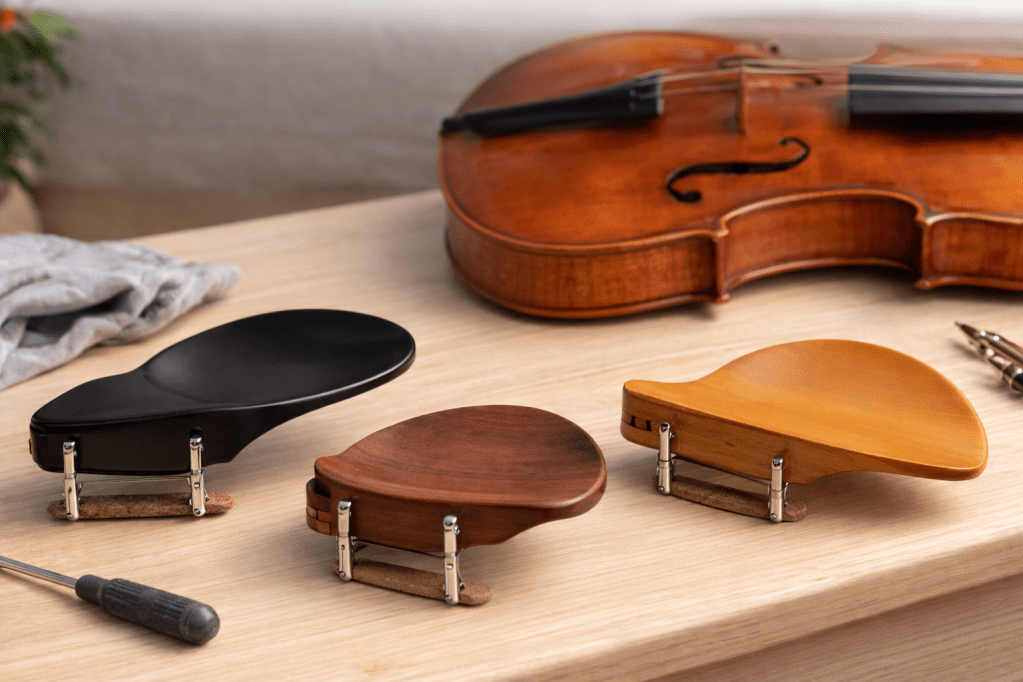
- Ebony (traditional, firm feel)
- Rosewood (slightly warmer feel)
- Boxwood (lighter, smoother texture)
Material affects feel more than sound — comfort should come first.
Best Violin Chin Rest Styles for Adult Comfort
Guarneri-Style Chin Rests
Best for: Jaw relief and pressure distribution
Guarneri-style chin rests are among the most popular for adult players because they offer a broad, contoured surface that spreads pressure evenly across the jaw.
These are often recommended for:
- Adult beginners experiencing jaw soreness
- Players with wider jaws
- Those who clamp unintentionally
Look for Guarneri-style chin rests with a smooth contour and slightly higher profile for added comfort.
Flesch-Style Chin Rests
Best for: Longer necks and upright head position
Flesch-style chin rests are typically center-mounted and flatter, encouraging a more neutral head position.
They can work well for:
- Players who feel twisted with side-mounted rests
- Adults with longer necks
- Those seeking a stable, centered feel
Some adult players find that a higher Flesch-style chin rest reduces the need for downward pressure.
Kaufman-Style Chin Rests
Best for: Minimal contact and sensitive skin
Kaufman-style chin rests have a lower profile and simpler shape, making them a good option for players who dislike bulky rests.
They’re often chosen by:
- Players with sensitive skin
- Those who prefer a lighter feel
- Violinists transitioning away from excessive support
Because they sit lower, pairing with proper shoulder support is especially important.
Hamburg-Style Chin Rests
Best for: Side-mounted comfort with contour
Hamburg-style chin rests are side-mounted with a curved cup that supports the jaw comfortably without forcing alignment.
They work well for:
- Players who prefer side-mounted designs
- Those needing moderate height
- Adults seeking a balance between freedom and support
Chin Rest Accessories That Improve Comfort
Chin Rest Cushions & Covers
For players experiencing skin irritation or pressure tenderness, a soft chin rest cover can make a noticeable difference.
These accessories help by:
- Reducing friction
- Softening contact
- Improving comfort during long practice sessions
They’re a simple first step before replacing a chin rest entirely.
Professional Fitting & Adjustment
Sometimes the chin rest itself is fine — it’s the fit that’s wrong.
A luthier can:
- Adjust clamp placement
- Ensure proper cork contact
- Prevent over-tightening
This can dramatically improve comfort without changing equipment.
How Chin Rests Work with Shoulder Rests
Chin rest comfort cannot be separated from shoulder rest setup.
If your shoulder rest is:
- Too high → jaw pressure increases
- Too low → head tilts downward
Balancing both together is often the key to lasting comfort. For a deeper comparison, see this guide on shoulder rests for adult violinists.
When to Replace a Chin Rest
Consider changing chin rests if you experience:
- Persistent jaw soreness
- Pressure after short sessions
- Neck strain linked to head tilt
- Skin irritation that doesn’t improve
Comfort should improve within days — not weeks.
Comfort Comes from Fit, Not Force
There is no single “best” chin rest for everyone. The best chin rest for adult players is the one that allows the violin to rest securely without clamping, twisting, or pressure.
If pain persists, revisit setup before pushing through discomfort. Your body is giving useful feedback.
Related Reading
- How to Reduce Chin Rest Pain: A Comfort Guide for Adult Violinists
- How to Play the Violin Without Neck and Shoulder Pain
Affiliate Disclosure: Some links in this article may be affiliate links. As an Amazon Associate and participant in other affiliate programs, we may earn from qualifying purchases at no additional cost to you.
 Practical Violinist
Leave a comment