
Last Updated: January 2026
Almost every adult beginner experiences finger pain when starting violin. It can be surprising, discouraging, and even make you wonder if something is wrong with your hands—or your instrument.
The good news:
Some finger discomfort is completely normal. Other types of pain are signals you should not ignore.
Learning the difference helps you build strength safely, avoid injury, and stay motivated.
Let’s break down what’s expected, what’s not, and how to protect your hands while you learn.
What Normal Violin Finger Pain Feels Like
When you first start playing, your fingertips are soft and unconditioned. Pressing steel or synthetic strings against a hardwood fingerboard is a new stress your body has never experienced.
Normal sensations include:
- Mild soreness in the fingertips
- A tender or “bruised” feeling after practice
- Skin sensitivity when you stop playing
- Light redness where the strings contact the fingers
This kind of discomfort usually:
- Appears during or after practice
- Improves within minutes or hours
- Gets better week by week
- Turns into light calluses over time
This is your body adapting. Just like building muscle at the gym, violin fingers strengthen gradually.
If you’re practicing in short, focused sessions like those in A Simple 5-Minute Daily Violin Practice Routine for Adults, this phase passes more quickly and comfortably.
What Not-Normal Pain Feels Like
Some pain is a warning sign. It’s your body saying, “Something isn’t right.”
Red flags include:
- Sharp or stabbing pain
- Burning or tingling sensations
- Numbness in fingers or hand
- Pain that spreads into the wrist or forearm
- Pain that lingers for hours or days
- Loss of finger control or strength
These symptoms may come from:
- Excessive finger pressure
- Poor left-hand posture
- Over-practicing too soon
- Instrument setup issues (high string action, stiff strings)
- Tension in the wrist or thumb
This kind of pain does not “toughen you up.” It leads to strain, frustration, and sometimes injury.
Common Causes of Unnecessary Finger Pain
Most painful issues come from technique, not toughness.
1. Pressing Too Hard
Beginners often squeeze the strings far harder than needed. The violin only requires enough pressure to make a clean sound—not a death grip.
If your knuckles whiten or your thumb clamps the neck, you’re working too hard.
2. Collapsed Finger Shape
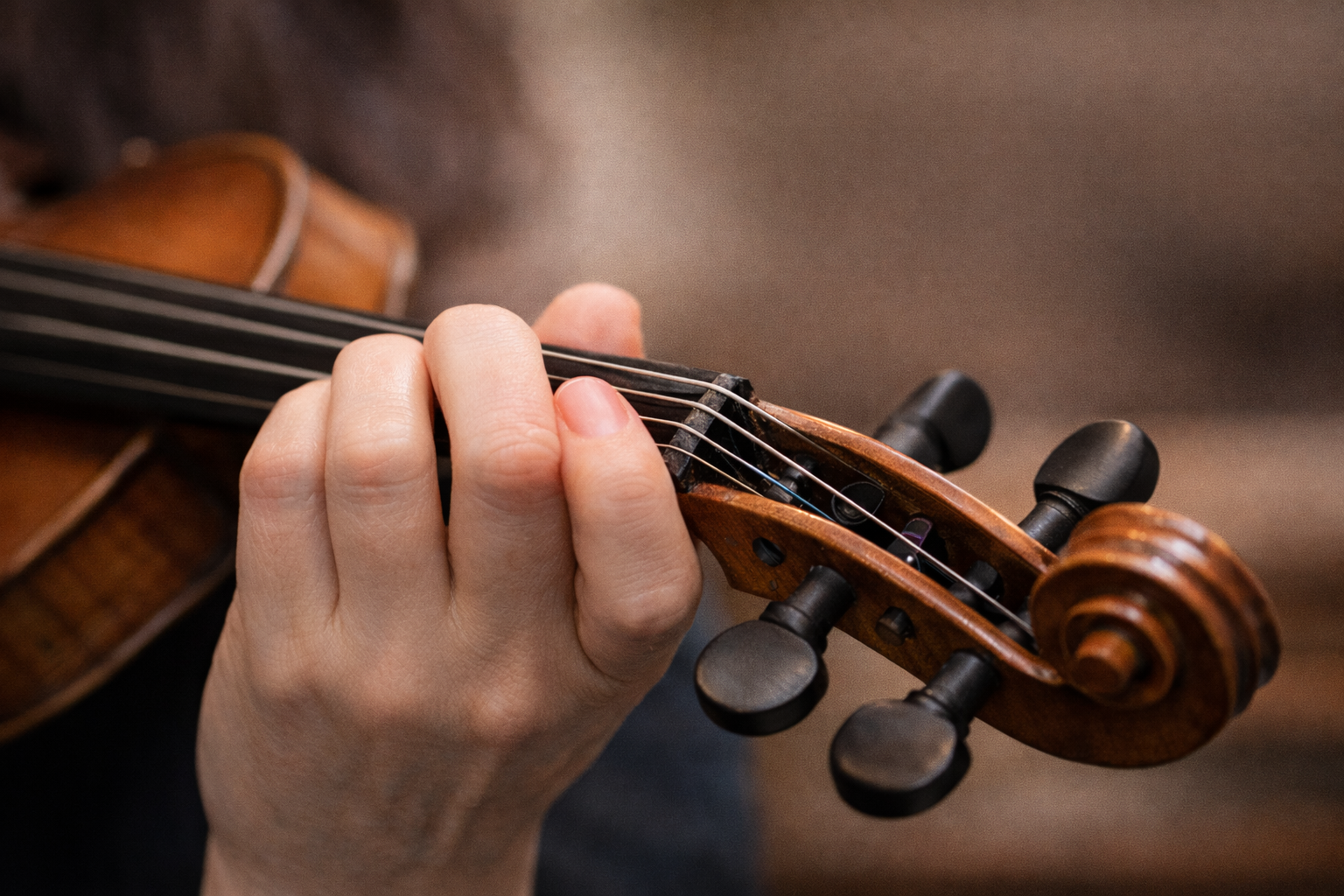
Flat fingers increase strain and reduce control. Rounded fingertips distribute pressure more efficiently and reduce pain.
3. Wrist Tension
A bent or locked wrist transfers stress into your hand and fingers. Comfort starts in the arm, not just the fingertips.
If posture and tension are ongoing struggles, your comfort setup matters just as much as technique. Articles like How to Reduce Chin Rest Pain: A Comfort Guide for Adult Violinists explain how small adjustments can dramatically reduce strain throughout your body.
4. Playing Too Long, Too Soon
Practicing 45 minutes on day one feels motivated—but often backfires. Tendons adapt slower than enthusiasm.
This is why building duration slowly, as explained in How Often Should Adults Practice the Violin?, protects your hands and keeps progress sustainable.
How to Reduce Finger Pain Safely
You don’t need to “push through” pain to improve. You need consistency, efficiency, and smart habits.
Try this:
- Limit early sessions to 5–15 minutes
- Shake out your hands between pieces
- Use the minimum pressure needed for clean tone
- Keep fingers rounded and relaxed
- Release pressure between notes
- Stop if pain becomes sharp or persistent
A helpful test:
Press a string slowly until it just stops buzzing. That’s your baseline pressure. Anything beyond that is wasted effort.
When to Take a Break
Take time off if:
- Pain persists into the next day
- You feel tingling or numbness
- You lose finger control
- Your hand feels “tight” even at rest
Rest is not failure. It’s part of learning safely.
A short break combined with technique adjustments often solves the problem completely.
The Big Picture
Finger discomfort is part of becoming a violinist. Injury is not.
Normal pain:
- Is mild
- Improves over time
- Builds resilience
Not-normal pain:
- Is sharp or lingering
- Spreads or numbs
- Gets worse
Learning to recognize the difference lets you grow without burning out.
With the right posture, pressure, and practice rhythm, your fingers will toughen naturally—and playing will become not only easier, but enjoyable.
Leave a Reply