
Last Updated: January 2026
Learning the violin as an adult doesn’t require a case full of gadgets. In fact, too many accessories can distract from what actually improves your playing.
That said, a small set of well-chosen tools can make practice smoother, tone more consistent, and maintenance far less stressful. These are the essentials that genuinely support adult violinists—without clutter, gimmicks, or unnecessary expense.
If you’re still building a routine, this pairs well with How Often Should Adults Practice the Violin?, which explains how to structure practice time realistically as an adult.
Tools That Support Better Practice (Not More Stuff)
The goal of violin tools isn’t to replace good technique—it’s to remove friction.
The right tools help you:
- Tune accurately
- Practice with better rhythm
- Protect your instrument
- Stay comfortable during longer sessions
Below are the tools worth owning, followed by a few you can confidently skip (at least for now).
Must-Have Practice Tools
Clip-On Tuner (or Tuner App as Backup)
Accurate tuning is one of the biggest challenges adult learners face—especially early on. A clip-on tuner provides clear visual feedback and helps train your ear over time.
Why it matters:
- Helps prevent practicing out of tune
- Reduces frustration during warm-ups
- Encourages consistent pitch awareness
Practical tip:
Many adults use a physical tuner for focused practice and keep a tuner app as a backup. Physical tuners remove phone distractions and are easier to read mid-session.
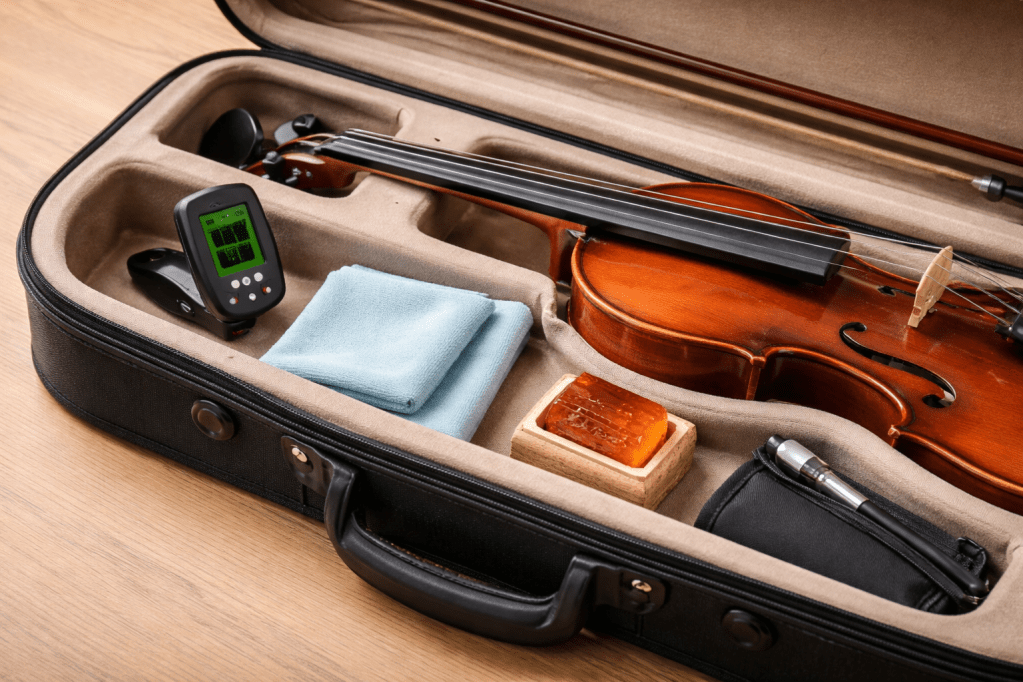
A simple clip-on tuner with a bright, easy-to-read display is usually the easiest starting point for adult learners — especially if you prefer to keep your phone off during practice.
For specific recommendations, see Best Metronomes and Tuners for Adult Violinists, which compares simple, accurate options that work well for home practice.
Metronome (Physical or App)
Rushing and dragging often happen without you realizing it. A metronome provides honest feedback and helps build reliable timing.
Why adults benefit especially:
- Reinforces steady rhythm
- Improves coordination between hands
- Prevents tempo drift in familiar pieces
Good to know:
You don’t need to use a metronome constantly. Short, targeted use is far more effective than playing everything mechanically.
Many adult players prefer a basic physical metronome because it reduces distractions and keeps rhythm work focused and intentional.
If metronome practice feels stiff or frustrating, How to Practice with a Metronome on Violin Without Sounding Mechanical shows musical ways to use it effectively.
Tone & Sound Control Tools
Quality Rosin (Matched to Your Playing Environment)
Rosin plays a quiet but critical role in sound production. Using the wrong type—or too much—can lead to scratchy tone or slipping bow hair.
Rather than repeating details here, it’s best to choose rosin based on:
- Climate
- String type
- Personal tone preference
Instead of detailing every type of rosin here, the essentials—what really matters for tone, friction, and playability—are covered in Best Violin Rosin for Adult Beginners (& What Actually Matters).
If you’re looking for a reliable starting point, a balanced rosin that works well across climates is usually the safest choice for adult beginners.
Cleaning Cloth (More Important Than It Seems)
Rosin buildup affects tone, string life, and even fingerboard feel. A simple cleaning cloth helps prevent long-term issues.
Best practice:
- Wipe strings and the top of the violin after every session
- Keep one cloth in your case at all times
- Microfiber or soft cotton both work well
This is one of the easiest habits to build—and one of the most overlooked.
A soft microfiber cloth kept in your case makes it easy to wipe down strings and the violin after every session.
Excess rosin buildup can contribute to harsh tone – Why Your Violin Sounds Scratchy explains how simple maintenance affects sound quality and tone production.
Comfort & Setup Helpers
A Shoulder Rest or Pad That Actually Fits You
Comfort directly affects tone and consistency. An ill-fitting setup can cause tension, shoulder pain, and unnecessary fatigue.
Rather than forcing a “standard” setup:
- Choose comfort over appearance
- Reassess fit as your posture improves
- Adjust gradually
For detailed guidance, see Shoulder Rests for Adult Violinists: Comfort vs Stability.
For players who haven’t settled on a setup yet, a highly adjustable shoulder rest can be a practical starting option.
Chinrest Wrench (Optional but Useful)
A chinrest wrench allows small adjustments if your chinrest loosens over time.
Important caution:
- Make very small adjustments
- Never overtighten
- If discomfort persists, consult a luthier
A basic chinrest wrench is useful for minor adjustments, though persistent comfort issues are best handled by a luthier.
This tool is helpful—but not required—for most players.
Maintenance & Protection Tools
Case Humidifier (Seasonal but Important)
Violins are sensitive to humidity changes, especially in dry winters or air-conditioned homes.
You may need a humidifier if:
- Your climate is very dry
- You notice sharp fingerboard edges
- The instrument feels stiff or unresponsive
In stable, moderate climates, this may not be necessary year-round.
In dry climates or winter months, a simple in-case humidifier can help protect your violin from cracking or stiffness.
Good Case Organization (A Habit, Not a Product)
Your case is part of your tool system.
Good habits include:
- Keeping rosin in a sealed compartment
- Avoiding loose pens or sharp objects
- Storing cloths flat, not bunched
- Emptying accessory pockets regularly
Simple organization protects both your violin and your sanity.
Tools You Can Skip (For Now)
Many accessories are marketed as “must-haves” but offer limited benefit early on.
You can usually skip:
- Practice mutes (unless noise is a serious issue)
- Fingerboard stickers beyond the very beginning
- Expensive gadgets promising faster progress
Progress comes from consistent, mindful practice, not accessories.
A Simple Starter Kit Summary
If you’re building your setup from scratch, focus on these essentials first:
- Clip-on tuner
- Metronome
- Appropriate rosin
- Cleaning cloth
- Comfortable shoulder/chin setup
Everything else is optional—and often situational.
Final Thought
The best violin tools don’t draw attention to themselves. They quietly support good habits, reduce frustration, and help you enjoy your practice time more.
When in doubt, choose simplicity over quantity. Your playing will thank you.
Affiliate Disclosure: Some links in this article may be affiliate links. As an Amazon Associate and participant in other affiliate programs, we may earn from qualifying purchases at no additional cost to you.
 Practical Violinist
Leave a comment