
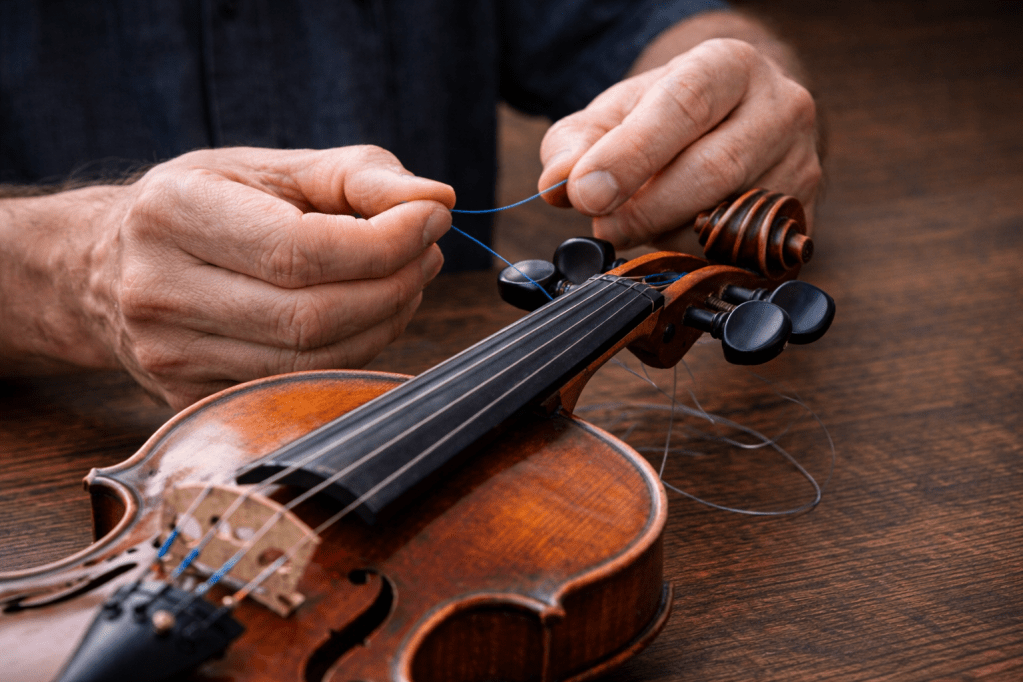
Knowing when to change violin strings is one of the most common points of confusion for adult players. Strings don’t always break when they’re worn out, and gradual tone changes can be easy to miss — especially if you practice regularly.
For most adult violinists, changing strings at the right time can make a noticeable difference in tone, tuning stability, and overall playability without requiring any other upgrades.
This guide explains how often to change violin strings, what signs to look for, and how your practice habits affect string lifespan.
How Long Do Violin Strings Typically Last?
For adult players, violin strings usually last:
- 3–6 months with regular practice (4–6 days per week)
- 6–12 months with lighter or occasional practice
- Shorter if you play daily or practice for long sessions
This is an estimate, not a rule. String lifespan depends on:
- Practice frequency
- Playing pressure
- Skin oils and sweat
- Climate and storage conditions
Strings can wear out even if they look fine.
Signs Your Violin Strings Need to Be Changed
You may need new strings if you notice:
- Tone becoming dull or muted
- Difficulty staying in tune
- A rough or gritty sound, especially on open strings
- Visible wear where fingers contact the string
- Increased finger noise or squeaking
If your violin feels harder to play or no longer responds the way it used to, worn strings are often the cause.
Do Adult Players Need to Change Strings More or Less Often?
Adult players often change strings less frequently than students — not because strings last longer, but because adults tend to practice more gently and consistently.
However, adult players may also:
- Keep strings longer than recommended
- Adapt to declining tone without realizing it
- Assume poor sound is a technique issue
If your practice routine hasn’t changed but your sound has, strings are a logical place to start.
How Practice Habits Affect String Lifespan
Your strings may wear faster if you:
- Practice daily for long sessions
- Use heavy finger pressure
- Play aggressively with the bow
- Sweat heavily while playing
They may last longer if you:
- Practice moderately
- Clean strings regularly
- Store your violin properly
- Avoid unnecessary tension
Regular care can extend string life, but it won’t prevent eventual wear.
Can You Clean Strings Instead of Replacing Them?
Cleaning strings can help extend their useful life, but it won’t restore worn strings.
If your strings still sound clear but feel slightly dull, cleaning may help. If the tone is consistently muted or unstable, replacement is the better option.
For safe cleaning methods, see this guide on how to clean violin strings without damaging your instrument.
Is It Better to Replace One String or the Whole Set?
In most cases, replacing the entire set is best.
Mixing old and new strings can cause:
- Uneven tone
- Balance issues across strings
- Tuning instability
The exception is a broken string that’s been replaced recently. Otherwise, changing all strings together keeps your instrument sounding balanced.
How Changing Strings Fits Into Overall Violin Care
String replacement is part of basic maintenance — not a gear upgrade.
If you’re unsure whether your violin needs attention beyond strings, a broader maintenance overview can help clarify what’s normal and what isn’t.
This violin maintenance checklist for adult players outlines simple care habits and when to consider additional attention.
Final Thoughts
For adult violinists, changing strings at the right time is one of the simplest ways to improve sound without adjusting technique or purchasing new equipment.
If your tone feels dull, your violin won’t stay in tune, or your playing feels harder than usual, worn strings are often the quiet culprit.
When in doubt, fresh strings are rarely a mistake.
 Practical Violinist
Leave a comment