
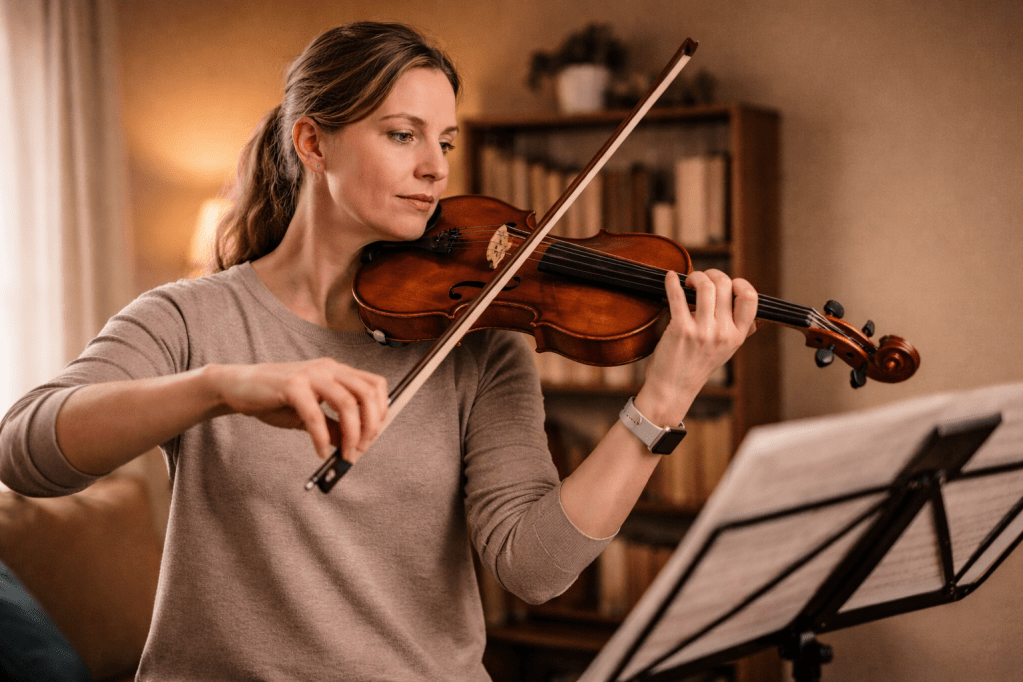
If you’re learning violin as an adult, one of the most common questions is also one of the most stressful:
How often should I practice?
You may see advice ranging from “every day, multiple hours” to “whenever you can,” which doesn’t help much if you have work, family, and limited time.
The truth is simpler — and far more encouraging.
Most adult learners don’t need long practice sessions to make progress. What matters far more is consistency, focus, and realistic expectations.
The Short Answer (For Most Adults)
For most adult beginners and returning players:
- 20–30 minutes, 4–5 days per week is enough to make steady progress
- Daily practice is helpful, but not required
- Short, focused sessions are better than long, unfocused ones
If you can only practice 10–15 minutes some days, that still counts.
Why Adults Don’t Need Hours of Practice
Adults learn differently than children.
You likely:
- Understand instructions quickly
- Notice problems faster
- Practice more intentionally
- Get mentally tired before physically tired
This means your practice time can be shorter but more efficient.
Trying to force long sessions often leads to:
- Tension
- Frustration
- Inconsistent practice
- Burnout
Consistency always beats intensity.
Comfort plays a major role in how long and how often adults can practice, and issues with stability or tension are common — this practical look at whether you really need a shoulder rest can help you evaluate your setup.
A Realistic Practice Frequency by Level
Adult Beginners
If you’re just starting:
- 15–20 minutes per session
- 4–5 days per week
Your main goals are:
- Building comfort with the instrument
- Developing basic bow control
- Avoiding tension
Stopping before you’re exhausted is a good habit.
Returning Adult Players
If you played years ago and are coming back:
- 20–30 minutes
- 4–6 days per week
You may progress faster at first, but consistency still matters more than duration.
More Committed Adult Learners
If violin is a major focus:
- 30–45 minutes
- 5–6 days per week
At this level, it helps to break practice into short sections (tone, technique, music) rather than extending one long session.
Is It Bad If I Miss Days?
No.
Missing a day — or even several — does not undo your progress.
What hurts progress is:
- Guilt that stops you from restarting
- Feeling like practice “doesn’t count” unless it’s perfect
- Waiting for large blocks of time that never appear
If you miss a few days, simply resume where you left off.
Why Short Practice Works Better for Adults
Short practice sessions help because they:
- Reduce physical tension
- Improve focus
- Make practice easier to start
- Fit into real life
Ten focused minutes is far more valuable than an hour of distracted playing.
How to Make Limited Practice Time Count
If your time is limited, focus on:
- Slow, controlled bowing
- Open strings for tone
- One small technical goal per session
- Stopping while things still feel manageable
Avoid trying to “catch up” by cramming everything into one session.
If limited practice time leads to frustration with tone, addressing common issues early can help — this guide on why your violin sounds scratchy (and how to fix it) walks through simple adjustments that make practice more productive.
What If I Can Only Practice Once or Twice a Week?
Progress will be slower, but it’s still possible — especially early on.
If that’s your situation:
- Keep sessions short and relaxed
- Focus on tone and comfort
- Accept slower improvement without self-criticism
Any consistent practice is better than none.
A Healthy Practice Mindset for Adults
The goal of practice is not:
- Perfection
- Speed
- Comparison with others
The goal is:
- Gradual improvement
- Better comfort and control
- Enjoyment of the instrument
If practice feels overwhelming, it’s usually a sign to do less, not more.
Start With This Simple Rule
If you’re unsure what schedule to follow, start here:
Practice 20–30 minutes, 4–5 days per week — and stop while you still feel good.
You can always adjust later.
Final Thought
Adults don’t fail at violin because they don’t practice enough. They struggle when expectations don’t match real life.
A realistic, repeatable practice routine will take you much further than occasional long sessions ever will.
If violin fits into your life in a sustainable way, progress will follow.
Affiliate Disclosure
Affiliate Disclosure: Some links in this article may be affiliate links. As an Amazon Associate and participant in other affiliate programs, we may earn from qualifying purchases at no additional cost to you.
 Practical Violinist
Leave a comment