
If your violin sounds dull, scratchy, or gritty, dirty strings are often the reason — not bad technique or worn-out strings.
For adult beginners, cleaning strings the right way matters. The wrong method can damage varnish, loosen fittings, or shorten string life.
This guide shows you exactly how to clean violin strings safely, what to use, and what to avoid.
Why Violin Strings Get Dirty
Every time you play, strings collect:
- Rosin dust
- Skin oils
- Sweat and moisture
- Microscopic debris
Over time, this buildup:
- Reduces clarity
- Causes scratchy tone
- Makes tuning less stable
Regular cleaning keeps your violin sounding better and your strings lasting longer.
The Safest Way to Clean Violin Strings (Step by Step)
What You’ll Need
- Soft microfiber cloth or clean cotton cloth
- Optional: a small amount of 70% isopropyl alcohol
Step 1: Wipe After Every Practice Session
After playing:
- Gently pinch each string with the cloth
- Slide along its length
- Remove visible rosin dust
This alone prevents most buildup.
Step 2: Deeper Cleaning (Occasional)
If strings still look cloudy or feel sticky:
- Place the violin on a flat, stable surface
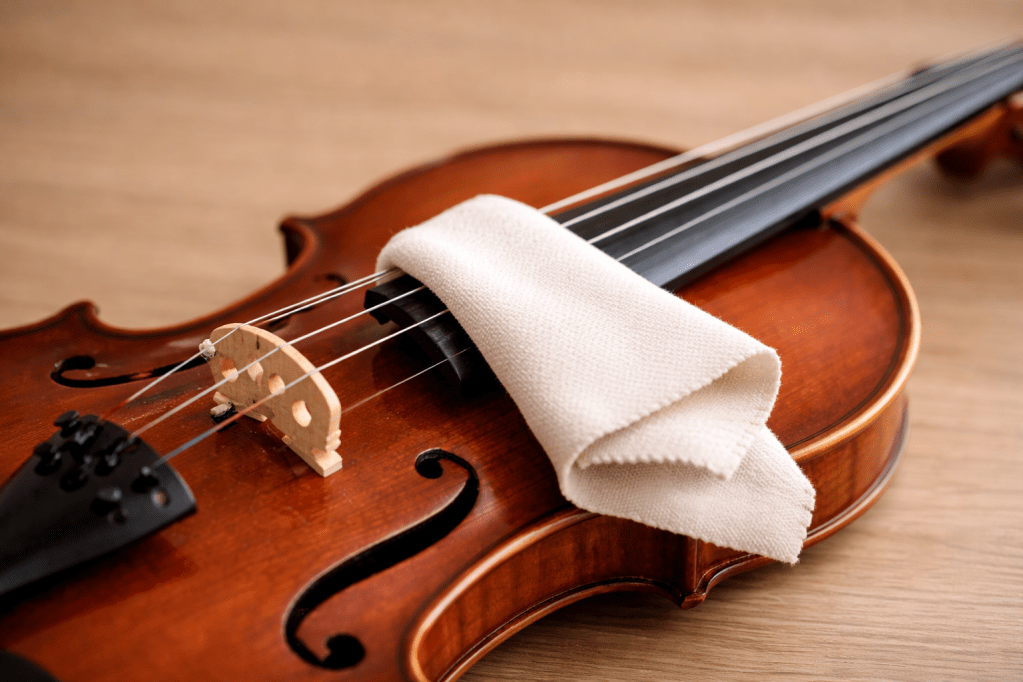
- Protect the top plate with a cloth under the strings
- Lightly dampen a cloth with isopropyl alcohol
- Cloth should be slightly damp, not wet
- Gently wipe each string
- Let dry for a few seconds before playing
⚠️ Never let alcohol touch the varnish.
What NOT to Use on Violin Strings
Avoid these completely:
- Household cleaners
- Furniture polish
- String lubricants not made for violins
- Excessive alcohol
- Paper towels (can scratch windings)
These can permanently damage strings or finish.
How Often Should You Clean Strings?
- After every session: dry wipe
- Every 1–2 weeks: deeper clean (if needed)
If you play daily, light but frequent cleaning is better than aggressive cleaning.
When Cleaning Isn’t Enough
Cleaning won’t fix:
- Frayed windings
- Rust spots
- Strings that won’t hold pitch
- Strings older than 6–12 months (for beginners)
At that point, replacement is the better option.
Final Advice for Adult Beginners
Good maintenance doesn’t require special products or complicated routines.
- Wipe strings regularly
- Use alcohol sparingly and carefully
- Protect the violin’s varnish
- Replace strings when cleaning no longer helps
A clean instrument is easier to play — and more enjoyable to practice.
 Practical Violinist
Leave a comment