
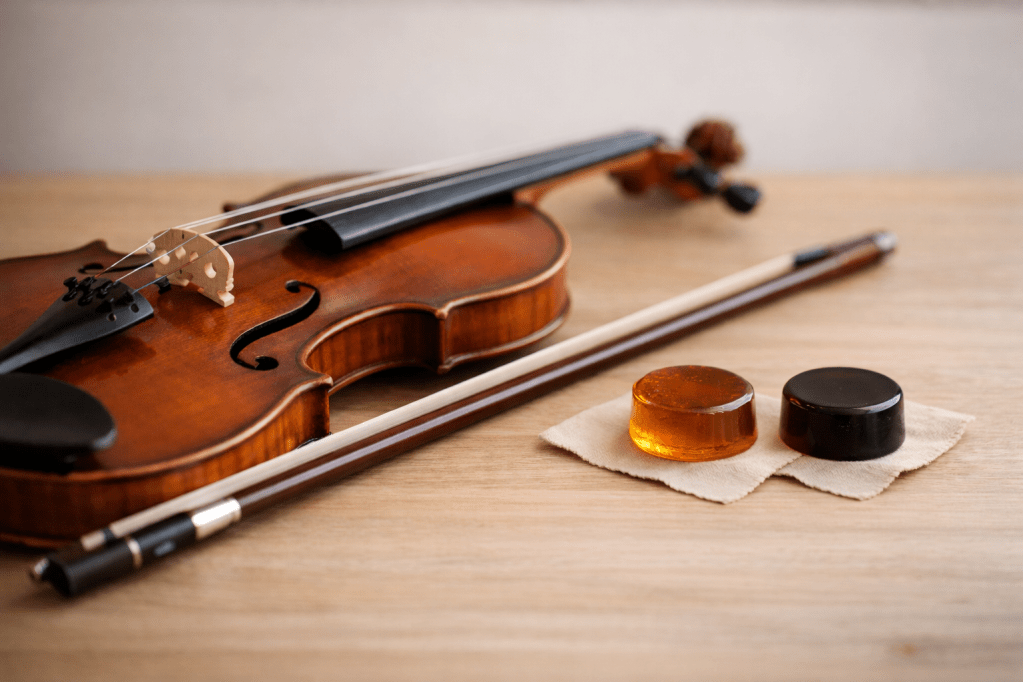
If you’re an adult learning the violin, rosin probably feels like one of the least important gear choices — until your bow starts slipping, squeaking, or sounding thin.
The truth is: rosin matters, but not in the complicated way it’s often explained. Most adult beginners don’t need specialty blends or expensive options. You just need the right type and reasonable quality.
This guide explains what actually matters when choosing violin rosin — without overthinking it.
What Rosin Does (Quickly Explained)
Rosin creates friction between the bow hair and the string. Without it, the bow simply slides across the string with little control or sound.
Good rosin helps you:
- Produce a clear tone
- Control dynamics more easily
- Reduce squeaks and “glassiness”
Bad rosin (or the wrong type) makes learning harder than it needs to be.
Light vs. Dark Rosin (This Is the Big Choice)
For adult beginners, this decision matters more than brand.
Light Rosin
- Harder texture
- Cleaner sound
- Less dust
- More forgiving in warm environments
Best for:
Most adult beginners, especially indoors
Dark Rosin
- Softer and stickier
- Grabs the string more
- Can feel “easier” at first
- Produces more dust
Best for:
Cool, dry climates or players who struggle with bow slipping
Simple rule:
👉 If you’re unsure, start with light rosin.
Do Beginners Need “Premium” Rosin?
No — but you should avoid the very cheapest options.
Ultra-cheap rosins often:
- Wear unevenly
- Create excessive dust
- Sound scratchy or inconsistent
A mid-priced, well-known rosin will last a long time and perform better than bargain brands.
How Often Should You Apply Rosin?
Most adult beginners over-rosin.
A good starting point:
- New bow hair: 10–15 slow strokes once
- Regular playing: 2–3 strokes every few sessions
If your violin sounds dusty or gritty, you’re probably using too much.
Signs You’re Using the Wrong Rosin
Consider switching if you notice:
- Constant squeaking even with good bow control
- Excessive white dust on strings and top plate
- Slippery sound no matter how much rosin you apply
- Sticky feel that makes smooth bowing difficult
Often, simply switching from dark to light rosin (or vice versa) fixes the problem.
Beginner-Friendly Rosin Recommendations
These options are reliable, affordable, and widely used by students and teachers:
- A light rosin for clean, controlled tone
- A mild dark rosin if you play in a dry or cold room
- A dust-reduced formula if you dislike cleanup
Final Recommendation
If you’re an adult beginner:
- Choose light rosin
- Stick with a reputable brand
- Apply sparingly
- Don’t chase tone fixes through rosin alone — bow control matters more
Rosin should help your playing, not distract you from learning.
 Practical Violinist
Leave a comment