
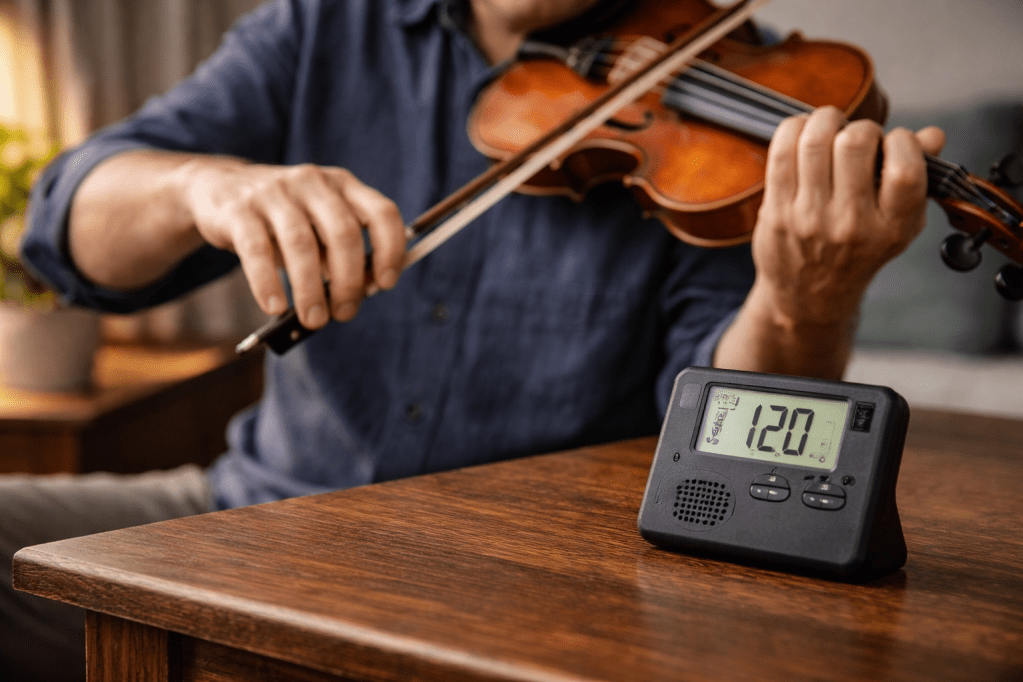
Practicing violin as an adult often comes down to efficiency. You may not have unlimited time, but the right tools can help you practice more accurately and make better use of every session.
A metronome helps you develop steady rhythm and control, while a tuner helps you train your ear and maintain reliable intonation. Used correctly, both tools support progress — without adding complexity or pressure.
This guide focuses on simple, accurate metronomes and tuners that work well for adult violinists, including both physical devices and apps.
Why Adult Violinists Benefit from Metronomes and Tuners
Many adult players struggle with:
- Rushing or dragging tempo
- Inconsistent intonation
- Practicing without clear feedback
A metronome and tuner provide neutral reference points. They don’t replace listening skills or musicality, but they help you:
- Build rhythmic stability
- Catch pitch issues early
- Practice with intention instead of guesswork
When used gently and intentionally, these tools improve confidence rather than create tension.
Metronome vs. Tuner vs. Combo Devices
Before choosing a tool, it helps to understand the difference.
- Metronome: Keeps steady time and supports rhythm, bow control, and coordination
- Tuner: Helps check pitch accuracy, especially during scales and slow practice
- Combo devices: Include both functions in one unit for convenience
Most adult violinists benefit from having access to both, whether as separate tools or a combined option.
Best Simple Metronomes for Adult Violinists
A good metronome for violin practice should be:
- Easy to read
- Loud enough to hear over the instrument
- Simple to adjust without distraction
Look for models with:
- Clear tempo display
- Tap tempo or simple buttons
- Audible clicks (not overly harsh)
A basic digital metronome is often more practical than mechanical models for adult learners because it’s quieter, smaller, and easier to control.
These metronomes offer clear tempo keeping and easy operation — ideal for incorporating rhythm practice into your sessions without overwhelming features.
- Boss DB‑90 Dr. Beat Metronome – A premium digital metronome with a variety of rhythm features and a built-in reference tone function, great for steady tempo practice and expanding your rhythmic control without complexity.
- Seiko Quartz Metronome – A reliable, easy-to-read metronome that’s well-suited for daily practice; simple controls and clear clicks help keep tempo without distraction.
- Korg MA-2 Digital Metronome – A compact, easy-to-read digital metronome with louder sound and a larger display than earlier models, making it especially useful for adult violinists who want clear tempo reference without fiddly controls.
Best Tuners for Violin Practice
A tuner should help you check pitch, not make you dependent on visual feedback.
Good violin tuners typically offer:
- Chromatic tuning mode
- Clear needle or display
- Fast response time
Clip-on tuners work well for home practice, while small digital tuners or phone-based tuners are convenient for quick checks during scales and warm-ups.
Accurate tuning support helps train your ear and ensures your violin sounds its best right from the start of your practice session.
- D’Addario Nexxus Rechargeable Violin Tuner – A rechargeable clip-on tuner with a bright display and responsive chromatic sensing, making it easy to check pitch quickly during practice without constant battery changes.
- Korg CA-50 Chromatic Tuner – A reliable chromatic tuner with a clear display and simple controls, ideal for adult violinists who want accurate tuning checks without complex menus or settings.
Best Metronome & Tuner Combo Options
Combo devices are ideal if you:
- Want fewer tools to manage
- Practice in multiple locations
- Prefer a single, familiar interface
Most combo units allow you to switch easily between metronome and tuner modes, making them useful for warm-ups, scale practice, and rhythm work in one session.
If you prefer a single tool for both intonation and rhythm reference, these combo devices simplify your practice without sacrificing key functions.
- Korg TM‑70T Tuner Metronome – A versatile combo unit with both metronome and tuner functions in one compact device — ideal if you want rhythm and pitch support without carrying multiple tools.
- Musedo Metro‑Tuner – A budget-friendly metronome and tuner combo that’s simple to operate and portable enough for case storage.
- KLIQ MetroPitch‑PRO Metronome Tuner – A flexible combo with tap tempo, chromatic tuning, and a broad set of rhythm settings — a solid all-in-one option for varied practice.
- Sondery Rechargeable Metronome & Tuner – A compact all-in-one practice tool with both metronome and chromatic tuning functions, rechargeable battery, and simple controls, making it a convenient choice for adult violinists who want reliable rhythm and pitch reference without separate devices.
Metronome & Tuner Apps: Are They Good Enough?
Apps can be an excellent option for adult players.
Pros:
- Always available
- No extra device to carry
- Often include advanced features
Cons:
- Screen distractions
- Notifications during practice
- Less tactile control
For many adult violinists, apps work best as backup tools, while physical devices help create a more focused practice environment.
If you’d like a reliable app option to supplement physical tools, the following is widely used by violinists.
• TonalEnergy Tuner & Metronome (App) – A highly regarded tuner and metronome app with clear visual feedback and flexible tempo controls, making it a convenient backup option for adult violinists who prefer practicing with a mobile device.
How to Use These Tools Without Over-Practicing
The goal is support, not dependence.
Try this approach:
- Use a tuner briefly at the start of practice
- Turn it off once your ear is engaged
- Use the metronome at slow tempos
- Turn it off when working on musical phrasing
These tools fit naturally into a structured daily routine like this 20–30 minute violin practice routine for busy adults.
Final Thoughts
Metronomes and tuners are not about perfection — they’re about clarity.
For adult violinists, the best tools are:
- Simple
- Accurate
- Easy to use without stress
Choose tools that support your practice, not complicate it, and let them guide — not control — your progress.
Affiliate Disclosure: Some links in this article may be affiliate links. As an Amazon Associate and participant in other affiliate programs, we may earn from qualifying purchases at no additional cost to you.
 Practical Violinist
Leave a comment