
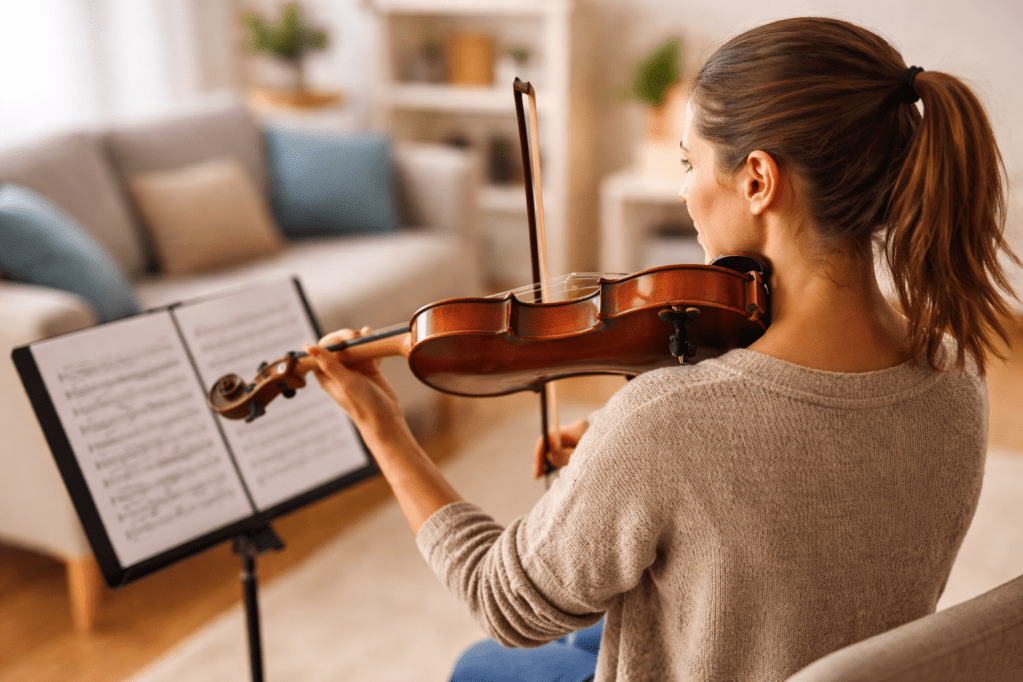
Practicing violin as an adult can feel frustrating — not because you aren’t motivated, but because time is limited and unfocused practice doesn’t lead to real improvement.
You don’t need hours each day. What you need is a clear, repeatable structure that improves tone, control, and confidence without wasting time.
This 20–30 minute routine is designed specifically for busy adult beginners and returning players who want steady progress without burnout.
Why a Structured Practice Routine Matters for Adults
Many adult violinists struggle not with effort, but with direction. Common problems include:
- Jumping straight into songs without warming up
- Spending too much time on difficult passages
- Practicing too long and feeling tense or discouraged
A simple structure solves these issues by:
- Prioritizing sound quality first
- Limiting practice time to what’s realistic
- Creating consistency you can maintain long-term
The 20–30 Minute Violin Practice Routine
You can complete this routine in 20 minutes, or extend it to 30 minutes when time allows.
1. Warm-Up & Bow Control (5 Minutes)
Using a metronome during warm-ups helps stabilize rhythm and bow control; for simple, reliable options, see our guide to the best metronomes and tuners for adult violinists.
Start every session by focusing on sound, not speed.
- Play slow open strings
- Use full bow strokes
- Listen for an even, steady tone
This helps:
- Reduce tension
- Improve bow control
- Eliminate scratchy sound early in the session
If your tone feels inconsistent, slow down — improvement starts here.
If your sound often feels rough or unstable, this guide on why your violin sounds scratchy explains the most common causes and fixes.
2. Tone & Left-Hand Basics (5–10 Minutes)
Next, move to simple fingered exercises.
Focus on:
- One-octave scales
- Slow finger placement
- Clean string crossings
Keep the tempo slow enough that:
- Notes sound clear
- Fingers land confidently
- You stay relaxed
This section builds accuracy and muscle memory, which are essential for adult learners.
3. Technique or Focus Area (5–10 Minutes)
Choose one technical goal per session, such as:
- Bow distribution
- String crossings
- Finger spacing
- Intonation on a difficult passage
Avoid trying to fix everything at once. Targeted practice produces faster improvement than repeating mistakes.
If you often feel unsure how to practice efficiently, this article on practicing violin technique effectively without wasting time goes deeper into focus strategies.
4. Repertoire or Musical Application (5 Minutes)
End your session with something musical.
This can be:
- A familiar piece
- A short étude
- A section you’re refining
Keep it relaxed. This part reinforces why you’re practicing and prevents burnout.
How Often Should Adults Use This Routine?
Most adult violinists make solid progress practicing:
- 4–6 days per week
- 20–30 minutes per session
Consistency matters more than duration. On days when time is extremely limited, even a brief session can help maintain momentum.
For ultra-busy days, this 5-minute daily violin practice routine for adults is a helpful fallback that keeps your habit intact.
Common Mistakes to Avoid
- Practicing too fast too soon
- Skipping warm-ups
- Practicing longer instead of smarter
- Comparing your progress to others
Adult progress is steady, not rushed.
Making This Routine Work Long-Term
To stay consistent:
- Practice at the same time each day
- Stop before fatigue sets in
- Focus on sound quality over speed
Small improvements compound quickly when your routine is sustainable.
Final Thoughts
You don’t need a complicated plan to improve on the violin. A simple, structured routine practiced consistently will lead to better tone, control, and confidence — even with limited time.
If you ever feel stuck, return to basics: slow bow, clear tone, relaxed posture.
Progress follows clarity.
 Practical Violinist
Leave a comment